




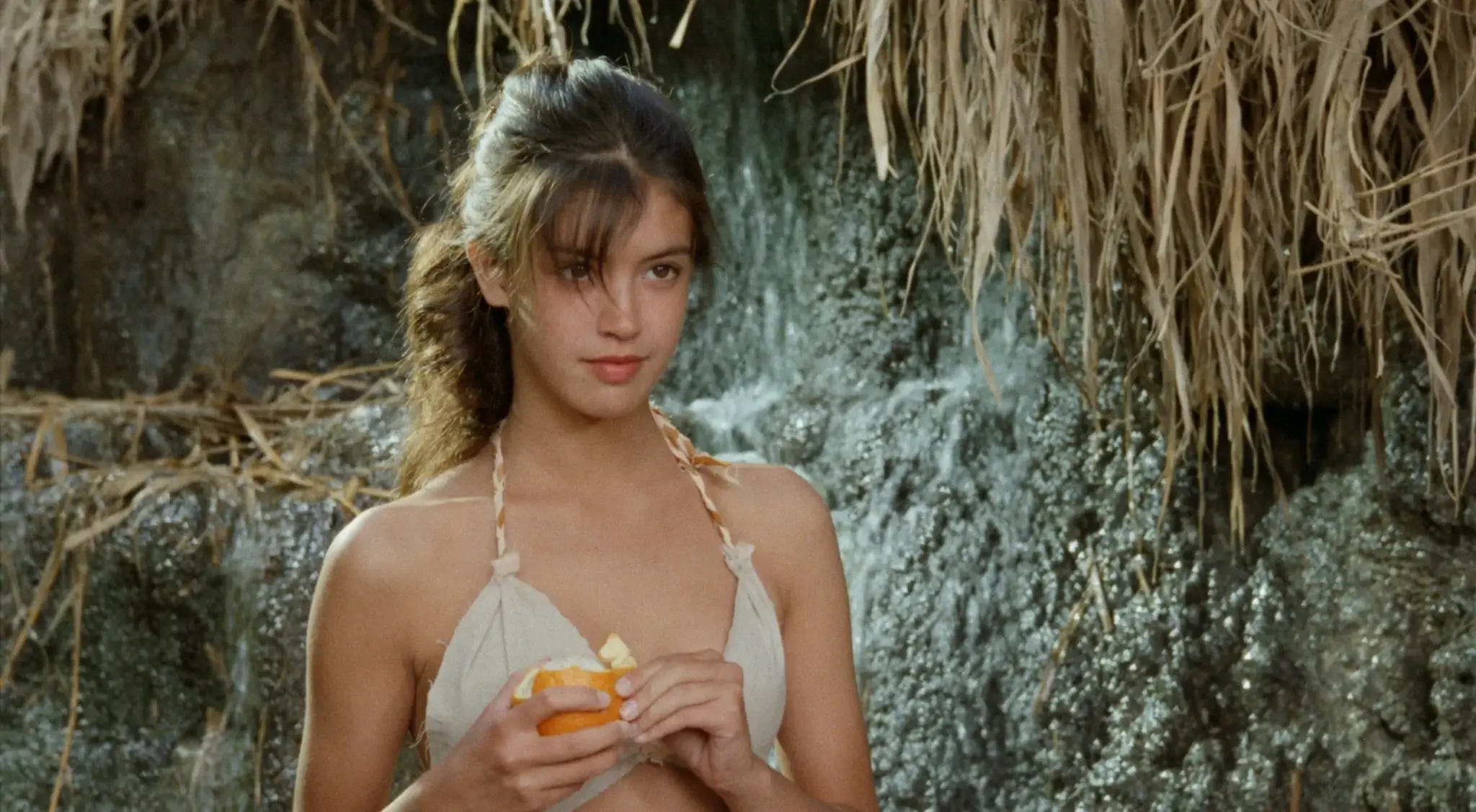
Paradise (released in theaters on May 7, 1982) sweeps onto the screen as a lush, sun-drenched romance that blends desert survival adventure with a passionate coming-of-age awakening. Directed by Stuart Gillard, the story takes place in 1863 and follows David (Willie Aames), an American teenager traveling with his missionary parents, and Sarah (Phoebe Cates), a young English girl, as their caravan treks across the vast Middle Eastern desert toward Damascus.
The peaceful journey turns horrific when the convoy is ambushed by a ruthless slave trader known as the Jackal (Tuvia Tavi), who intends to capture Sarah for his harem.
David and Sarah barely manage to escape the deadly raid, fleeing deep into the harsh, unforgiving wilderness alongside Sarah’s loyal servant.
When their adult companion perishes during the ordeal, the two inexperienced teenagers are left completely stranded.
Navigating shifting sands and treacherous terrain, they stumble upon a hidden, fertile desert oasis. Safe from immediate danger, David and Sarah learn to survive by building a home, gathering food, and finding solace in one another’s company.
As their isolated paradise shields them from the outside world, their friendship naturally blossoms into an intense, romantic, and physical discovery of love.
However, their idyllic sanctuary is threatened when the relentless Jackal tracks them down, forcing David to summon courage, defend their oasis, and defeat the villain to secure their freedom.
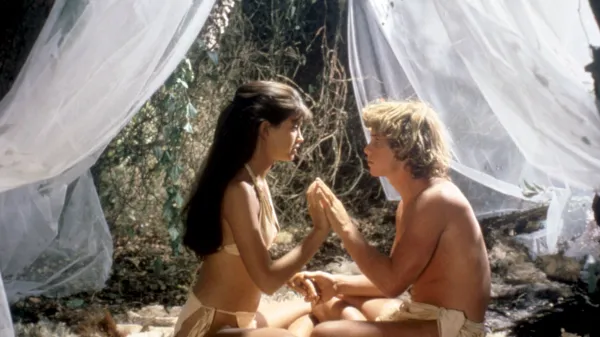
Phoebe Cates and Willie Aames in Paradise (Photo/RSL Films)
Reception for Paradise
Paradise grossed $2.8 million on its opening weekend, finishing second at the box office behind Porky’s, which earned $3.4 million on its eight weekend.
The film would gross $5.6 million in its theatrical run.
Legacy
Paradise‘s legacy endures as a quintessential, highly discussed artifact of early-1980s teen cinema, widely remembered for launching Cates to international stardom.
Following in the footsteps of The Blue Lagoon, the feature captivated audiences with its stunning location cinematography in Israel and its infectious, chart-topping theme song sung by Cates herself.
The production remains an iconic showcase for its lead stars, establishing Aames as an 80s teen idol right alongside Cates’s pop-culture breakthrough that same year in Fast Times at Ridgemont High.
1980s film enthusiasts continue to look back on Paradise as a nostalgic, visually captivating guilty pleasure that perfectly embodies the glossy melodramatic charm of its era.