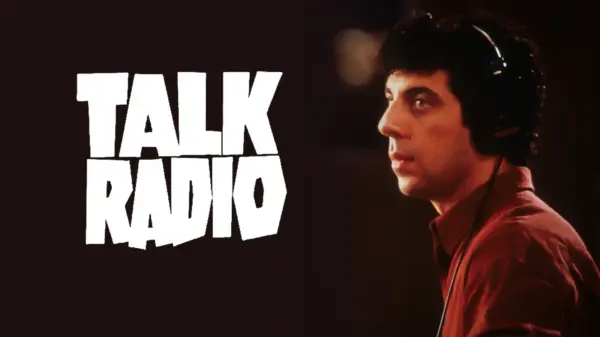



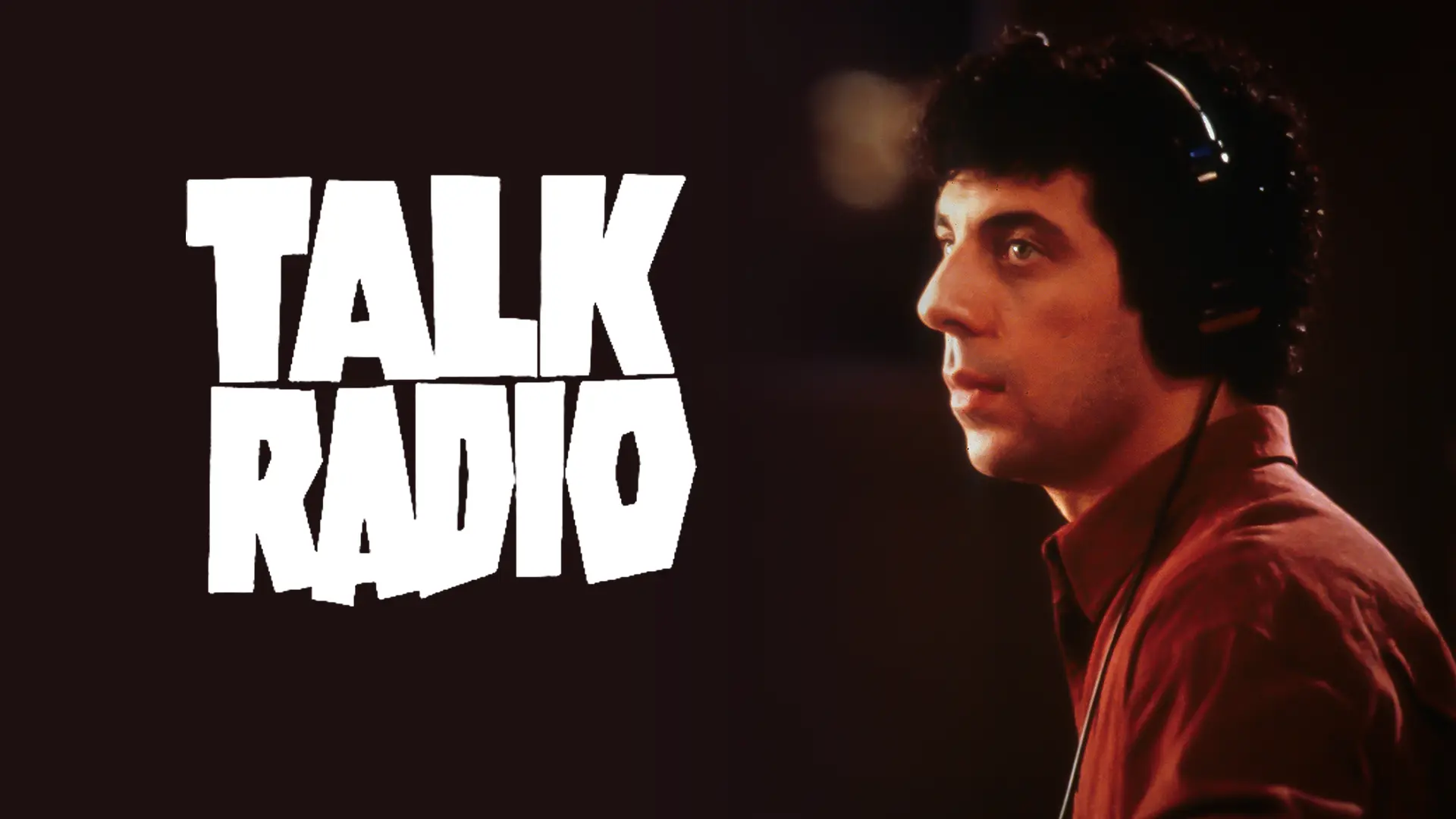
Talk Radio (released in theaters on December 23, 1988) grabs viewers by the collar and plunges them into the suffocating, sweat-soaked booth of a late-night shock jock in Dallas, Texas. Directed by Oliver Stone, the psychological drama follows Barry Champlain (Eric Bogosian), an acerbic, deeply cynical radio host whose show “Night Talk” has become a local sensation.
Armed with rapid-fire wit and relentless hostility, Barry spends his nights berating, mocking, and provoking the lonely, unstable, and extremist callers who dial into his station.
On the eve of his show being picked up for national syndication by a major network, the pressure on Barry reaches a boiling point, forcing him to confront both his vocal detractors and his own inner demons.
As the pivotal national broadcast approaches, station manager Dan (Alec Baldwin) and producer Stu (John C. McGinley) push Barry to tone down his volatile antics to satisfy corporate sponsors.
However, Barry refuses to soften his edge, driving away his ex-wife Ellen (Ellen Greene), who attempts to reconcile with him, and alienating his dedicated associate Laura (Leslie Hope).
Inside the dimly lit studio, corporate executive Dietz (John Pankow) watches nervously as Barry takes increasingly dangerous calls from anti-Semitic white supremacists, desperate fanatics, and a creepy, recurring caller named Kent (Michael Wincott).
Rather than backing down, Barry spirals into a cathartic, monologue-driven meltdown during a live broadcast, openly despising his audience while acknowledging their shared addiction to his toxic airwaves.
This relentless escalation culminates in a shocking, tragic climax outside the studio, proving that the hatred and alienation Barry invited into his booth carries deadly real-world consequences.
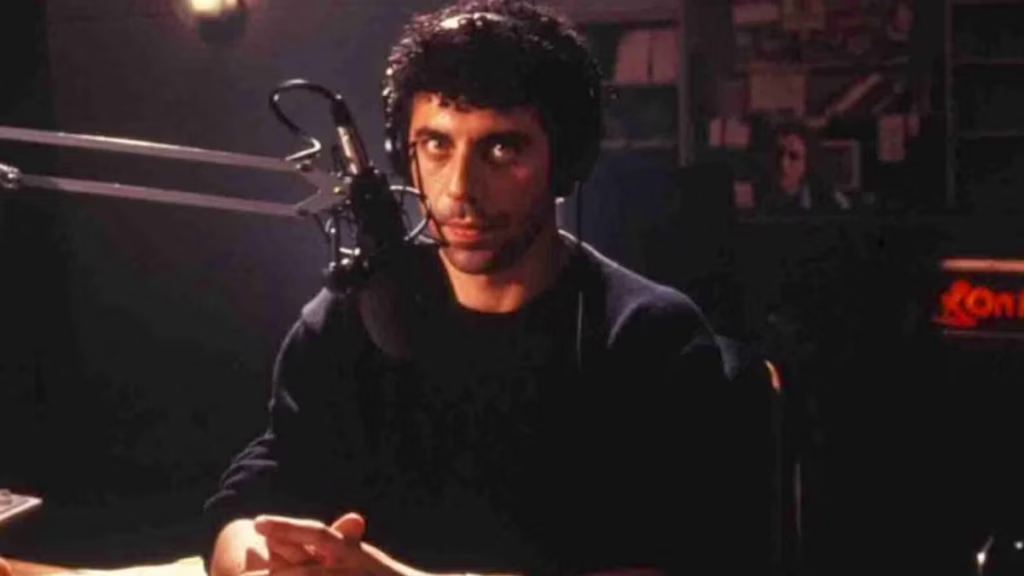
Eric Bogosian in Talk Radio (Photo/Universal Pictures)
Reception for Talk Radio
Talk Radio grossed $80,547 on its opening weekend, finishing 19th at the box office, in limited release on six screens. The top grossing film was Twins, which earned $5.3 million on its third weekend.
The film would gross $3.5 million in its theatrical run.
Roger Ebert gave Talk Radio four out of four stars in his review.
Legacy
Talk Radio‘s legacy endures as a searing, prophetic masterpiece of late-1980s cinema, widely recognized for anticipating the toxic nature of modern outrage culture, clickbait media, and commentary-driven talk entertainment.
Adapted from Bogosian’s acclaimed off-Broadway play and inspired by the real-life murder of radio host Alan Berg, the feature showcased a career-defining tour de force performance by Bogosian, who co-wrote the screenplay.
Stone’s claustrophobic direction and Robert Richardson’s fluid camera movement transformed a single-location setup into a tense cinematic thriller.
Talk Radio a haunting, eerily prescient critique of media obsession and American alienation.