


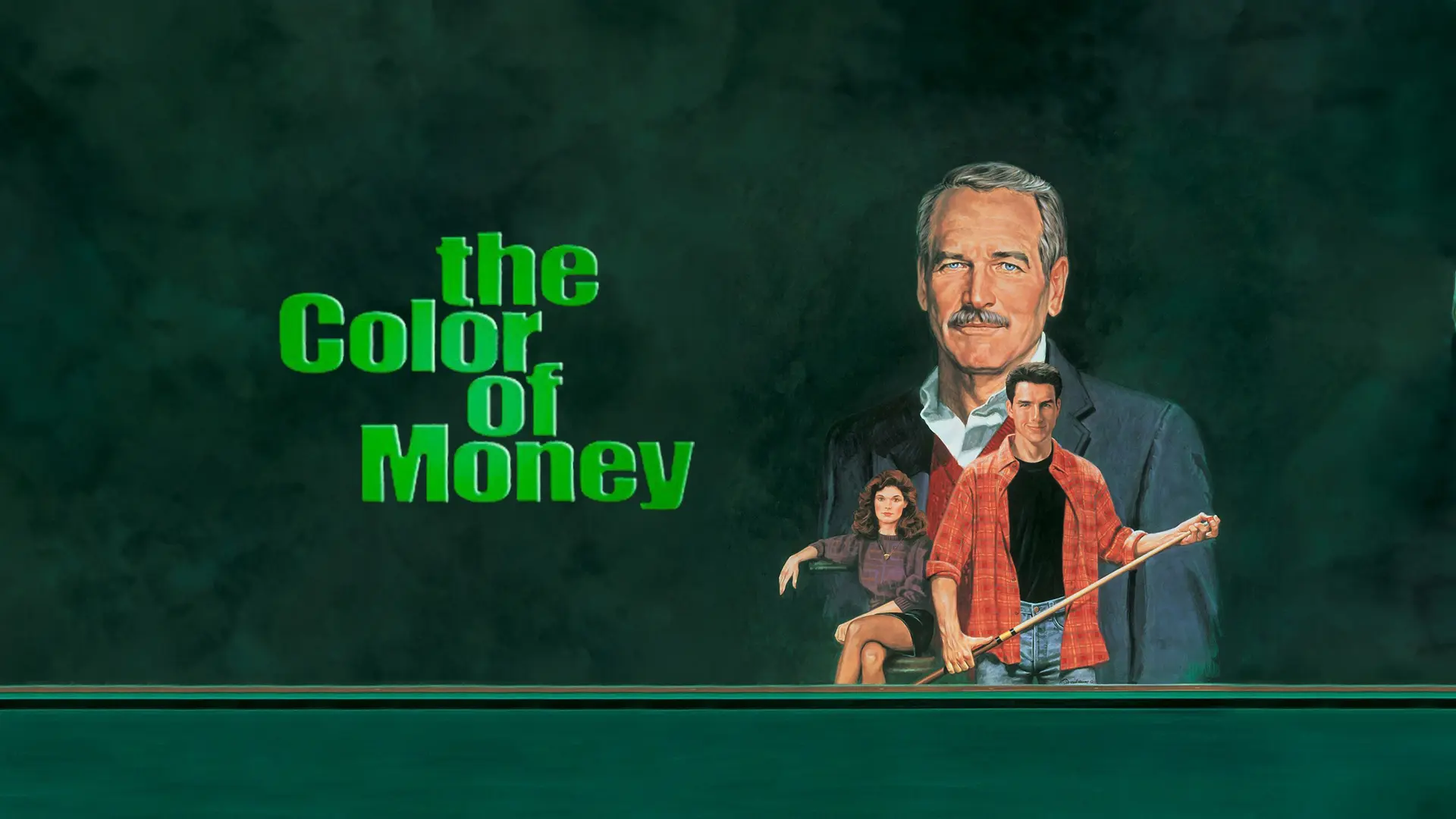
The Color of Money (released in theaters on October 17, 1986) glides onto the screen as a slick, electrifying character study that explores mentorship, pride, and the intoxicating thrill of the hustle. Directed with dynamic visual kineticism by Martin Scorsese, the story revisits “Fast Eddie” Felson (Paul Newman), twenty-five years after the events of The Hustler.
Now a comfortable, middle-aged liquor salesman living in Chicago with his girlfriend Janelle (Helen Shaver), Eddie has long abandoned competitive pool.
However, his sharp eye for talent ignites when he encounters Vincent Lauria (Tom Cruise), an extraordinarily gifted but cocky young pool player destroying local opponents at a dive hall.
Recognizing Vincent’s raw ability and naive swagger, Eddie strikes a deal with Vincent and his savvy, street-smart girlfriend Carmen (Mary Elizabeth Mastrantonio) to take them on a road trip leading to a major nine-ball tournament in Atlantic City.
As Eddie attempts to teach Vincent the subtle art of hustling – dumping games, hiding true skill, and manipulating human psychology for financial gain – Vincent’s unbridled vanity and desire to show off repeatedly clash with Eddie’s methodical discipline.
Along their journey through smoke-filled pool halls, Vincent’s reckless play causes embarrassing losses, including a memorable defeat by a smooth hustler named Julian (John Turturro).
Experiencing a sudden awakening of his own competitive fire, Eddie picks up a cue to play again, only to suffer a humiliating loss that forces him to reevaluate his life, leave the young couple behind, and train relentlessly to reclaim his dignity on the felt.
Forest Whitaker, Bill Cobbs, Iggy Pop, Bruce A. Young, and Ron Dean round out the supporting cast.
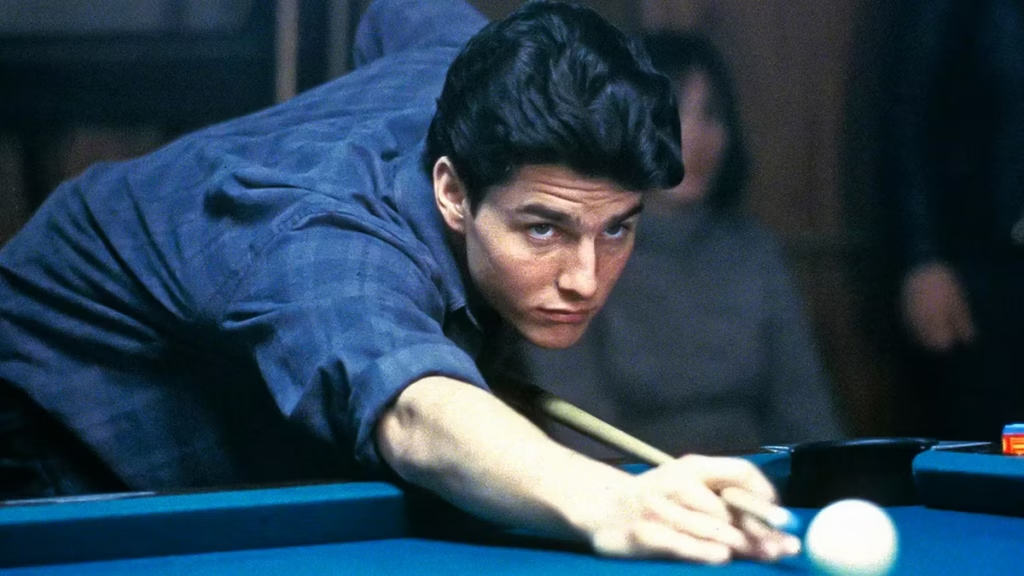
Tom Cruise in The Color of Money (Photo/Touchstone Pictures)
Reception for The Color of Money
The Color of Money grossed $6.4 million on its opening weekend, finishing second at the box office, trailing Crocodile Dundee, which earned $7.4 million on its fourth weekend.
The film would gross $52.3 million in its theatrical run.
Lasting Legacy
The Color of Money‘s legacy endures as a celebrated milestone in modern American cinema, famous for finally earning Newman his long-overdue Academy Award for Best Actor for his iconic reprise of Eddie Felson.
Scorsese’s dazzling camera movements, paired with Robbie Robertson’s bluesy score and Michael Ballhaus’s kinetic cinematography, transformed pool halls into arenas of intense psychological battle.
Mastrantonio earned an Oscar nomination for her sharp supporting performance, while Cruise solidified his star status with an energetic, star-making turn alongside a legendary screen icon.
The Color of Money is remembered as a brilliantly acted, timeless masterclass in competitive ambition and intergenerational mentorship.