



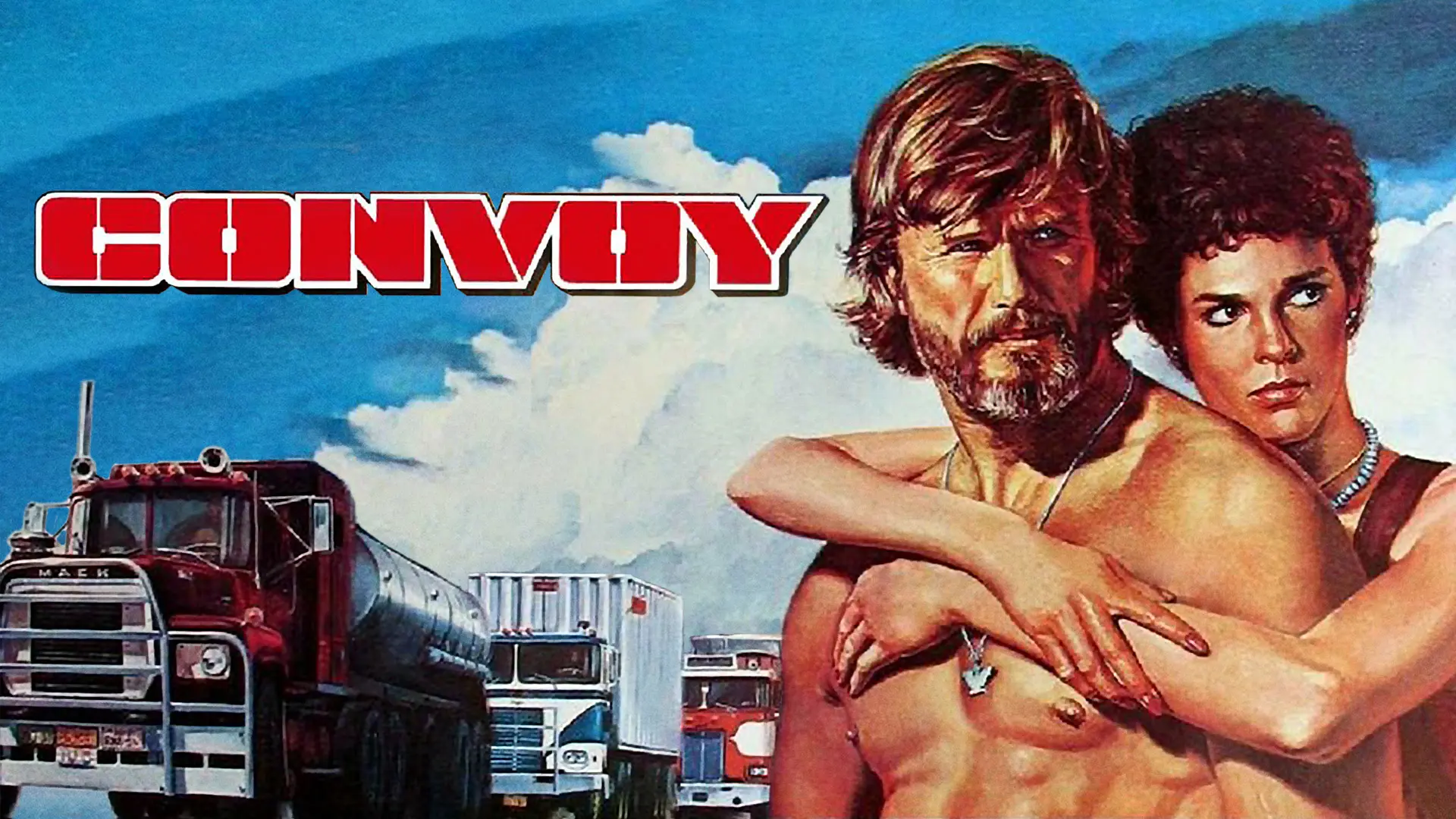
Convoy (released in theaters on June 28, 1978) thunders onto the screen as a sprawling, diesel-fueled 1978 action movie that captures the absolute peak of the late-seventies CB radio and trucking cultural craze. Directed by the legendary Sam Peckinpah and inspired by C.W. McCall’s hit novelty song, the story centers on Martin “Rubber Duck” Penwald (Kris Kristofferson), a fiercely independent independent trucker hauling freight across the American Southwest.
Alongside his fellow drivers, including Bobby “Love Machine” (Burt Young) and Spider Mike (Franklyn Ajaye), the Duck frequently clashes with the corrupt, vindictive Arizona Sheriff Lyle “Dirty Lyle” Wallace (Ernest Borgnine).
After Wallace extorts the truckers and attempts a corrupt arrest at a truck stop, a massive brawl breaks out, forcing the drivers to flee across state lines.
Along for the ride is Melissa (Ali MacGraw), a chic, stranded photographer who hitches a ride in the Duck’s iconic black Mack truck.
As they outrun the law, their desperate escape transforms into a massive, multi-state protest movement. Via CB radio, hundreds of sympathetic truckers join their formation, creating an unstoppable mile-long line of eighteen-wheelers.
The growing political spectacle attracts opportunistic politicians like Governor Jerry Haskins (Seymour Cassel), who attempts to capitalize on the truckers’ anti-establishment sentiment for votes.
Meanwhile, the interpersonal stakes deepen when Spider Mike leaves the line to rush home to his pregnant wife (Madge Sinclair) and gets brutally beaten by Wallace’s corrupt deputies.
Refusing to leave a man behind, Rubber Duck turns his massive rig around to smash through a local jail, setting off a high-stakes, explosive military confrontation on a bridge that tests the limits of his rebel code.
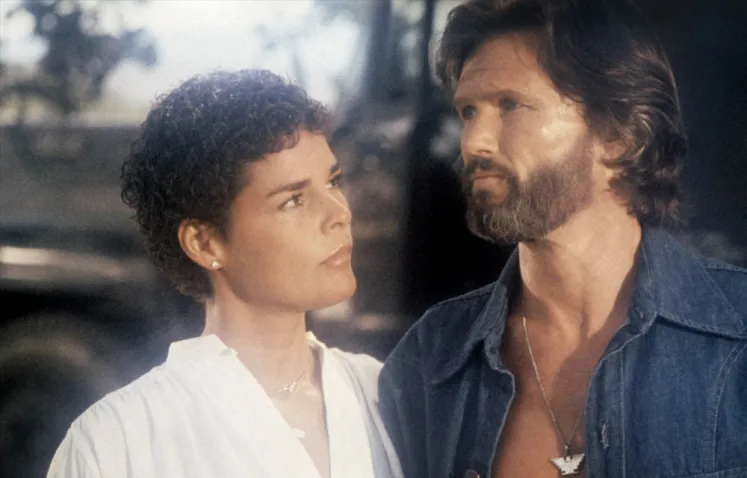
Ali MacGraw and Kris Kristofferson in Convoy (Photo/United Artists)
Reception for Convoy
Convoy grossed $45 million in its theatrical run.
Legacy
Convoy‘s legacy remains a fascinating chapter in Hollywood history, serving as both a massive commercial triumph and an artistic turning point.
Despite suffering from a notoriously chaotic, drug-fueled production that strained Peckinpah’s health, the picture went on to become the highest-grossing film of the director’s storied career, grossing over forty-five million dollars.
Convoy stands as a definitive time capsule of the American 1970s, perfectly encapsulating the era’s deep-seated distrust of authority, blue-collar romanticism, and the brief, explosive popularity of trucker subculture.
By swapping his trademark Western horses for roaring eighteen-wheelers, Peckinpah created a unique modern frontier myth that continues to influence road-warrior cinema, car-chase epics, and high-speed action filmmaking.