




The plot spirals into a dangerous game of psychological cat-and-mouse as Scott’s double life begins to unravel.
He struggles to separate his genuine, growing affection for Mickey from his criminal lifestyle, which draws the heavy suspicion of his erratic, street-smart burglary partner, Buddy Calamara (David Caruso).
Meanwhile, Ray begins to sense his wife’s emotional distance and attempts to save their marriage, confiding his frustrations to their mutual friend, Marty Morrison (George Wendt).
Tensions reach a boiling point when Buddy grows greedy and acts behind Scott’s back, breaking into Mickey’s home once more and throwing the fragile arrangement into chaos.
Mickey is forced to confront the shattering realization that her perfect lover is the very predator who violated her privacy, leading to a tense, violent home-invasion climax where the boundaries of trust, betrayal, and marital loyalty collide.
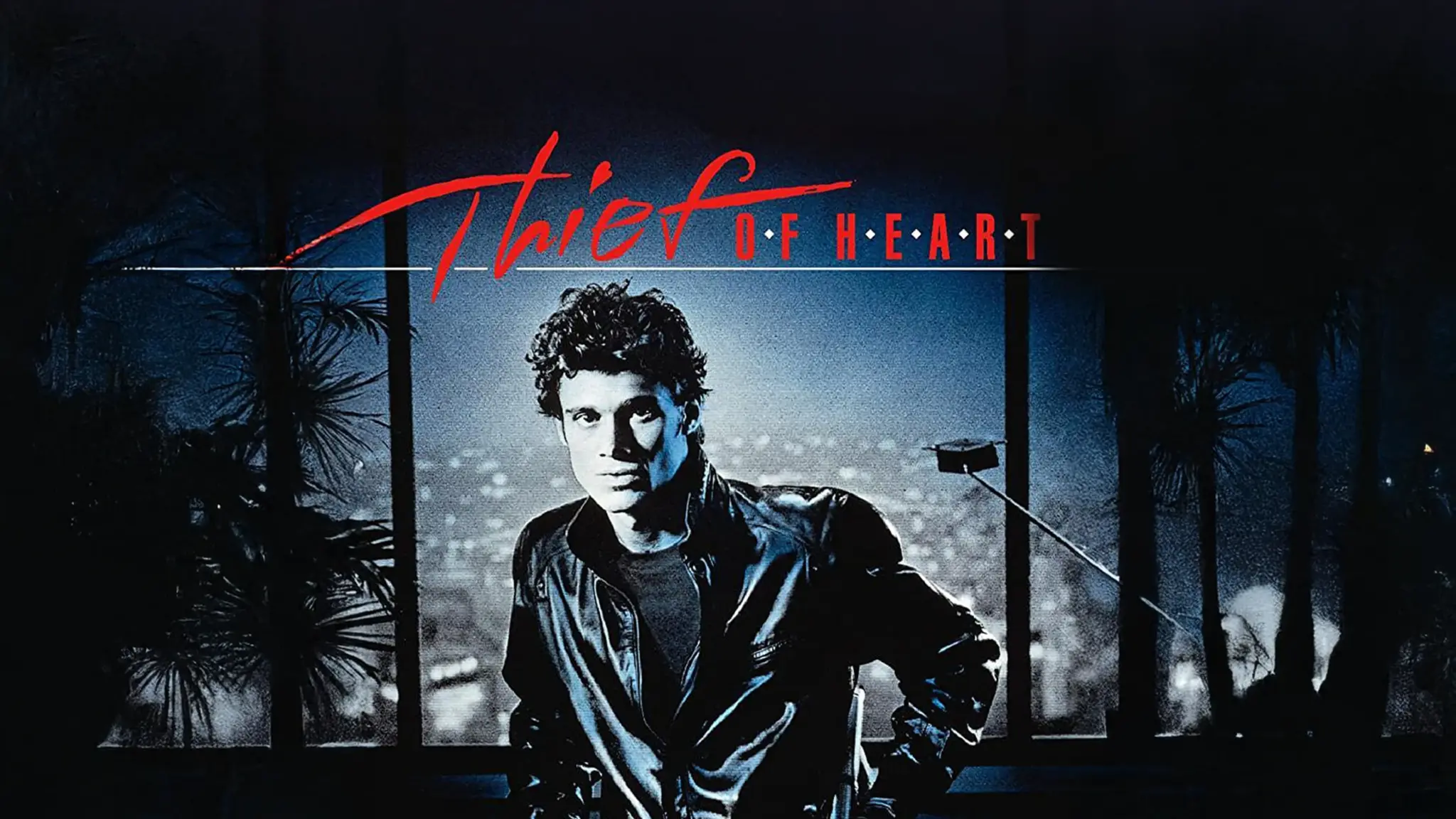
Directed and written by Douglas Day Stewart, the film is an ultra-stylish production that moves with a slow-burning, rhythmic intensity.
Bauer delivers an incredibly charismatic and sultry performance, balancing a smooth criminality with real vulnerability.
Williams brings an understated, raw emotional depth to Mickey, while a young Caruso steals his scenes with a gritty, volatile energy that acts as a great counterweight to the film’s polished romance.
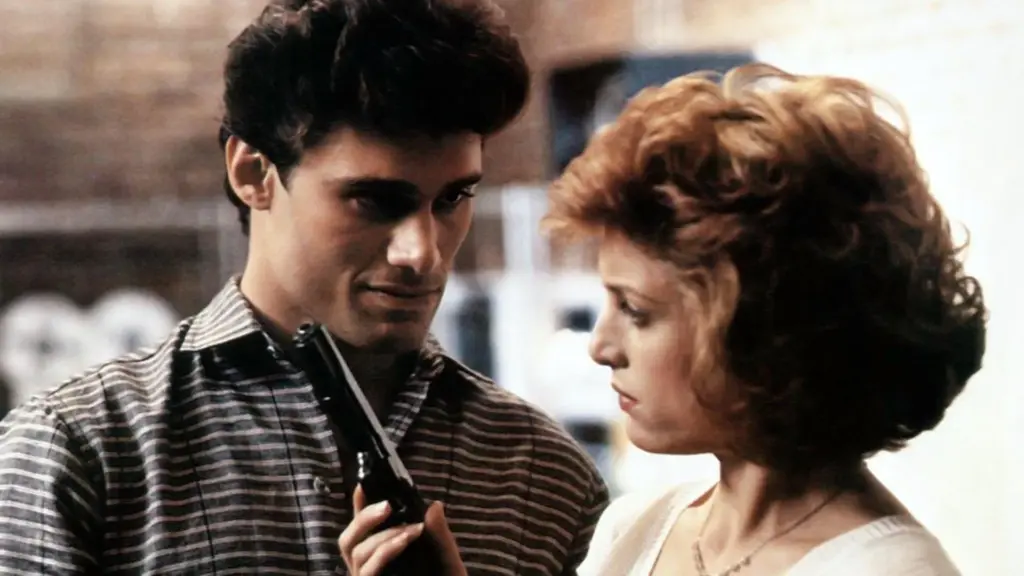
Steven Bauer and Barbara Williams in Thief of Hearts (Photo/Paramount Pictures)
Reception for Thief of Hearts
Thief of Hearts grossed $3.09 million on its opening weekend, finishing third at the box office behind Teachers ($3.4 million) and Places in the Heart ($3.13 million).
The film would gross $10.4 million in its theatrical run.
Legacy
Thief of Hearts‘ legacy rests on its position as an early, highly influential pioneer of the sleek “erotic thriller” subgenre that would completely dominate mainstream Hollywood cinema throughout the late 1980s and early 1990s.
Spearheaded by the legendary production team of Don Simpson and Jerry Bruckheimer, the movie beautifully established their signature aesthetic of high-contrast neon lighting, smoky rooms, and high-production value that defined the decade’s cinematic identity.
While it did not match the massive box office numbers of the duo’s other smash hits like Flashdance or Top Gun, it earned a permanent cult following for its legendary, synthesizer-heavy electronic score composed by Harold Faltermeyer and its sultry theme song by Melissa Manchester.
Thief of Hearts remains a fascinating, hidden gem of 1984, celebrated by cinephiles as a beautifully crafted, visual time capsule that captured the dawn of a new era of mature, high-fashion studio blockbusters.