






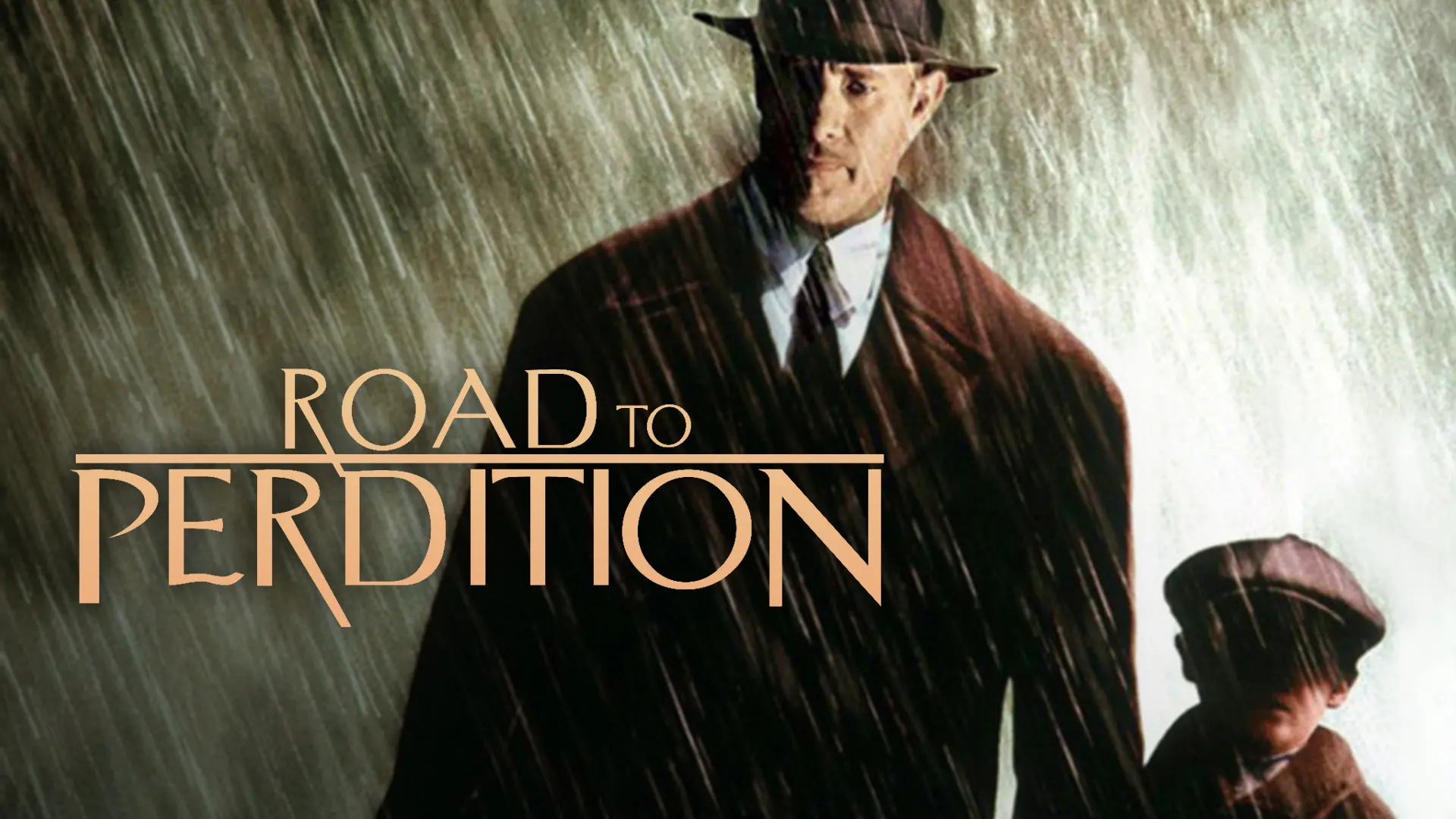
Road to Perdition (released in theaters on July 12, 2002) cements itself as a visually stunning, emotionally devastating 2002 period crime drama that subverts traditional gangster tropes to examine the heavy cost of fatherhood and vengeance.
Directed by Sam Mendes and adapted from the graphic novel by Max Allan Collins, the plot unfolds in 1931 Depression-era Illinois. Michael Sullivan Sr. (Tom Hanks) operates as a fiercely stoic, lethal enforcer for the benevolent but iron-fisted Irish mob boss John Rooney (Paul Newman), who raised Sullivan like a son.
Sullivan’s quiet family life with his wife Annie (Jennifer Jason Leigh) shatter completely when his curious eldest son, Michael Jr. (Tyler Hoechlin), witnesses a brutal gangland execution carried out by Rooney’s unstable, deeply envious biological son, Connor (Daniel Craig).
Terrified of exposure, Connor attempts a swift purge, murdering Annie and Sullivan’s youngest child. Stricken with grief, Sullivan Sr. takes Michael Jr. and flees toward the town of Perdition, initiating a bleak journey of survival and retaliation.
To protect his remaining family, Sullivan targets the financial assets of the Chicago Outfit, attempting to pressure syndicate boss Frank Nitti (Stanley Tucci) into surrendering Connor.
In response, Nitti enlists Harlen Maguire (Jude Law), a grotesque, psychopathic crime scene photographer who moonlights as a relentless contract killer.
As Maguire pursues them across a rain-slicked Midwestern landscape, Sullivan utilizes a network of crooked encounters – including dealings with accountant Alexander Rance (Dylan Baker) and an omitted confrontation with Al Capone (Anthony LaPaglia) – to methodically train his son to be resourceful while desperately fighting to ensure the boy never follows his own bloody, damned profession.
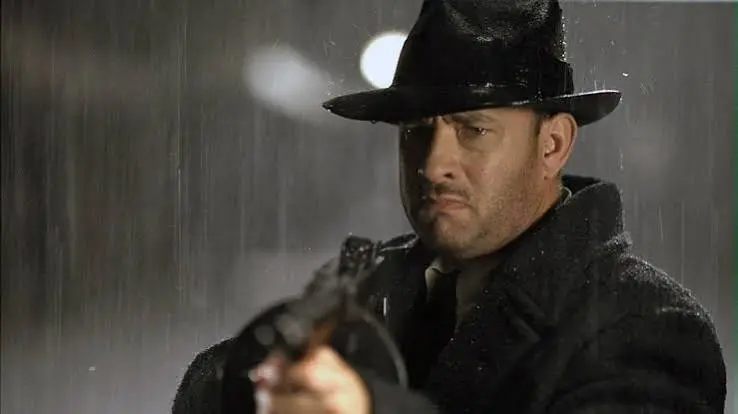
Tom Hanks in Road to Perdition (Photo/DreamWorks Pictures)
Reception for Road to Perdition
Road to Perdition grossed $22.1 million on its opening weekend, finishing second at the box office behind Men in Black II, which earned $24.4 million on its second weekend.
The film would improve to No. 1 on its second weekend, grossing $15.4 million, en route to earning $181 million worldwide.
Roger Ebert gave Road to Perdition three out of four stars in his review.
Legacy
Road to Perdition‘s legacy is monumental, widely regarded as one of the most visually poetic and thematic masterpieces of twenty-first-century American cinema.
It is immortalized by the breathtaking, Oscar-winning cinematography of Conrad L. Hall, whose iconic use of shadows and torrential rain redefined neo-noir imagery.
The project stands as a historic milestone for featuring Newman’s final, towering on-screen film performance, earning him a well-deserved posthumous wave of critical reverence.
Additionally, the picture is celebrated for showcasing Craig years before he attained global stardom as James Bond, and for proving that Hanks could successfully subvert his wholesome “America’s Dad” image to play a cold, morally complex antihero.
Road to Perdition endures as a deeply influential, universally acclaimed masterpiece on the cyclical nature of violence and the ultimate power of parental sacrifice.