



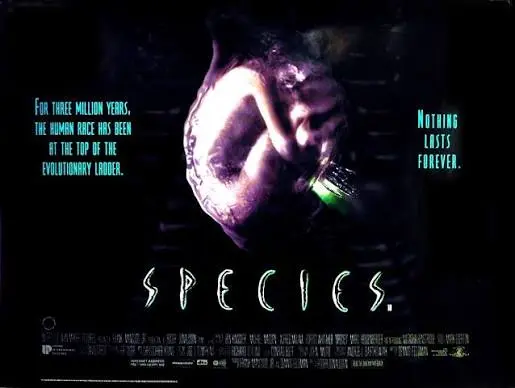
Species (released in theaters on July 7, 1995) bursts onto the screen as a highly stylized, provocative 1995 science-fiction horror thriller that perfectly captures Hollywood’s mid-nineties obsession with biotechnology and extraterrestrial paranoia.
Directed by Roger Donaldson, the plot kicks off when a team of government scientists led by the cold, calculating Xavier Fitch (Ben Kingsley) intercepts an alien radio transmission containing a method to splice human and extraterrestrial DNA.
The resulting hybrid child, named Sil (played by a young Michelle Williams), grows at a terrifyingly accelerated rate.
Recognizing her lethal unpredictability, Fitch orders her termination, but the highly intelligent creature breaks out of her high-tech containment cell and escapes into Los Angeles.
Sil quickly undergoes a rapid metamorphosis into a stunningly beautiful adult woman (Natasha Henstridge) driven by an aggressive, biologically hardwired instinct to find a human mate and reproduce.
To hunt the elusive predator before she can seed a dominant new lifeform on Earth, Fitch assembles an elite team of specialized experts.
This eclectic task force includes Preston “Press” Lennox (Michael Madsen), a rugged and pragmatic mercenary tracker; Dr. Laura Baker (Marg Helgenberger), an analytical molecular biologist; Dr. Stephen Arden (Alfred Molina), an overly enthusiastic anthropologist; and Dan Smithson (Forest Whitaker), a deeply sensitive, emotionally overwhelmed empath.
As the group tracks Sil’s bloody trail through the neon-drenched clubs and luxury hotels of the city, Sil learns to master her human appearance to lure in unsuspecting victims.
The narrative escalates into a tense game of cat-and-mouse, leading to lethal encounters with various men – including a brief, fatal rendezvous with a man named John Carey (Whip Hubley) – before building toward a claustrophobic, slime-slicked final showdown within the dark confines of the Los Angeles sewer system.
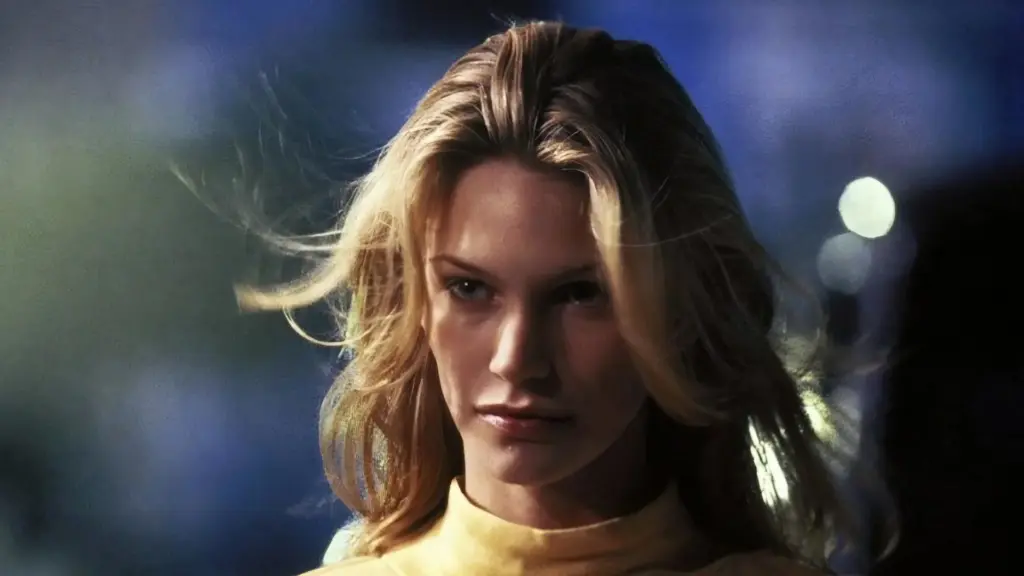
Natasha Henstridge in Species (Photo/MGM)
Reception for Species
Species grossed $17.2 million on its opening weekend, finishing second at the box office, trailing Apollo 13, which pulled in $19.6 million on its second weekend.
The film grossed $113.3 million in its theatrical run.
Roger Ebert gave Species two out of four stars in his review.
Legacy
Species‘ legacy remains firmly anchored in its striking visual identity and its massive impact on the pop culture landscape of the decade.
Acclaimed artist H.R. Giger, the mastermind behind the iconic imagery of Alien, was brought in to design Sil’s terrifyingly biomechanical true alien form, lending the production a unique, high-concept aesthetic that helped it gross over one hundred and thirteen million dollars worldwide.
It successfully launched the acting career of former model Natasha Henstridge, who instantly became a defining cinematic figure of the era.
Rather than being forgotten as a simple B-movie, Species is celebrated as a highly entertaining, star-studded milestone of mainstream sci-fi horror that spawned a multi-film franchise, numerous comic book adaptations, and directly influenced the biological body-horror tropes utilized in modern science fiction.