






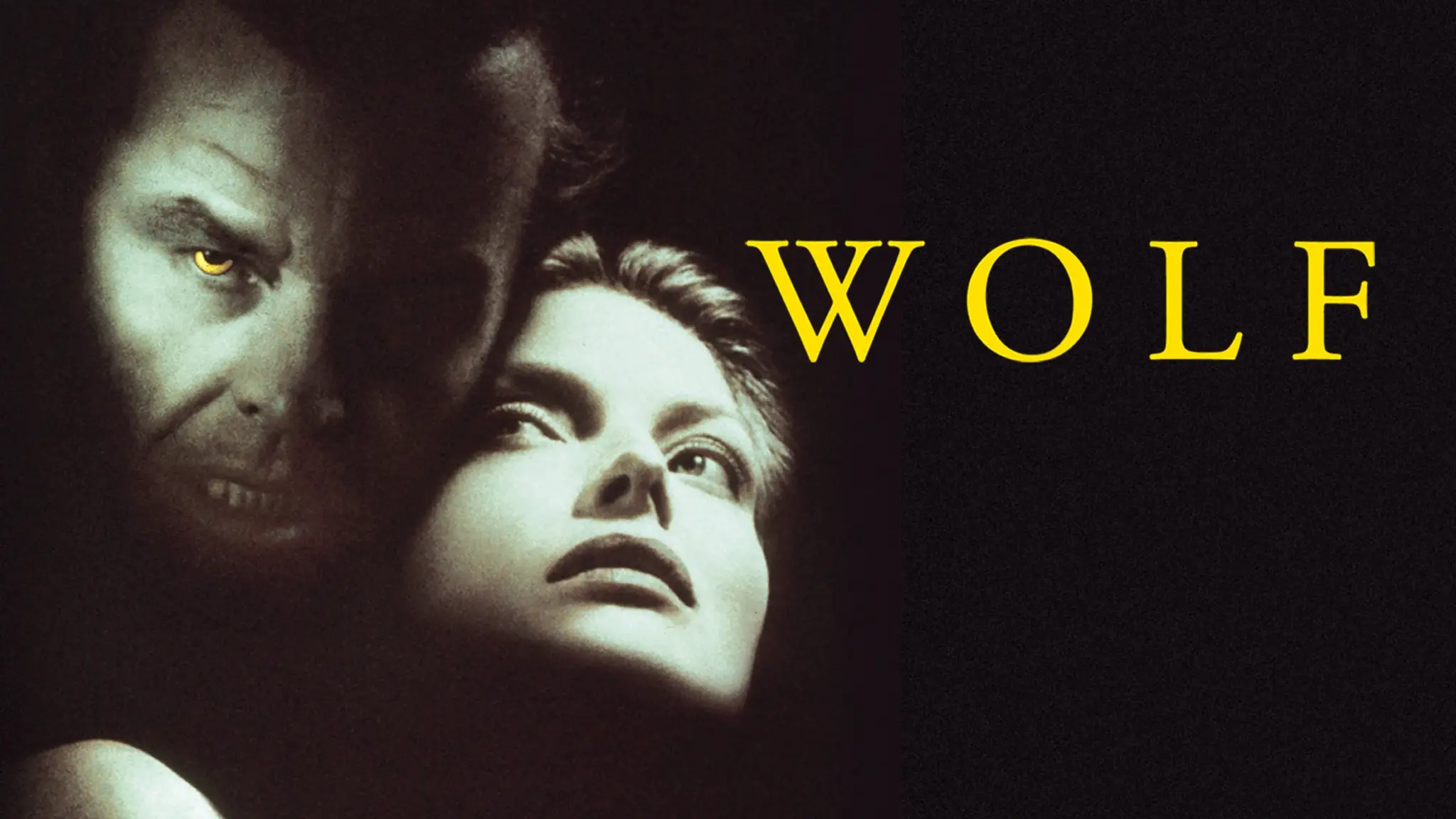
Wolf (released in theaters on June 17, 1994) introduces Will Randall (Jack Nicholson), a weathered, literate chief editor at a prestigious New York publishing house who is on the verge of being ruthlessly pushed aside by aggressive, billionaire tycoon Raymond Alden (Christopher Plummer).
Will’s already unraveling life takes a supernatural turn on a snow-slicked Vermont highway when he strikes a wild wolf with his car; upon stepping out to inspect the animal, it bites his hand before vanishing into the dark woods.
As Will returns to the high-stakes corporate battlefield of Manhattan, he discovers his senses heightening to a staggering degree, his chronic ailments completely vanishing, and a primal, alpha-male confidence surging through his veins.
This terrifying yet intoxicating transformation gives him the predatory edge needed to fight back against Stuart Swinton (James Spader), a sycophantic, backstabbing protégé who is secretly sleeping with Will’s unfaithful wife, Charlotte (Kate Nelligan).
The plot accelerates into a dark, stylish urban thriller as Will finds an unexpected, fierce ally in Alden’s rebellious, fiercely independent daughter, Laura (Michelle Pfeiffer).
Drawn to Will’s enigmatic, dangerous aura, Laura shelters him as his midnight transformations grow increasingly violent, leading to bloody encounters with muggers in Central Park.
Concerned about his breaking sanity, Will consults Dr. Vijay Alezais (Om Puri), an eccentric scholar of the occult who warns him that he is fully turning into a lycanthrope.
Supported by concerned colleagues like the loyal, observant staff members played by Richard Jenkins, David Hyde Pierce, and Ron Rifkin, Will attempts to lock himself away to protect society.
The narrative builds to a terrifying, blood-soaked climax on Laura’s sprawling country estate when it is revealed that Stuart has also been bitten, culminating in a vicious, animalistic showdown for dominance that forces Will to fully embrace his savage, wild nature to survive.
Director Mike Nichols elevates the traditional creature-feature into a masterfully sharp, beautifully atmospheric satire of modern corporate greed and primal gender dynamics.
Nicholson gives a phenomenal, deeply layered performance, shifting seamlessly from a broken intellectual to a terrifyingly charismatic beast, while Pfeiffer provides a remarkably soulful, sharp-witted emotional center.
Spader shines with spectacular, slime-ball brilliance as the villain, chewing the corporate scenery with unmatched, narcissistic malice.
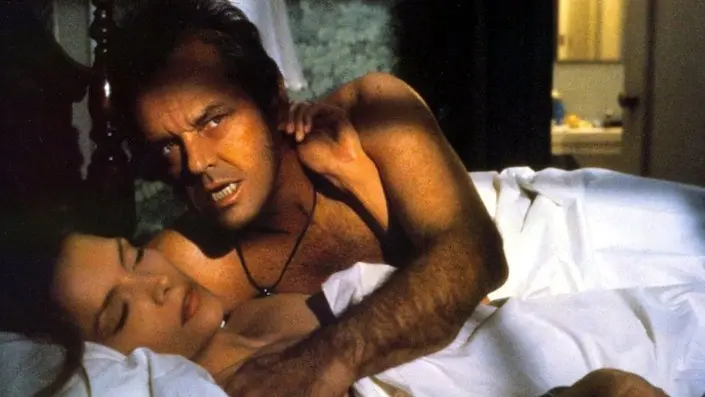
Jack Nicholson and Michelle Pfeiffer in Wolf (Photo/Columbia Pictures)
Reception for Wolf
Wolf grossed $17.9 million on its opening weekend, finishing No. 1 at the box office, topping Speed, which earned $12.9 million on its second weekend.
The film would gross $131 million worldwide.
Roger Ebert gave Wolf three out of four stars in his review.
Legacy
Wolf‘s legacy rests on its reputation as a highly sophisticated, uniquely adult entry in the horror genre that arrived at a time when Hollywood rarely mixed prestige arthouse direction with classic monster mythology.
It is widely celebrated by film enthusiasts for Ennio Morricone’s hauntingly lush, jazz-inflected orchestral score and Rick Baker’s masterfully subtle, Oscar-nominated practical makeup effects, which prioritized expressive acting over heavy prosthetics.
By using the classic werewolf curse as a brilliant, sharp metaphor for the cutthroat, predatory nature of corporate capitalism and aging in America, the movie carved out a entirely unique cultural space.
Wolf remains a fiercely respected and stylized artifact of mid-nineties cinema, continually praised for its intellectual ambition, its spectacular ensemble chemistry, and its timeless reminder that the most dangerous beasts are often found wearing expensive business suits.