









The plot intensifies as Brubaker’s righteous crusade collides with the entrenched financial interests of the local community.
Backed by the governor’s progressive assistant, Lillian Gray (Jane Alexander), Brubaker challenges a corrupt prison board led by John Deach (Murray Hamilton), exposing local businesses that rely on unpaid, forced inmate labor.
The situation escalates from bureaucratic greed to a horrifying murder mystery when a broken inmate named Walter (Morgan Freeman) triggers a chain of events that leads Brubaker to discover a secret graveyard on the prison farm, containing the bodies of inmates murdered by previous administrations.
Supported by complex characters like the conflicted clerk Purcell (Matt Clark), the deeply corrupt Huebner (Tim McIntire), the sinister guard Caldwell (Everett McGill), and a crooked local contractor (M. Emmet Walsh), Brubaker refuses to hush up the discovery.
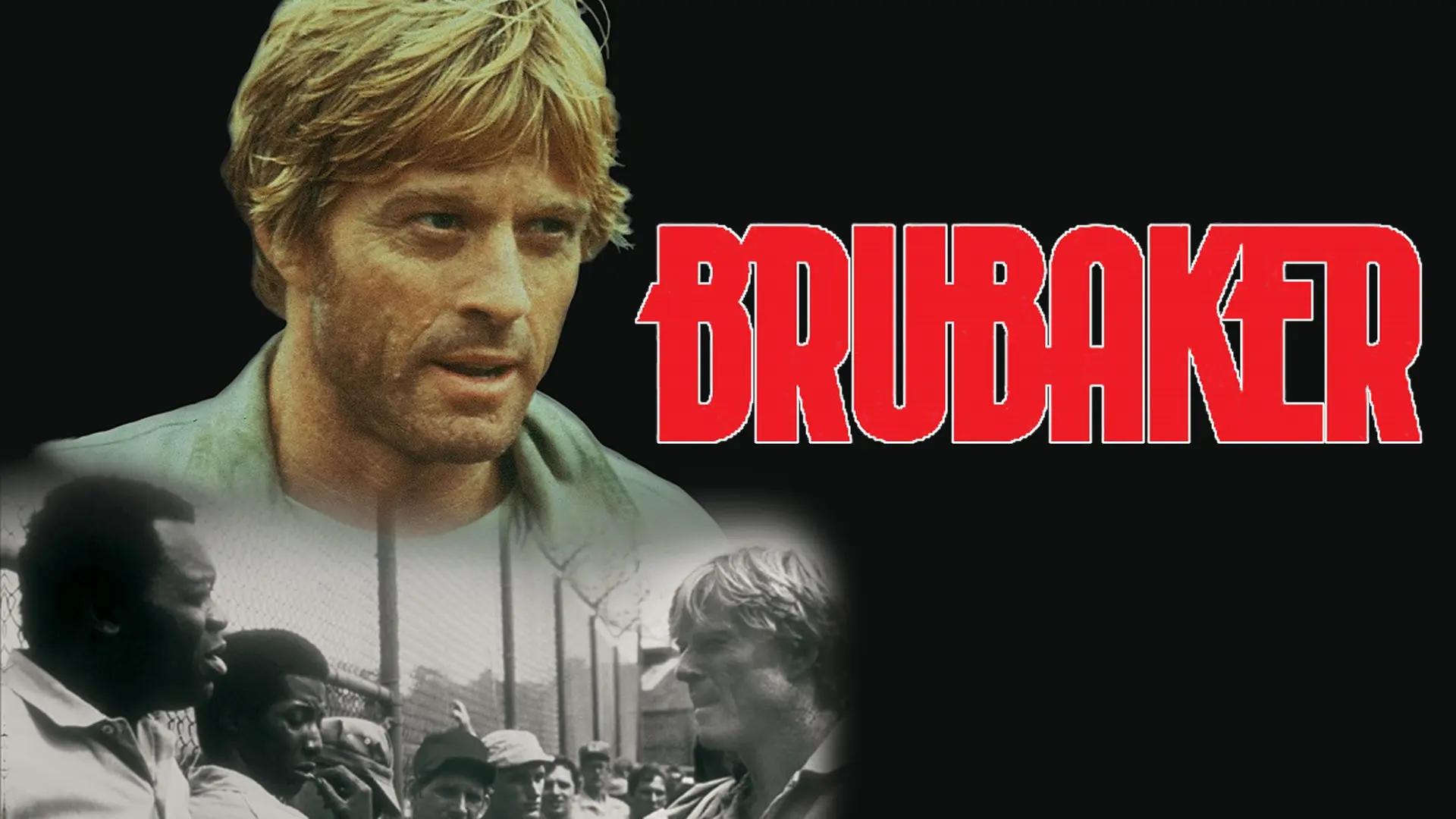
His unyielding moral stance forces the political establishment to orchestrate his firing, culminating in a devastating yet deeply inspiring exit where the entire inmate population risks severe punishment to stand at the fence and applaud their departing champion.
Director Stuart Rosenberg delivers a masterfully grounded, atmospheric social drama that treats the prison setting with a gritty, documentary-style realism.
Redford gives an exceptional, quiet performance that anchors the production, discarding his usual Hollywood glamour to portray a flawed, stubbornly uncompromising idealist.
Kotto provides a powerful, gravelly gravitas that grounds the emotional stakes, while a young Freeman commands the screen in his brief, highly explosive scenes.
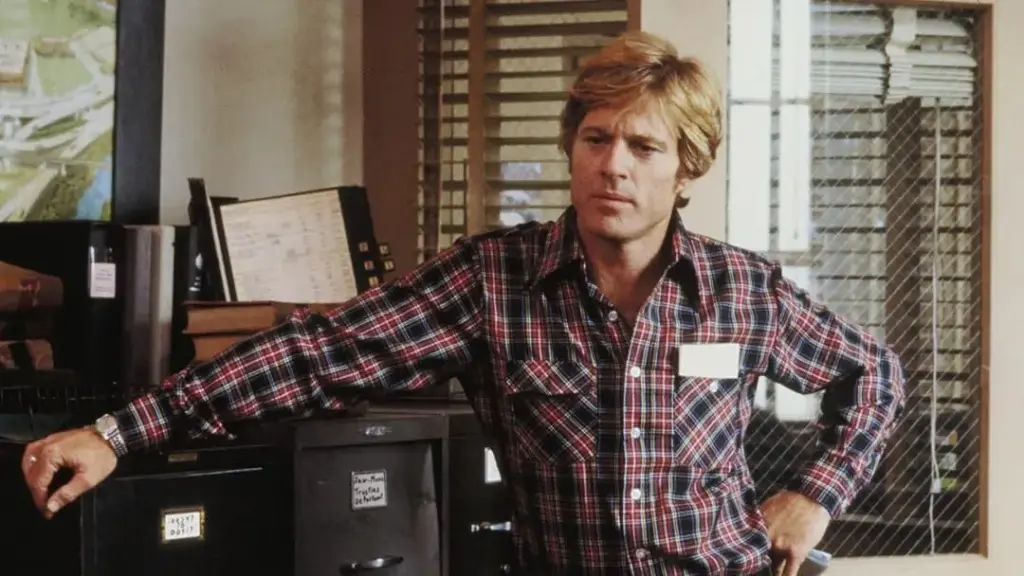
Robert Redford in Brubaker (Photo/20th Century Fox)
Reception for Brubaker
Brubaker grossed $2.7 million on its opening weekend, finishing third at the box office.
The film would gross $37.1 million in its theatrical run.
Roger Ebert gave Brubaker two and a half stars in his review.
Legacy
The legacy of Brubaker rests on its enduring reputation as one of the most intelligent, fiercely authentic institutional expose dramas ever produced by a major studio, earning an Academy Award nomination for its exceptionally sharp screenplay.
Based on the real-life experiences of whistleblowing penologist Thomas Murton, the movie remains highly respected by criminologists for its accurate, unvarnished depiction of the institutionalized corruption and political gridlock that continuously plagues American penal reform.
It stands as a brilliant, twilight monument to the socially conscious cinema of the late 1970s and early 1980s, leaving an indelible impression on audiences with its powerful final sequence.
Brubaker is remembered as a timeless, thought-provoking triumph, continuously celebrated for its searing moral clarity and its uncompromising reminder that true integrity often requires sacrificing personal comfort.