





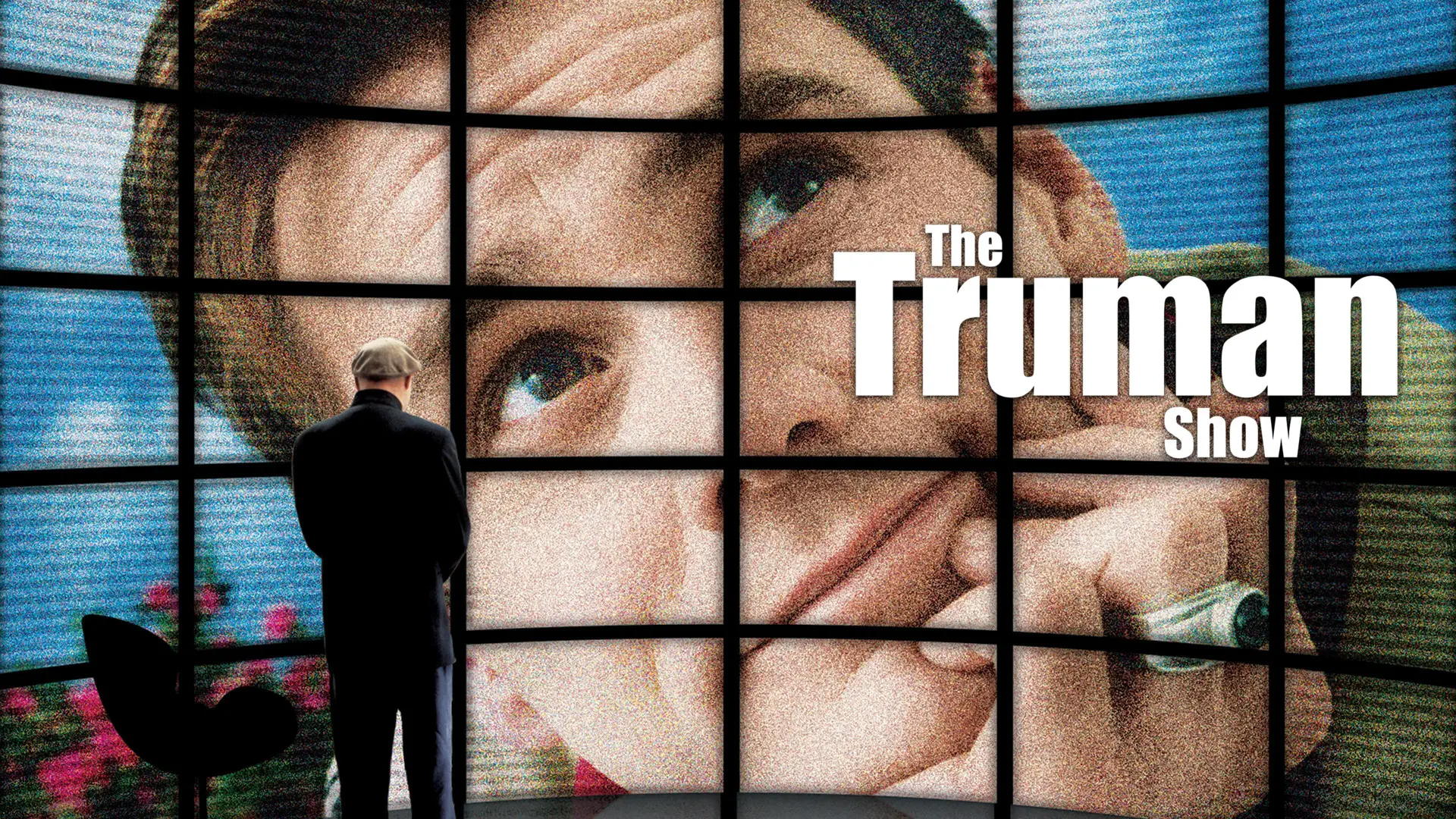
The plot thickens as Truman’s engineered reality begins to fracture due to unexpected technical glitches, starting when a studio light inexplicably plunges from the artificial sky.
His suspicions skyrocket when his car radio accidentally intercepts the production crew’s internal tracking coordinates, and he spots his long-lost father—who was written off the show years prior in a staged drowning—dressed as a homeless extra.
These bizarre anomalies trigger memories of Sylvia (Natascha McElhone), a former extra who tried to warn Truman about the fabrication before being abruptly removed by the production crew.
Supported behind the scenes by frantic control room director (Paul Giamatti) and network executives (Philip Baker Hall and John Pleshette), Christof orchestrates elaborate obstacles, from fake chemical leaks to manufactured extreme weather, to prevent Truman from escaping the island.
Driven by a desperate need for truth, Truman overcomes his deep, engineered fear of the water, sailing into a terrifying, artificially generated storm to reach the physical edge of his universe.
Peter Krause is Truman’s boss and Harry Shearer appears as TV talk show host Mike Michaelson.
Director Peter Weir delivers an exceptionally crafted film that balances existential dread with genuine, heartbreaking human warmth.
Carrey gives a transformative, career-defining performance, flawlessly blending his signature physical comedy with profound dramatic vulnerability.
Harris acts as a spectacular counterweight, infusing Christof with a chillingly arrogant paternalism, while Linney provides a brilliant, satirical look at commercialized relationships.
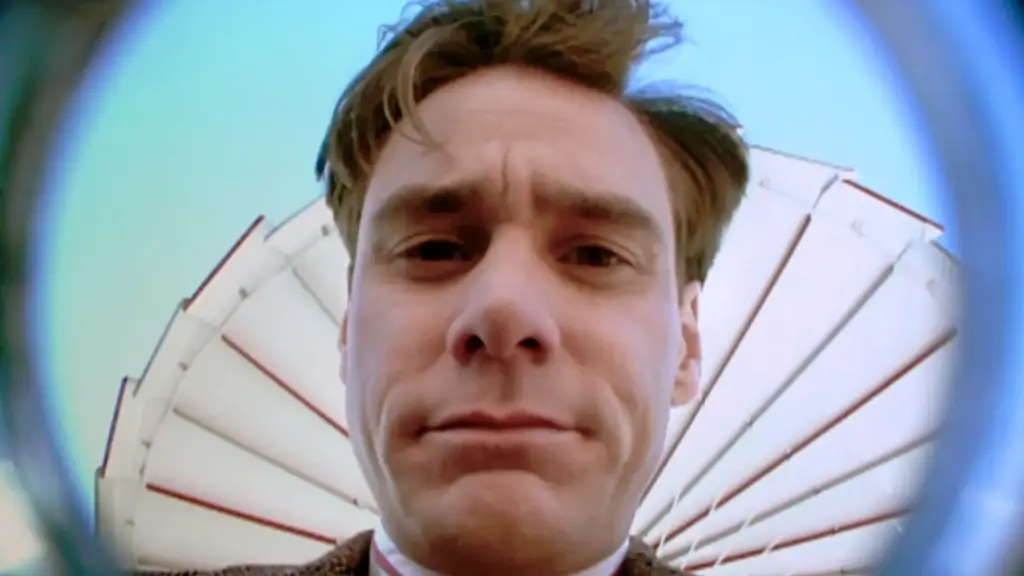
Jim Carrey in The Truman Show (Photo/Paramount Pictures)
Reception for The Truman Show
The Truman Show grossed $31.5 million on its opening weekend, finishing No. 1 at the box office
The film would gross $264.1 million worldwide.
Roger Ebert gave The Truman Show four out of four stars in his review.
Carrey won the Golden Globe for Best Actor in a Motion Picture – Drama and was nominated for an Academy Award for Best Actor.
Legacy
The legacy of The Truman Show is staggering, celebrated by modern critics as one of the most eerily prophetic masterpieces in cinematic history.
Released right before the massive explosion of modern reality television, social media surveillance, and the digital age, it precisely anticipated society’s deep fixation with curated lifestyles and the total erosion of personal privacy.
The film’s profound psychological resonance even led to the coining of a real medical condition, the “Truman Show delusion,” describing individuals who believe their lives are being secretly broadcast to a global audience.
By effortlessly pairing Andrew Niccol’s brilliant, philosophical screenplay with a gorgeous, classical musical score, The Truman Show remains an immortal cinematic touchstone that continues to challenge our perception of media manipulation, autonomy, and the true cost of living an authentic life.