





The plot thickens into a complex, multi-layered family tragedy as a ruthless corporate rival named Glenn Talbot (Josh Lucas) attempts to capture Bruce to weaponize his irradiated DNA for profit.
Simultaneously, a mysterious, unhinged new janitor at the lab reveals himself to be David Banner (Nick Nolte), Bruce’s biological father. David is a rogue scientist who experimented on his own DNA decades earlier, passing the genetic curse down to his son before committing an unspeakable act of violence that fractured young Bruce’s mind.
As the military locks Bruce down in a desert bunker, his explosive escape leads to a spectacular, cross-country rampage through the desert and into San Francisco, where he battles mutated hounds and military fighter jets.
The narrative culminates in a surreal, stormy showdown between Bruce and his father, who has gained terrifying, elemental absorption powers, forcing Bruce to weaponize his own endless, agonizing fury to defeat him.
Director Ang Lee brings a bold, arthouse sensibility to the blockbuster genre, famously utilizing innovative, multi-panel split-screen transitions to mimic the visual grammar of a comic book page.
Bana delivers a deeply internal, brooding performance that captures the quiet agony of a man trapped by his own psyche, while Connelly provides a remarkably soulful, empathetic emotional anchor.
Nolte steals his scenes with an intensely theatrical, Shakespearean level of unhinged intensity that makes the familial conflict feel genuinely terrifying.
Stan Lee, co-creator of Hulk, and Lou Ferrigno, who starred alongside Bill Bixby in the 70s The Incredible Hulk series, make cameos as security guards.
Cara Buono, Geoffrey Scott and Daniel Dae Kim round out the supporting cast.
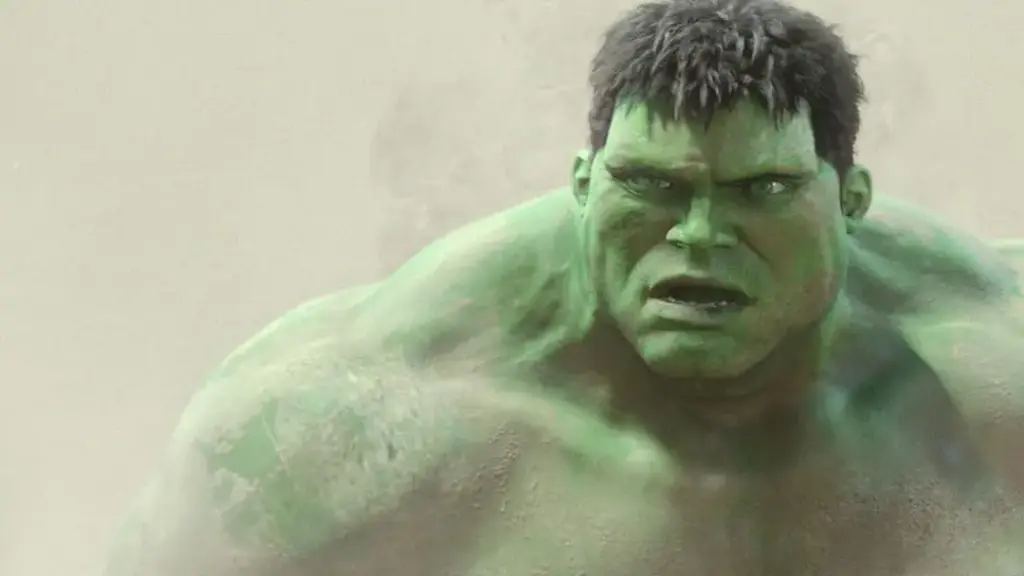
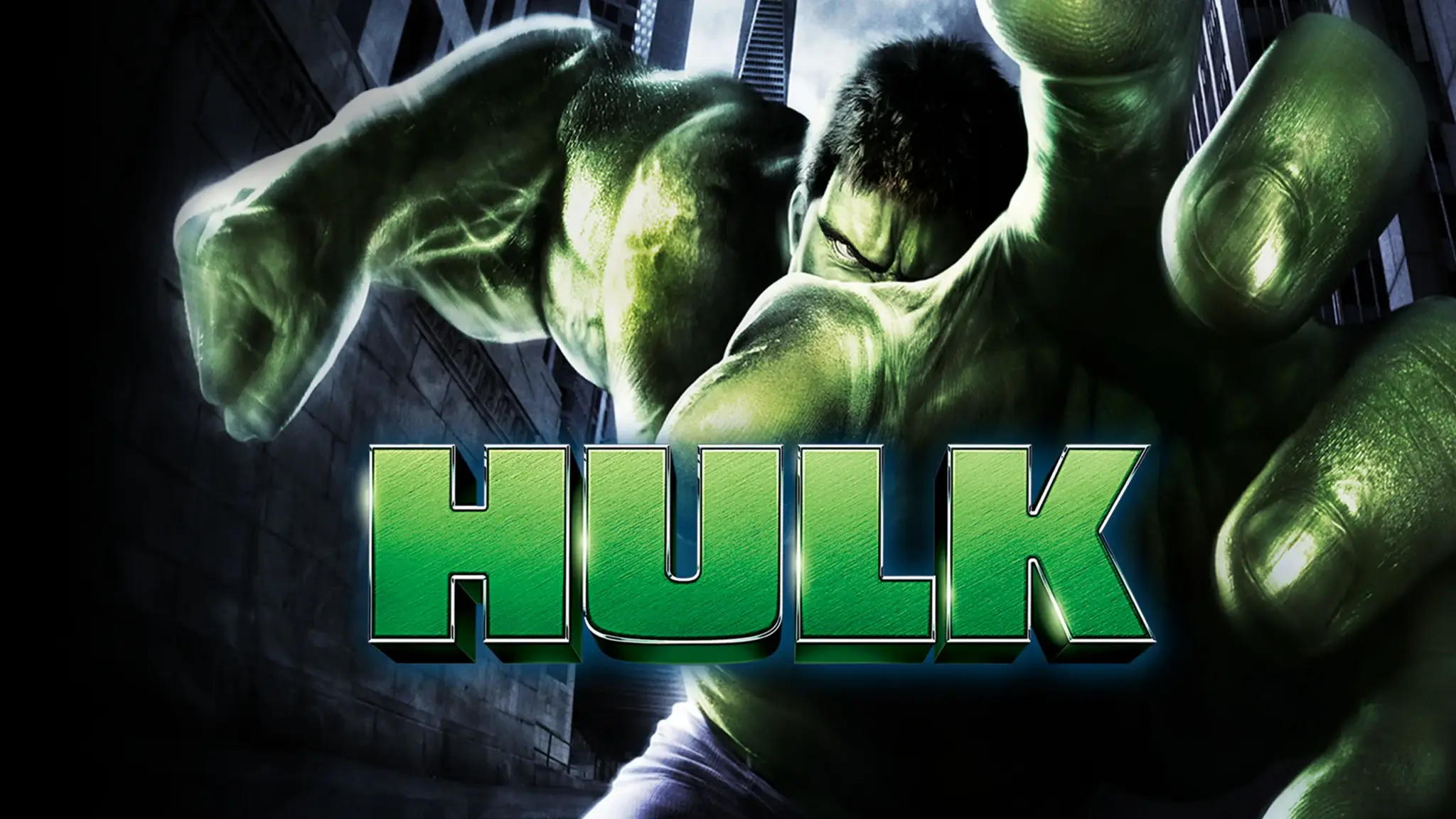
Hulk (Photo/Universal Pictures)
Reception for Hulk
Hulk grossed $62.1 million on its opening weekend, finishing No. 1 at the box office.
The film would gross $245.3 million worldwide.
Roger Ebert gave Hulk three out of four stars in his review.
Legacy
Hulk‘s legacy rests on its unique position as a highly polarizing, fiercely debated masterpiece of avant-garde blockbusters that arrived right before the birth of modern cinematic universes.
While 2003 audiences were initially jarred by its preference for Greek tragedy and Freudian psychological drama over straightforward superhero action, film historians have deeply reassessed it as a masterfully auteur-driven, ahead-of-its-time exploration of trauma and legacy.
Its striking use of experimental editing, saturated color palettes, and sweeping desert imagery represents an incredibly unique artistic swing that Hollywood blockbusters rarely take today.
Hulk stands as a fascinating and deeply respected artifact of comic book cinema, continually celebrated for its visual ambition, its psychological depth, and its refusal to compromise its director’s high-minded vision.