

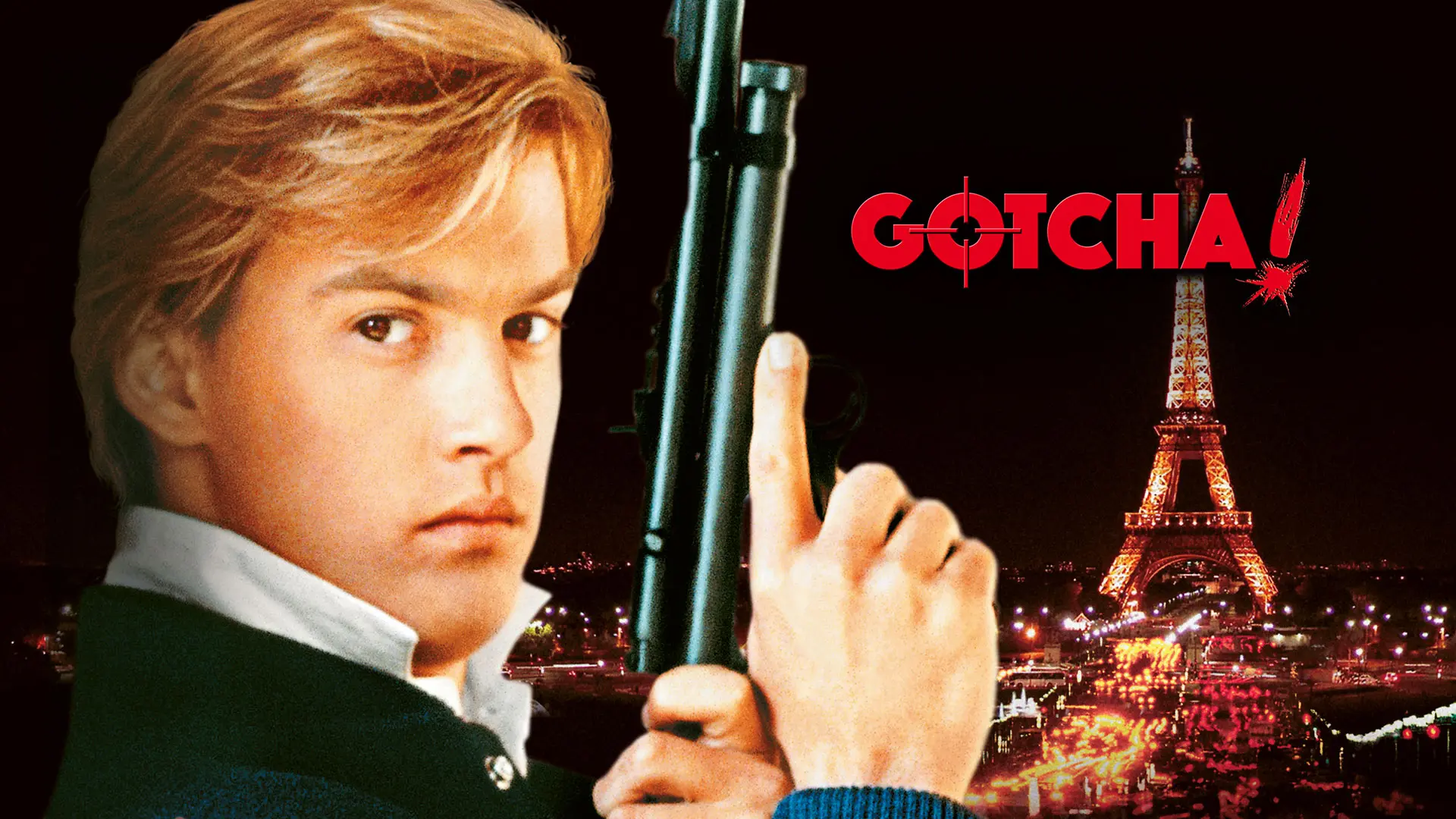
Gotcha! (released in theaters on May 3, 1985) follows Jonathan Moore (Anthony Edwards), a goofy UCLA sophomore and a reigning champion of a campus-wide assassination game called “Gotcha!” involving paint pellet guns. While on a summer vacation in Paris with his friend Manolo (Nick Corri), Jonathan meets the mysterious and sophisticated Sasha (Linda Fiorentino).
Smitten, he follows her to East Berlin, only to realize too late that he has been pulled into a real-life game of international espionage.
Sasha is actually a courier, and Jonathan becomes an unwitting mule for a secret film canister. Suddenly, the toy guns are replaced by real ones as Soviet agents and the KGB pursue him across Europe.
The plot takes a frantic turn when Jonathan manages to escape back to Los Angeles, only to find that the spies have followed him home.
He is forced to use the tactical skills he honed in his campus game to survive a deadly encounter in the real world.
Along the way, Alex Rocco provides comedic tension as Jonathan’s perplexed father, and Kari Lizer appears as a quirky student caught in the crossfire.
Directed by Jeff Kanew, the film successfully pivots from a lighthearted sex comedy into a genuine Cold War thriller, anchored by the chemistry between the naive Edwards and the sultry, enigmatic Fiorentino.
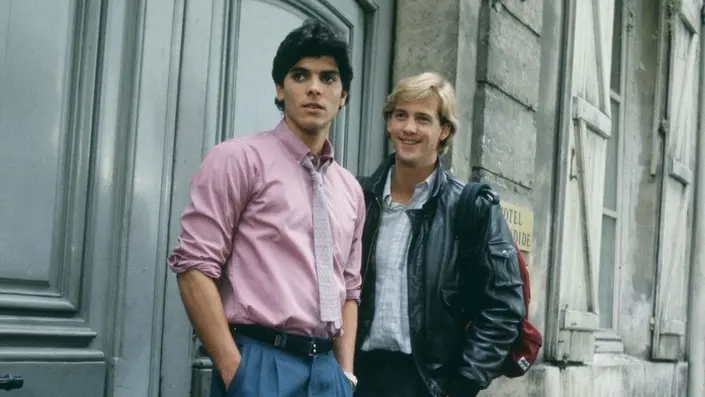
Nick Corri and Anthony Edwards in Gotcha! (Photo/Universal Pictures)
Reception for Gotcha!
Gotcha! grossed $2.4 million on its opening weekend, finishing third at the box office behind Code of Silence ($5.5 million) and Just One of the Guys ($2.5 million).
The film would gross $10.8 million in its theatrical run.
Roger Ebert gave Gotcha! two out of four stars in his review.
Legacy
The legacy of Gotcha! is defined by its status as a quintessential 1980s cult classic that perfectly captured the era’s fascination with teenage rebellion and geopolitical tension. It stands out for its clever subversion of the “fish out of water” trope, using the harmless hobby of live-action role-playing as a legitimate setup for survival in a high-stakes environment.
Unlike the more self-serious spy films of its time, it maintained a playful, irreverent spirit that resonated with the burgeoning youth market of the decade.
It helped solidify Edwards as a relatable leading man before his later dramatic success and introduced audiences to Fiorentino’s unique brand of cinematic “femme fatale.”
Gotcha! has remained a nostalgic favorite for those who remember the thrill of the “Gotcha!” craze, serving as a reminder of a specific moment in pop culture when the lines between childhood games and adult dangers were delightfully blurred in Hollywood storytelling.