

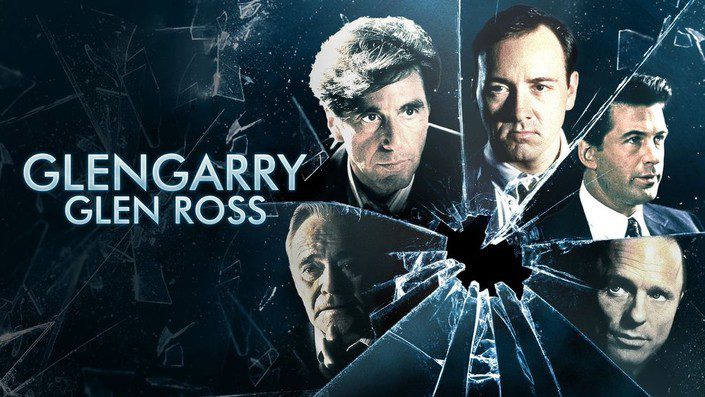
Glengarry Glen Ross, released in theaters on October 2, 1992, is a devastatingly sharp and claustrophobic drama centered on a group of desperate Chicago real estate salesmen. Directed by James Foley and adapted by David Mamet from his own Pulitzer Prize-winning play, the film dissects the cutthroat world of competitive salesmanship over two brutal days, where the stakes are life-changing—and failure means professional death.
The plot kicks off with a demoralizing ultimatum delivered by a ruthless company man, Blake (Alec Baldwin): the top two sellers at the end of the week win a Cadillac and a set of steak knives, respectively; the rest are fired.
This announcement throws the office into chaos, forcing the aging, struggling veterans Shelley “The Machine” Levene (Jack Lemmon), the cynical and sharp George Aaronow (Alan Arkin), and the brooding, perpetually angry Dave Moss (Ed Harris) to consider morally bankrupt actions to secure the “leads” they need to survive.
The story follows the fallout of this pressure, primarily through the efforts of the smooth-talking, successful Ricky Roma (Al Pacino), the only salesman seemingly thriving amid the pressure.
The narrative culminates in the discovery of a break-in at the office, where the valuable Glengarry and Glen Ross sales leads were stolen, triggering a tense police interrogation led by office manager John Williamson (Kevin Spacey).
Jonathan Pryce and Bruce Altman also deliver crucial, understated performances that round out the cast of desperate players.
Pacino was nominated for Best Supporting Actor at the Academy Awards and Golden Globe Awards.
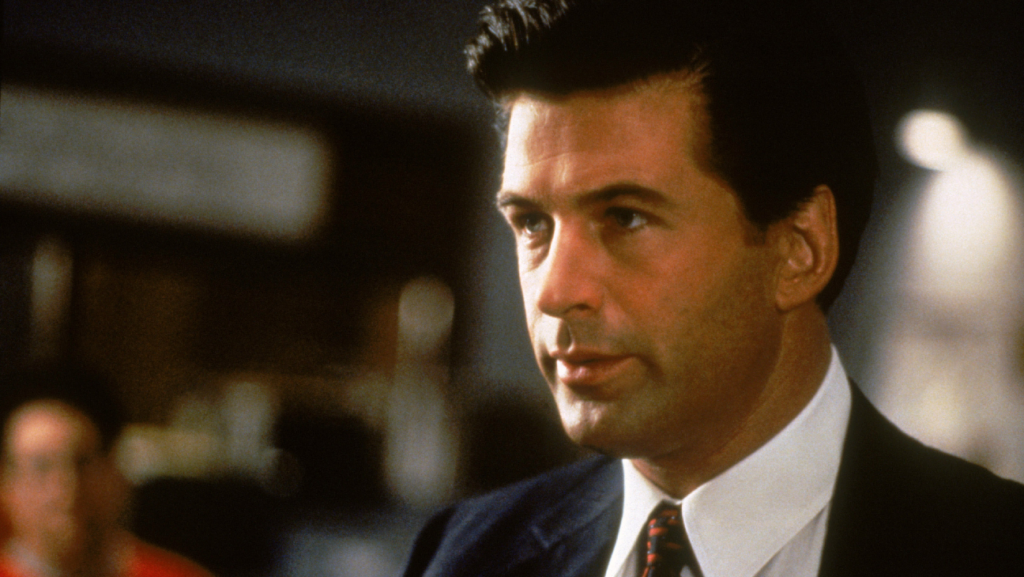
Alec Baldwin in Glengarry Glen Ross (Photo/New Line Cinema)
Reception for Glengarry Glen Ross
Glengarry Glen Ross grossed $2.1 million on its opening weekend, on limited released of 416 screens.
The film grossed $10.7 million in its theatrical run.
Roger Ebert gave Glengarry Glen Ross three and a half out of four stars in his review.
Legacy
The film’s legacy is immense, widely considered one of the greatest ensemble dramas ever made led by the “Always Be Closing” speech by Baldwin.
It’s a masterclass in acting, with the cast delivering Mamet’s distinctive, rhythmic, and profane dialogue with mesmerizing intensity.
The film’s themes of greed, masculinity, and the American dream twisted into a nightmare of capitalism remain powerfully relevant, cementing Glengarry Glen Ross as a landmark cinematic achievement.