


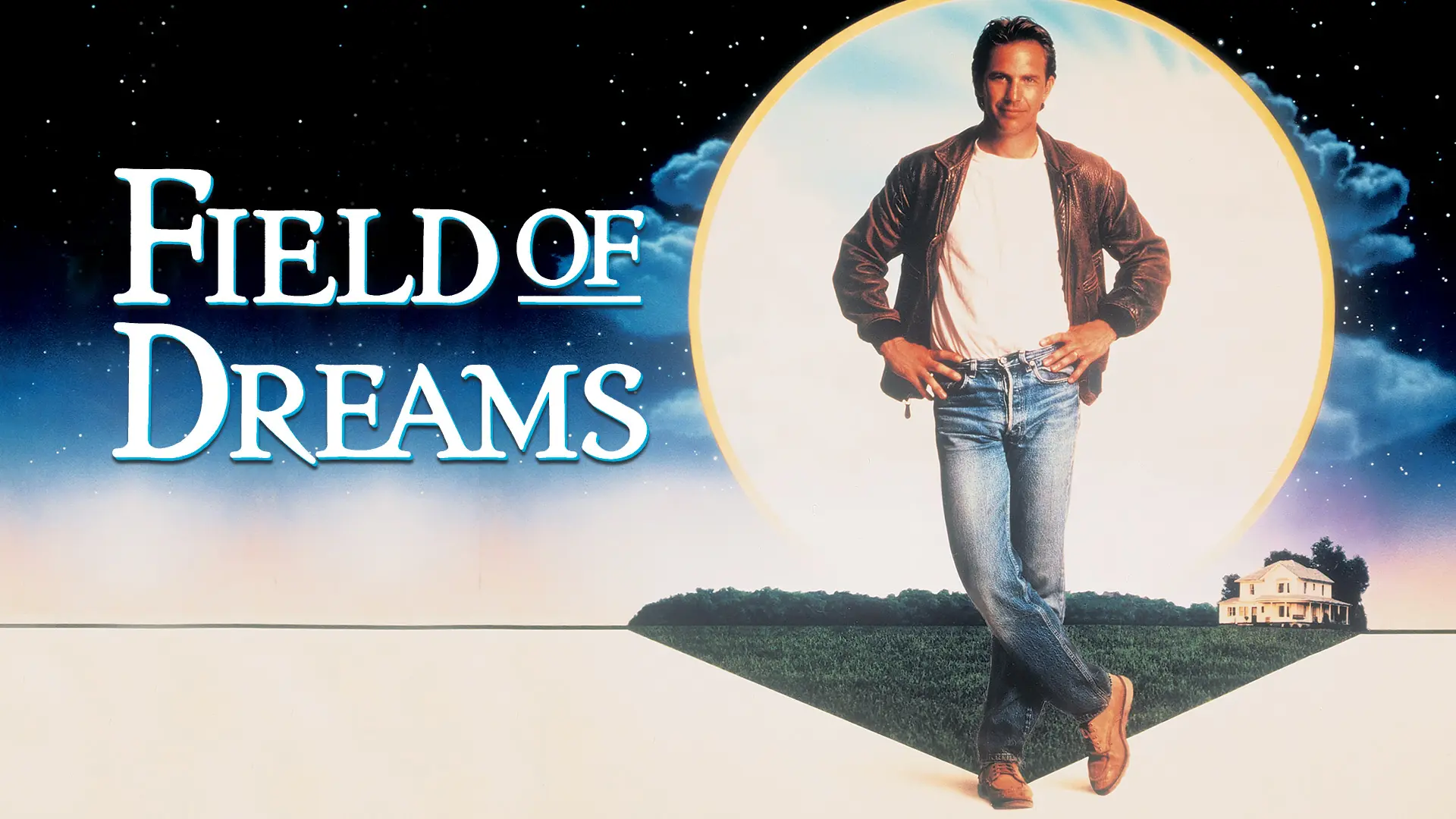
Field of Dreams (released in theaters on April 21, 1989) begins with an ethereal voice whispering to Iowa farmer Ray Kinsella (Kevin Costner), “If you build it, he will come,” sparking one of the most mystical and moving journeys in American cinema. Driven by a vision he barely understands, Ray risks his livelihood by plowing under his corn to build a professional-grade baseball diamond in his backyard.
The plot follows Ray as he follows further cryptic instructions that lead him across the country to recruit reclusive, JD Salinger-esque author Terence Mann (James Earl Jones) and a doctor (Burt Lancaster) who walked away from a professional baseball career decades earlier.
As the field begins to attract the ghosts of the 1919 “Black Sox” team, including the legendary Shoeless Joe Jackson, the narrative transforms from a simple sports fantasy into a profound exploration of second chances and the power of faith.
Ultimately, the field serves as a bridge across time, allowing Ray to confront his own unresolved grief and the fractured relationship with his late father.
Costner delivers a career-defining performance as Ray, embodying the Everyman dreamer with a sincerity that grounds the film’s supernatural elements.
Ray Liotta provides a fierce and enigmatic presence as Shoeless Joe, while Amy Madigan shines as Ray’s fiercely supportive wife, Annie.
The film is elevated by the immense gravitas of the final film appearance of the legendary Lancaster, bringing a sense of historical weight and wisdom to the story.
Supporting turns by Timothy Busfield, Gaby Hoffmann, Frank Whaley, and Dwier Brown – whose brief but pivotal appearance in the finale remains a benchmark for emotional resonance – round out an impeccable ensemble.
Michael Milhoan and Art LaFleur appear as Buck Weaver and Chick Gandil.
Under the direction of Phil Alden Robinson, the film captures a sense of Americana that is both nostalgic and timeless.
Matt Damon and Ben Affleck were extras in the Fenway Park scene.
Field of Dreams was based on W. P. Kinsella’s 1982 novel Shoeless Joe.
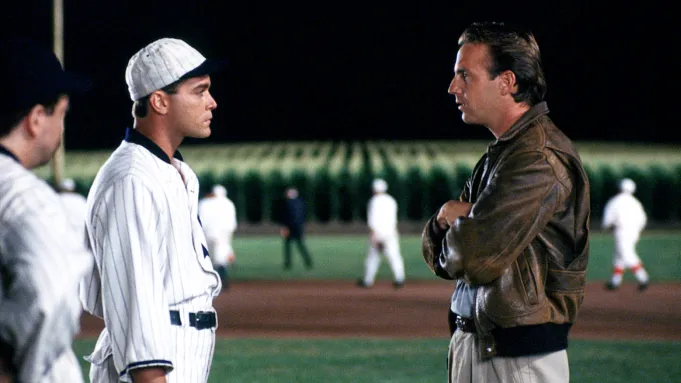
Ray Liotta and Kevin Costner in Field of Dreams (Photo/Universal Pictures)
Reception for Field of Dreams
Field of Dreams grossed $531,346 on its opening weekend, in limited released on 22 screens. Its $24,152 per screen average topped the No. 1 film of the week, Pet Sematary, which pulled in $7,600 per screen.
The film would gross $84.5 million in its theatrical run.
Roger Ebert gave Field of Dreams four out of four stars in his review, saying “This is the kind of movie Frank Capra might have directed, and James Stewart might have starred in—a movie about dreams.”
Legacy
Field of Dreams‘ legacy is monumental, transcending the sports genre to become a cultural metaphor for hope and the pursuit of impossible dreams.
It is frequently cited as one of the most emotionally impactful films ever made, specifically for its themes of paternal reconciliation which have famously made grown men cry for decades.
The phrase “If you build it, he will come” has permeated the global lexicon, and the actual filming location in Dyersville, Iowa, remains a major pilgrimage site for fans.
The movie’s enduring influence was recently celebrated by Major League Baseball with the “Field of Dreams” game, proving that its magic continues to resonate with new generations.
By blending the supernatural with the deeply personal, Field of Dreams solidified its place as a definitive piece of cinematic folklore, reminding audiences that magic can happen in the most ordinary of places if one is willing to listen.