

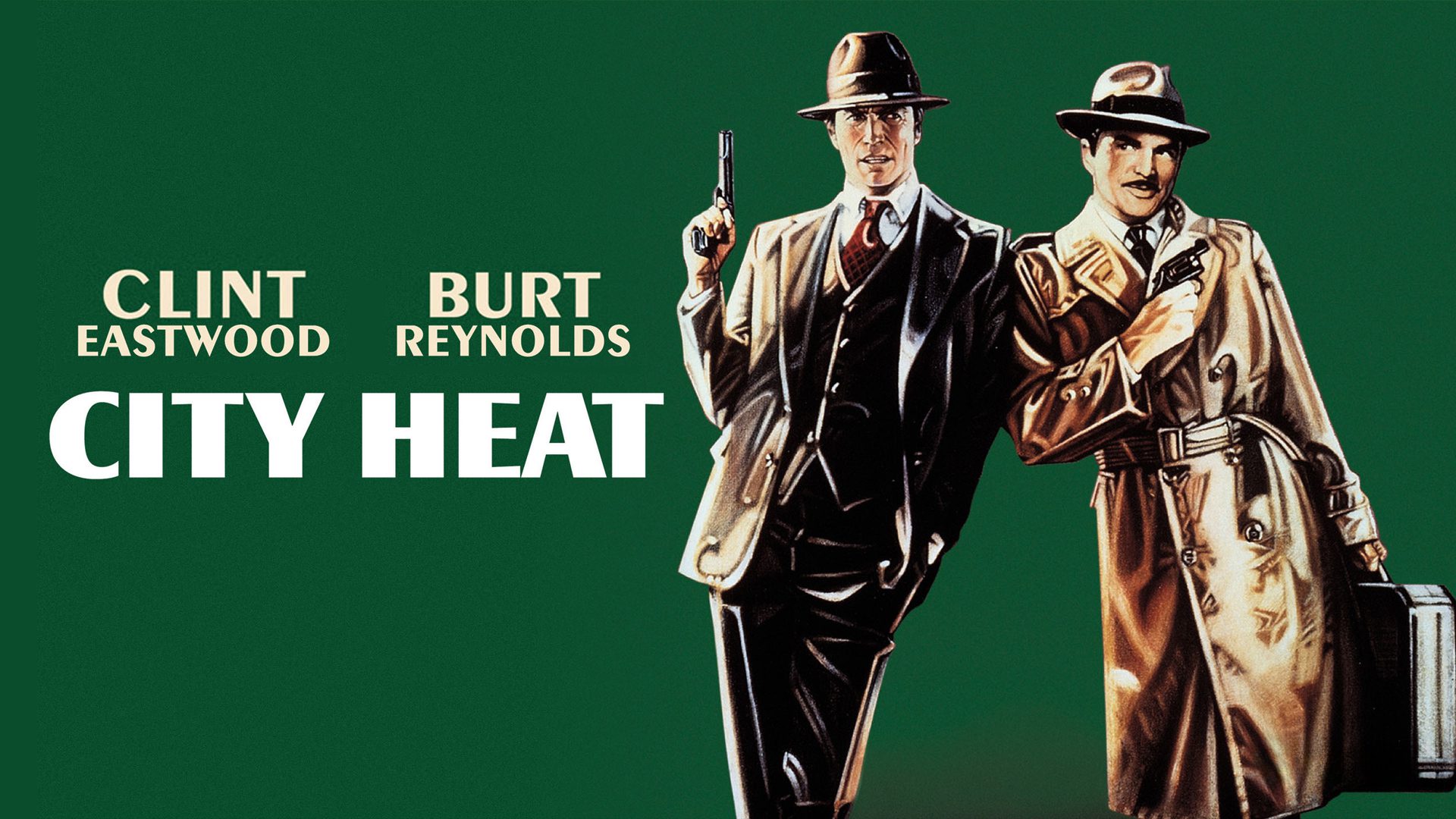
City Heat, released in theaters on December 7, 1984, is a period action-comedy set in the glamorous yet dangerous world of 1930s Kansas City. The film is notable primarily for its high-wattage pairing of two of the era’s biggest box-office stars, Clint Eastwood and Burt Reynolds.
Originally conceived and partially directed by comedy legend Blake Edwards, the final version was helmed by Richard Benjamin after Edwards was replaced, resulting in a somewhat tonally inconsistent but entertaining spectacle.
The year is 1933, just as Prohibition is ending. The story centers on two former partners who now find themselves on opposite sides of the law, yet constantly crossing paths in the city’s criminal landscape.
Mike Murphy (Reynolds) is a flashy, wisecracking private investigator struggling to make ends meet. His former police partner is Lieutenant Speer (Eastwood), a stone-faced, methodical homicide detective who embodies the stark, quiet resolve of the “man with no name” persona, even in a suit.
The plot kicks off when Murphy’s partner, Dehl Swift (Richard Roundtree), is murdered after stumbling upon a ledger containing secrets related to a massive racketeering operation.
Suddenly, Murphy finds himself entangled in a turf war between two ruthless mob bosses: the smooth, established Primo Pitt (Rip Torn), and the hot-headed, ambitious newcomer, Leon Coll (Tony Lo Bianco).
Speer begins to investigate the murder, which inevitably brings him into Murphy’s messy life.
The duo is forced to reluctantly team up to solve the murder and track down the missing ledger, which everyone from the mob to Pitt’s sharp-witted mistress, Caroline Howley (Madeline Kahn), is seeking.
Adding to the chaos is Addy (Jane Alexander), a former flame of Murphy’s who also gets caught up in the mayhem, and Ginny Lee (Irene Cara), a singer who provides a few musical interludes.
Robert Davi, Art LaFleur and Beau Starr round out the supporting cast.
The film delivers a series of shootouts, double-crosses, and chases as the two disparate partners, driven by very different motives, work to clean up the city.
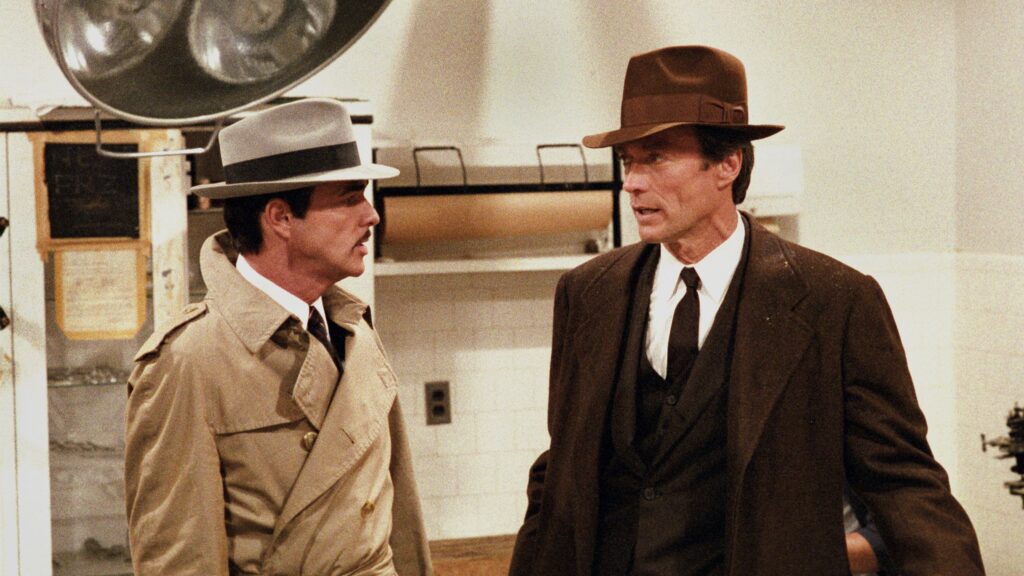
Burt Reynolds and Clint Eastwood in City Heat (Photo/Warner Bros.)
Reception for City Heat
City Heat grossed $6.3 million on its opening weekend, finishing third at the box office behind Beverly Hills Cop ($15.2 million) and 2010: The Year We Make Contact ($7.4 million).
The film would gross $38.4 million in its theatrical run.
Legacy
The enduring legacy of City Heat rests almost entirely on the star power and unique casting of Eastwood and Reynolds.
The film was conceived as a vehicle to pit Reynolds’s signature Southern charm and motor-mouthed antics against Eastwood’s quiet, cool, and commanding presence.
Although their on-screen chemistry is palpable, the production’s behind-the-scenes turmoil—resulting in the tonal shift from Edwards’s slapstick to Benjamin’s more conventional action—means the film never quite lives up to the potential of its premise or its leading men.
Nonetheless, it remains a fascinating curio for fans of both actors, showcasing them at the height of their 1980s celebrity.