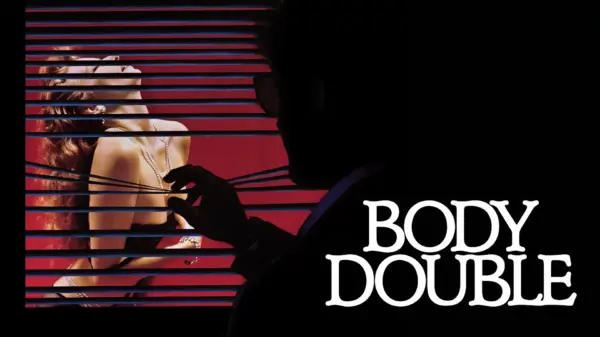










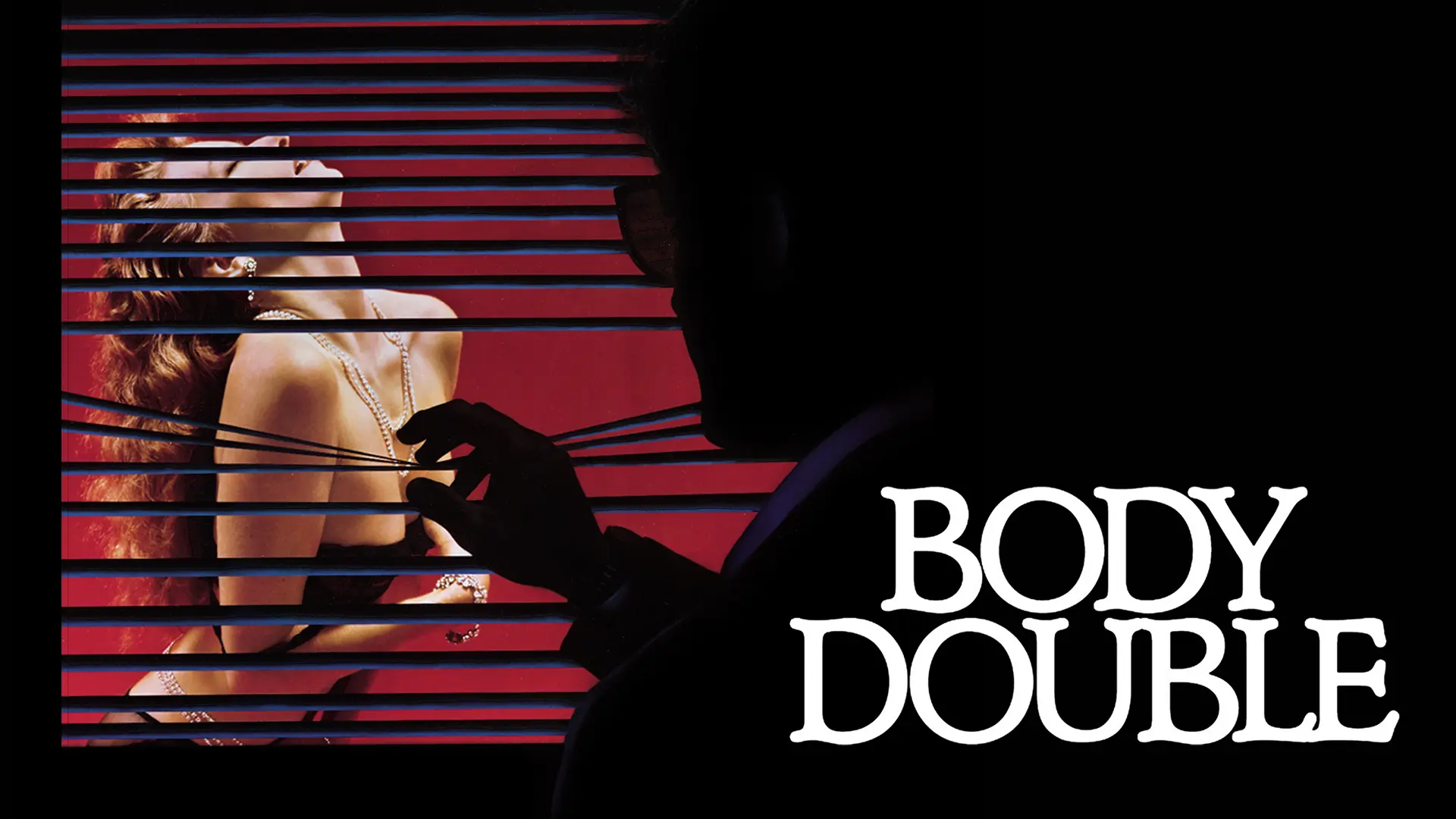
Body Double stands as Brian De Palma’s ultimate homage to Hitchcockian suspense, blending eroticism, voyeurism, and Hollywood satire into a stylish thriller. The story follows Jake Scully (Craig Wasson), a struggling, claustrophobic B-movie actor who finds himself abruptly homeless and unemployed after losing a vampire movie role.
A chance encounter with a slick fellow actor, Sam Bouchard (Gregg Henry), leads Jake to an ideal house-sitting gig in an ultra-modern, rotating hilltop mansion overlooking Los Angeles.
Sam points out a lucrative bonus to the assignment: through a telescope, Jake can watch a gorgeous neighbor, Gloria Revelle (Deborah Shelton), perform a provocative nightly dance in her bedroom window.
Jake quickly becomes obsessed with spying on her, but his harmless surveillance turns perilous when he witnesses a sinister figure threatening her life.
Plagued by his debilitating claustrophobia, Jake fails to prevent a violent crime.
Desperate to uncover the truth and clear his conscience, his investigation drags him into the gritty adult film underworld.
There, he meets adult video performer Holly Body (Melanie Griffith), whose insider knowledge holds the key to unraveling a convoluted web of identity, deception, and murder, while detective Jim McLean (Guy Boyd) tries to piece together the suspicious evidence left behind.
De Palma crafts a tense, visually captivating mystery that functions equally as a critique of cinema itself.
Pino Donaggio’s lush score enhances the surreal atmosphere, matching De Palma’s split-screen techniques, dramatic camera sweeps, and signature split-diopter shots.
Wasson delivers a sympathetic lead performance, grounding the absurdities of the narrative, while Griffith turns in a standout, charismatic turn that balances toughness with vulnerability.
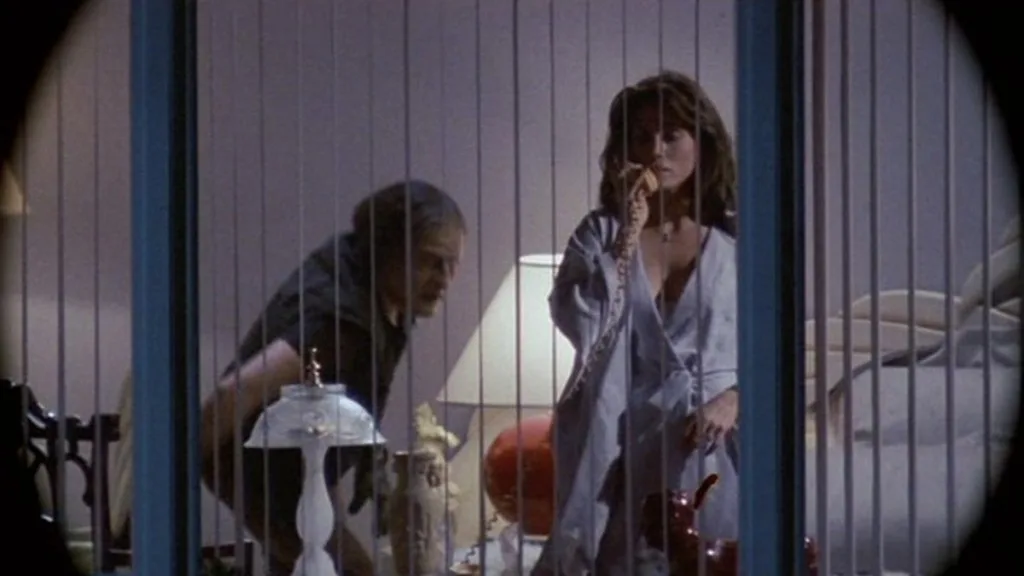
Deborah Shelton in Body Double (Photo/Columbia Pictures)
Reception for Body Double
Body Double grossed $2.8 million on its opening weekend, finishing third at the box office behind The Terminator ($4.02 million) and Terror in the Aisles ($4 million).
The film would gross $8.8 million in its theatrical run.
Roger Ebert gave Body Double three and a half stars in his review.
Legacy
Body Double‘s legacy remains a fascinating chapter in 1980s cinema.
Initially polarizing critics and audiences due to its intense violence, brazen erotic content, and unapologetic self-indulgence, it has steadily grown in stature to become a quintessential cult classic.
Body Double is remembered as one of De Palma’s most self-aware masterpieces.
Its hyper-stylized aesthetic, memorable music-video interlude featuring Frankie Goes to Hollywood, and razor-sharp satire of Hollywood’s superficial nature heavily influenced the visual identity of neon-drenched neo-noirs and thriller subgenres for decades to come.