
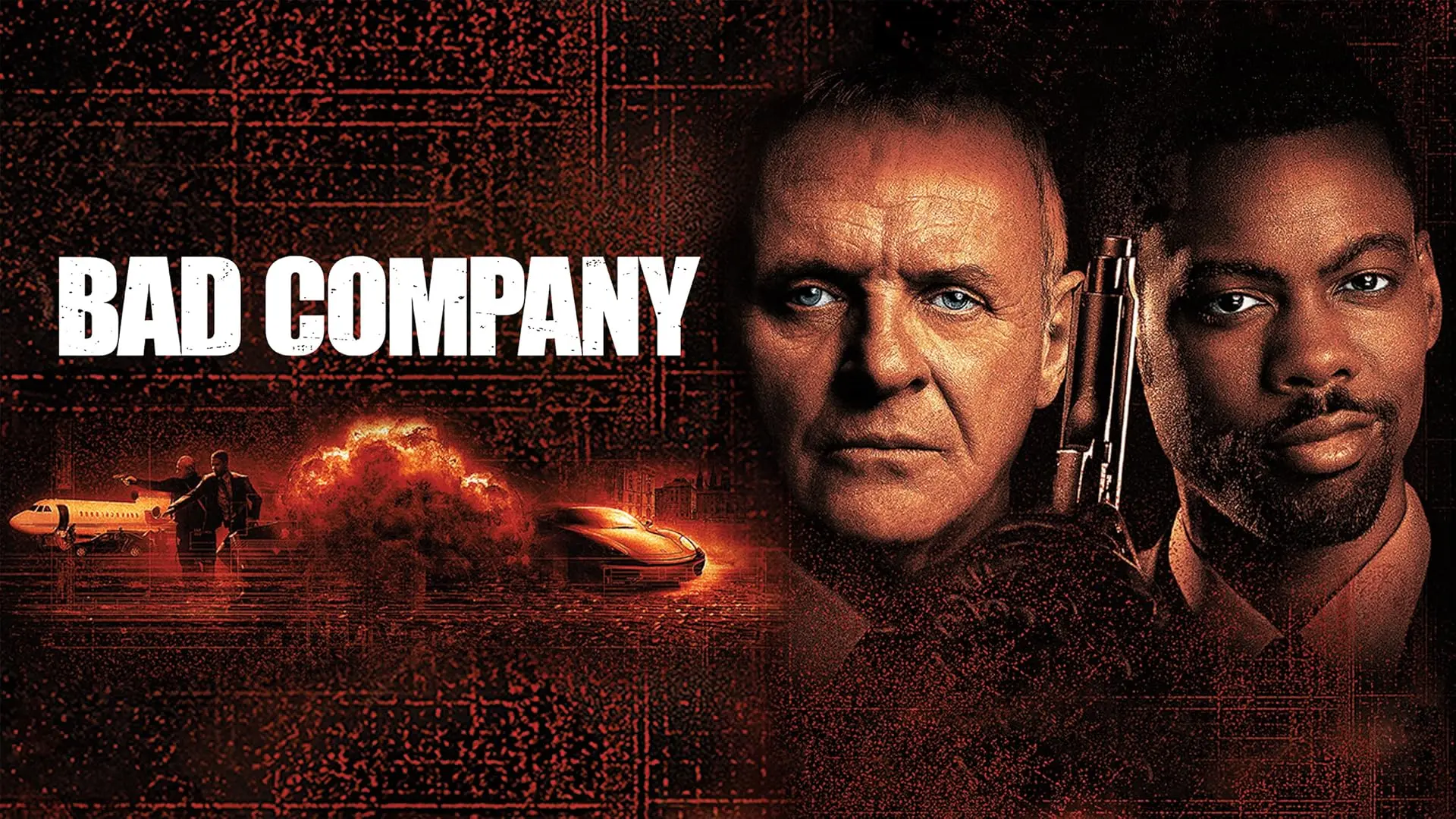
The plot kicks into gear as Oakes faces the near-impossible challenge of transforming Jake into a refined international secret agent in less than a week.
With tech-support backing from fellow field operatives like Seale (Gabriel Macht) and agency supervisor Roland Yates (John Slattery), the intense crash course is constantly disrupted by Jake’s erratic behavior and his desperate attempts to reconnect with his unsuspecting girlfriend, Julie (Kerry Washington).
The narrative rapidly moves across Europe as Jake is plunged directly into the dangerous underworld of Prague.
There, he must negotiate with Adrik Vas (Peter Stormare), a ruthless, unhinged Russian black-market dealer who is prepared to sell the weapon to a terrorist cell.
When the terrorists discover the ruse and kidnap Julie to use as leverage, Jake and Oakes must fully trust each other’s wildly different skills, culminating in a high-octane, race-against-the-clock showdown in New York City to defuse the bomb and save the day.
Director Joel Schumacher injects the film with his signature kinetic energy and sleek visual flair, utilizing slick cinematography and high-octane action sequences.
Produced by Jerry Bruckheimer, the blockbuster elements are out in full force, shifting from explosive gunfights to high-speed car chases.
Rock brings immense energy and signature comedic timing to his dual roles, acting as a great comedic engine against Hopkins’s impeccable, deadpan stoicism.
Michael Ealy, Shea Whigham and Charlie Day all appear in the film.
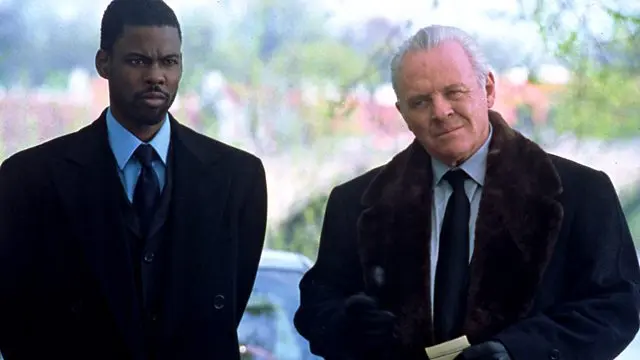
Chris Rock and Anthony Hopkins in Bad Company (Photo/Touchstone Pictures)
Reception for Bad Company
Bad Company grossed $11 million on its opening weekend, finishing fourth at the box office.
The film would gross $66 million worldwide.
Roger Ebert gave Bad Company two out of four stars in his review.
Legacy
Bad Company‘s legacy rests on its historic position as a definitive time capsule of Hollywood’s major transition period in blockbusters immediately following the events of September 11. Initially scheduled for a late 2001 release, the heavy nuclear terrorism themes necessitated a significant delay, making it one of the final massive action-comedies of its kind to be evaluated by a drastically altered cultural landscape.
It stands as a fascinating cross-genre experiment that fused Bruckheimer’s glossy, big-budget action aesthetic with the classic, mismatched buddy-cop framework popularized in the eighties.
While Bad Company marked one of the final collaborations of its specific high-concept era, the movie remains an entertaining, nostalgic cult favorite among fans of the genre, celebrated for its unique pairing of two radically different cinematic icons, its pulsing electronic soundtrack, and its fast-paced, uncritical popcorn thrills.