









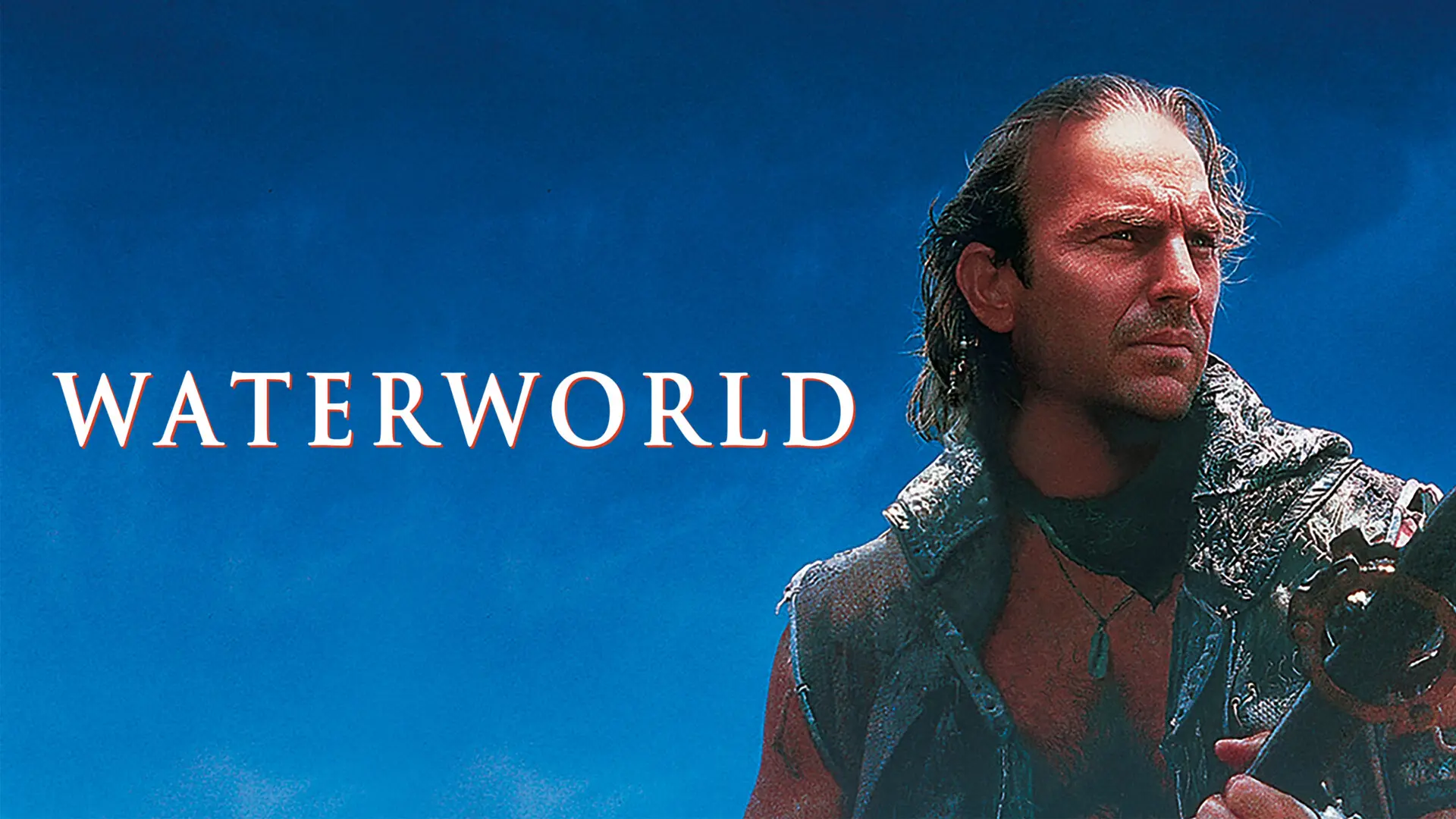
Waterworld (released in theaters on July 28, 1995) plunges audiences into a bleak, flooded future where the polar ice caps have completely melted, submerging Earth’s continents beneath an endless global ocean. Directed with grand scale by Kevin Reynolds, the story centers on the Mariner (Kevin Costner), a cynical, webbed-toed mutant who survives alone on his high-tech trimaran by scavenging precious dirt and sunken relics from the sea floor.
When the Mariner visits a floating outpost known as an Atoll to trade soil, he unexpectedly becomes the protector of a woman named Helen (Jeanne Tripplehorn) and her young ward Enola (Tina Majorino), a girl bearing a cryptic tattoo on her back rumored to be a map to the legendary “Dryland.”
Their fragile sanctuary is destroyed when the Smokers – a ruthless gang of jet-skiing pirates led by the charismatic, one-eyed Deacon (Dennis Hopper) – decimate the Atoll to kidnap Enola and claim Dryland for themselves. Escaping the assault, the Mariner reluctantly sails away with Helen and Enola, gradually forming a protective bond as they evade Deacon’s relentlessly pursuing fleet.
Assisted by the eccentric inventor Gregor (Michael Jeter), who works to decipher the mysterious symbols tattooed on Enola, the Mariner is forced to confront his solitary nature, wage an explosive war against Deacon’s oil-obsessed army, and rescue the girl from a rusting supertanker before humanity’s last hope disappears forever beneath the waves.
Kim Coates, R.D. Call, Zakes Mokae, and Jack Black round out the supporting cast.
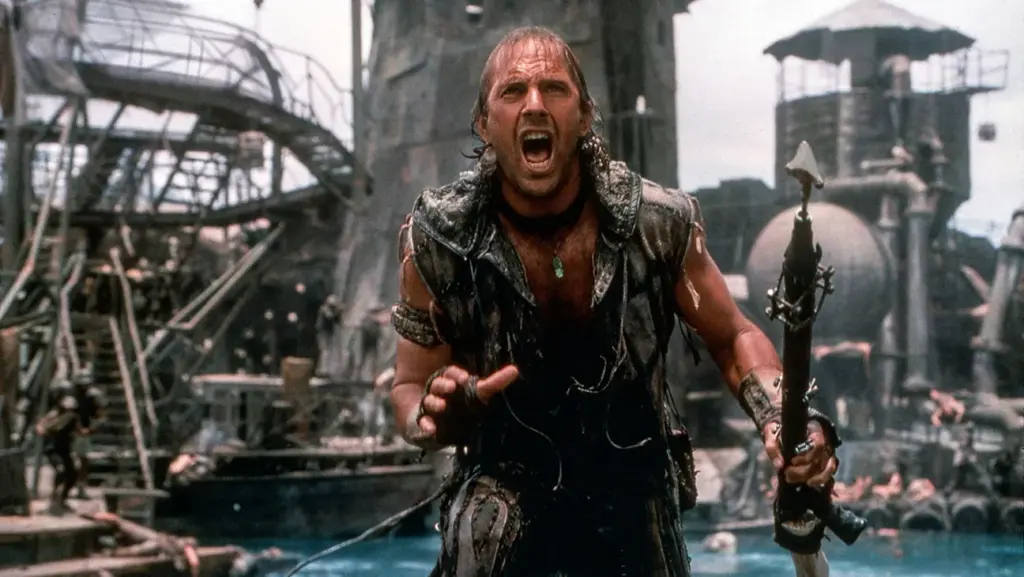
Kevin Costner in Waterworld (Photo/Universal Pictures)
Reception for Waterworld
Waterworld grossed $21.2 million on its opening weekend, finishing No. 1 at the box office.
The film would gross $264.2 million worldwide.
Waterworld was nominated for an Academy Award in the category Best Sound at the 68th Academy Awards.
Roger Ebert gave Waterworld two and a half out of four stars in his review.
Legacy
Waterworld‘s legacy is one of the most remarkable turnarounds in Hollywood history, evolving over time from a notorious media punchline into a revered 1990s cult favorite. Initially plagued by a ballooning budget (it was the most expensive film ever made at that time), oceanic shooting disasters, and publicized creative clashes, the feature defied its early “box office flop” narrative by becoming a global financial success.
Action and sci-fi fans celebrate the spectacle for Waterworld‘s astonishing commitment to practical effects, massive physical set builds, and relentless stunt choreography that stands in stark contrast to modern green-screen blockbusters.
Its cultural footprint is permanently anchored by Universal Studios’ long-running, award-winning live stunt show attraction, which continues to thrill millions of theme park visitors decades after the movie’s theatrical release.