






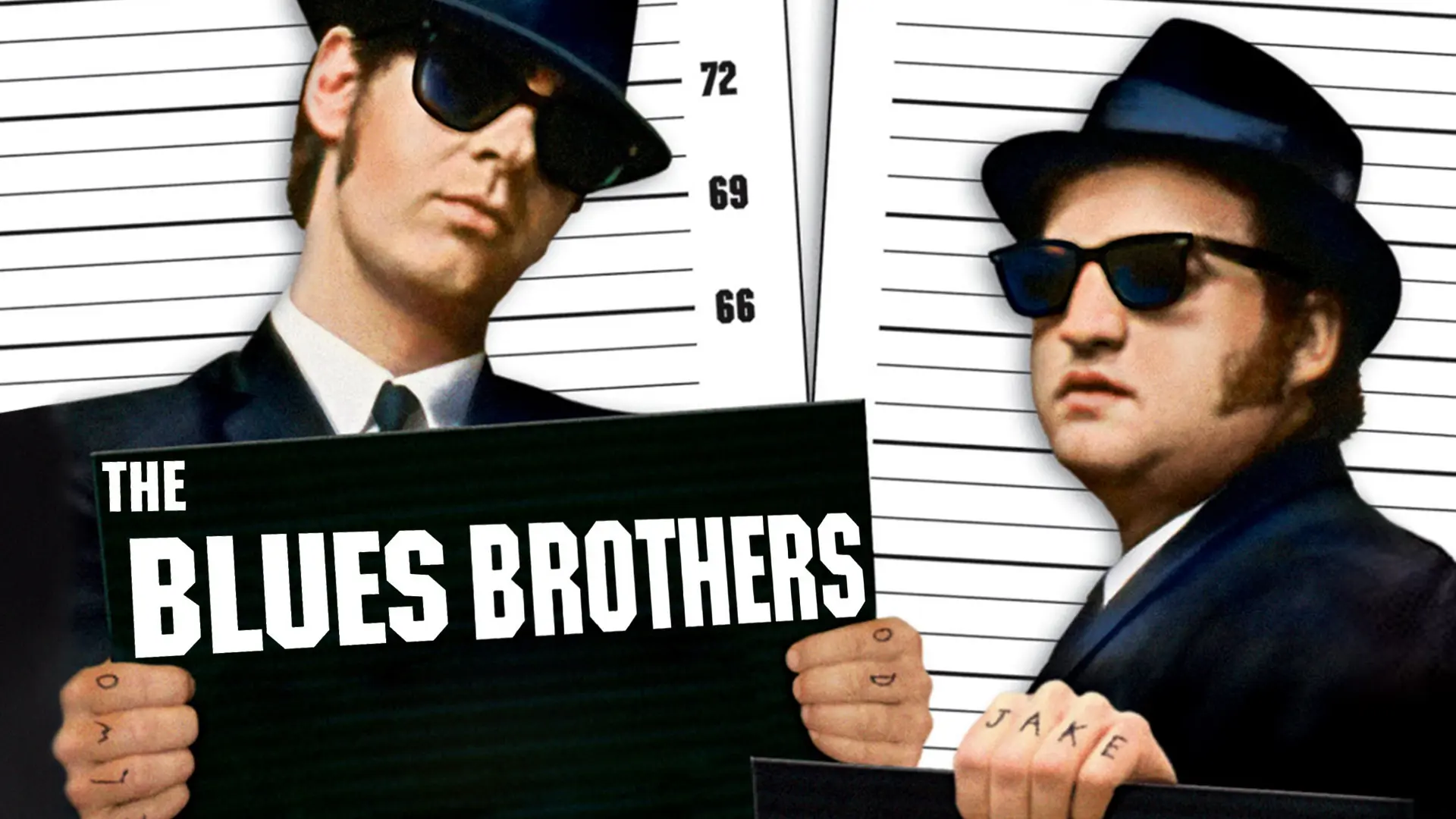
The Blues Brothers (released in theaters on June 20, 1980) explodes onto the screen as deadpan blues frontman “Joliet” Jake Blues (John Belushi) is paroled from prison, greeted at the gates by his taciturn, harmonica-playing brother, Elwood (Dan Aykroyd), in a battered, decommissioned Mount Prospect police cruiser.
The brothers visit the Roman Catholic orphanage where they were raised, only to learn from the fierce Sister Mary Stigmata (Kathleen Freeman) that the institution faces foreclosure unless its property tax bill is paid within days.
Advised by the orphanage’s wise caretaker, Curtis (Cab Calloway), Jake and Elwood seek spiritual guidance at a neighborhood church.
There, a sweat-drenched, musical sermon by the energetic Reverend Cleophus James (James Brown) strikes Jake with a literal bolt of divine inspiration, prompting the brothers to declare that they are embarking on a sacred “mission from God” to reassemble their rhythm-and-blues band and raise the money legally.
The plot shifts into a chaotic, musical road trip across Illinois as the duo tracks down their estranged musicians, navigating a mind-boggling array of furious enemies.
Along the way, they swap lines with a rhythm-heavy music store owner (Ray Charles) and a fierce diner owner (Aretha Franklin).
Their journey becomes incredibly dangerous as they are relentlessly hunted by a heavily armed, unnamed mystery woman (Carrie Fisher) armed with bazookas and assault rifles, determined to assassinate Jake.
Simultaneously, they draw the wrath of a bumbling group of Illinois Nazis led by a fanatic commander (Henry Gibson), a redneck country band fronted by Tucker McElroy (Charles Napier), an persistent state trooper (Steven Williams), and a massive task force of state police led by a relentless investigator (John Candy).
After playing a legendary, packed theater gig, the brothers make a frantic, rubber-burning dash to downtown Chicago, executing the most destructive car chase in movie history.
Accompanied by cameos like a straight-faced corrections officer (Frank Oz), the brothers smash their way into the county building to deliver the cash just before the law catches up.
Director John Landis mounts a masterfully chaotic production, successfully blending dry, deadpan comedy, jaw-dropping practical vehicle stunts, and legendary musical numbers.
Belushi and Aykroyd share a brilliant, unshakeable chemistry, performing their choreography with total commitment, while the supporting cast of musical icons delivers legendary, unmatched energy.
Blues Brothers 2000 starring Aykroyd, John Goodman and Joe Morton followed in 1998.
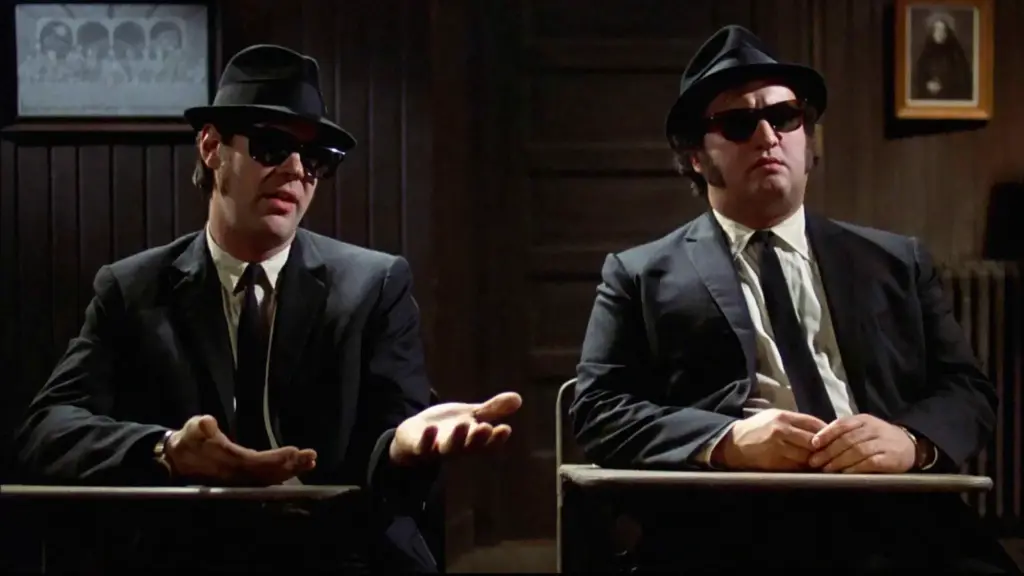
Dan Aykroyd and John Belushi in The Blues Brothers (Photo/Universal Pictures)
Reception for The Blues Brothers
The Blues Brothers grossed $4.9 million on its opening weekend, finishing second at the box office behind The Empire Strikes Back ($10.8 million) on its fifth weekend.
The film would gross $115.2 million worldwide.
Roger Ebert gave The Blues Brothers three out of four stars in his review.
Lasting Legacy
The Blues Brothers‘ legacy stands permanently as a monumental pillar of American musical and comedic cinema. It successfully transformed a popular Saturday Night Live sketch into a sweeping, multi-genre epic that effectively introduced classic rhythm, blues, and soul music to an entirely new generation of fans.
The movie is widely celebrated by film historians for its absolute reliance on practical, gravity-defying car crashes, holding a long-standing record for the sheer number of vehicles destroyed during production.
The Blues Brothers‘ iconic aesthetic of black suits, fedoras, and dark sunglasses remains universally recognized global iconography, celebrated for its raw energy, its timeless soundtrack, and its beautifully chaotic celebration of American roots music.