




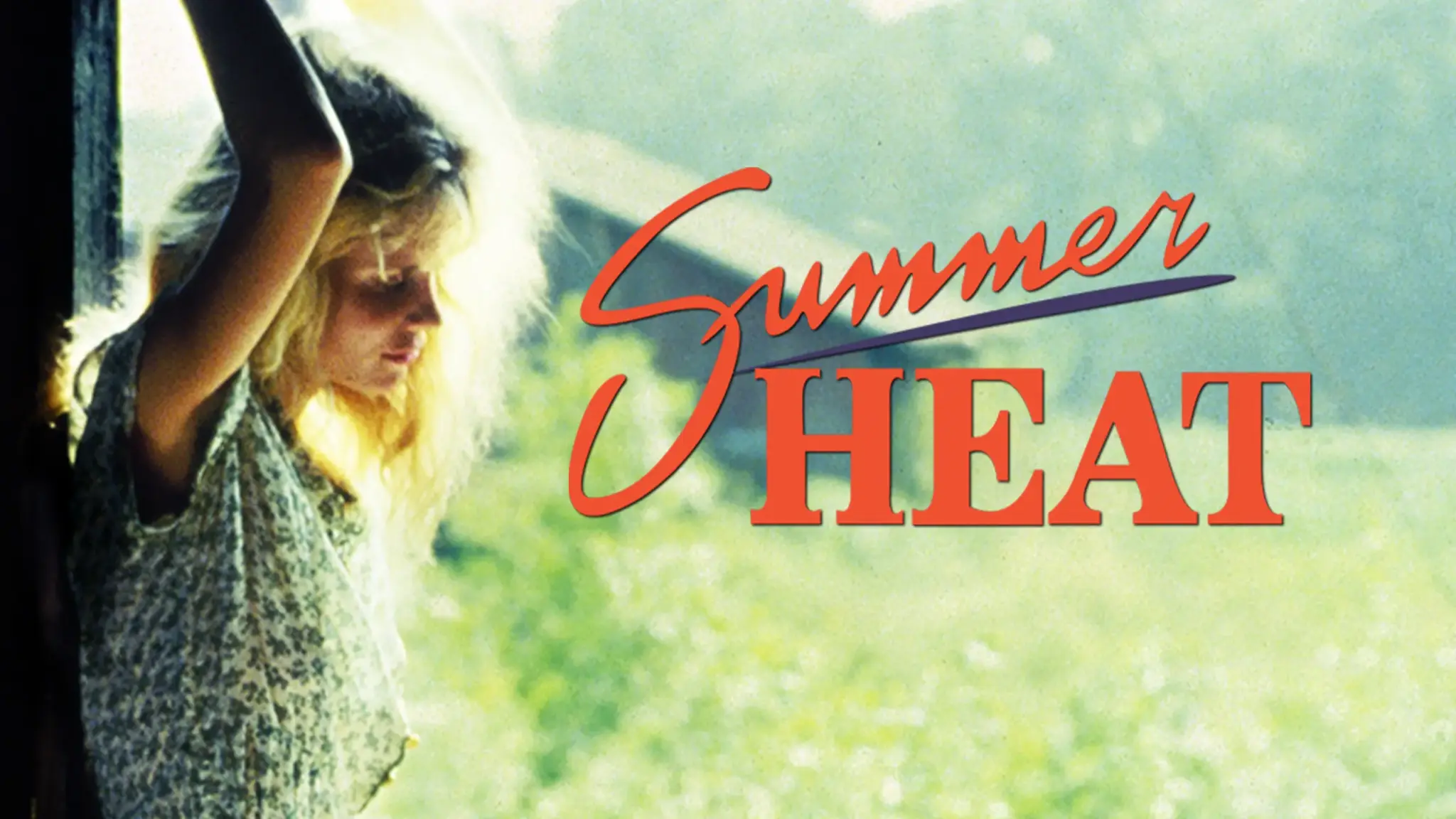
Summer Heat (released in theaters on May 29, 1987) is a sultry drama set in the sweltering rural landscape of 1930s North Carolina, where the oppressive humidity mirrors the rising tensions of its central characters. The story follows Roxy Walston (Lori Singer), a beautiful and restless young woman married to a much older, stern tobacco farmer named Aaron (Anthony Edwards).
Their marriage is one of convenience and quiet desperation, stifled by the grueling demands of farm life and Aaron’s rigid personality.
The status quo is shattered with the arrival of Jack Ruffin (Bruce Abbott), a handsome and drifter-like hired hand who exudes a raw, dangerous energy.
As the record-breaking heatwave intensifies, Roxy and Jack begin a clandestine and volatile affair.
Their passion quickly spirals out of control, leading to a web of betrayal and violence that threatens to destroy everyone involved.
Amidst the unfolding scandal, Kathy Bates delivers a grounding performance as Ruth, a local woman who witnesses the moral decay of her neighbors, while Clu Gulager provides a seasoned presence as a figure of local authority.
Directed by Michie Gleason, the film leans heavily into its Southern Gothic atmosphere, using the visceral setting to heighten the stakes of a classic “femme fatale” narrative.
The plot eventually shifts from a slow-burn romance into a dark crime thriller as Roxy and Jack’s desperation leads them toward a point of no return.
The film captures the feeling of a world where poverty and heat strip away the veneers of civility, leaving only raw instinct and the consequences of forbidden desire.
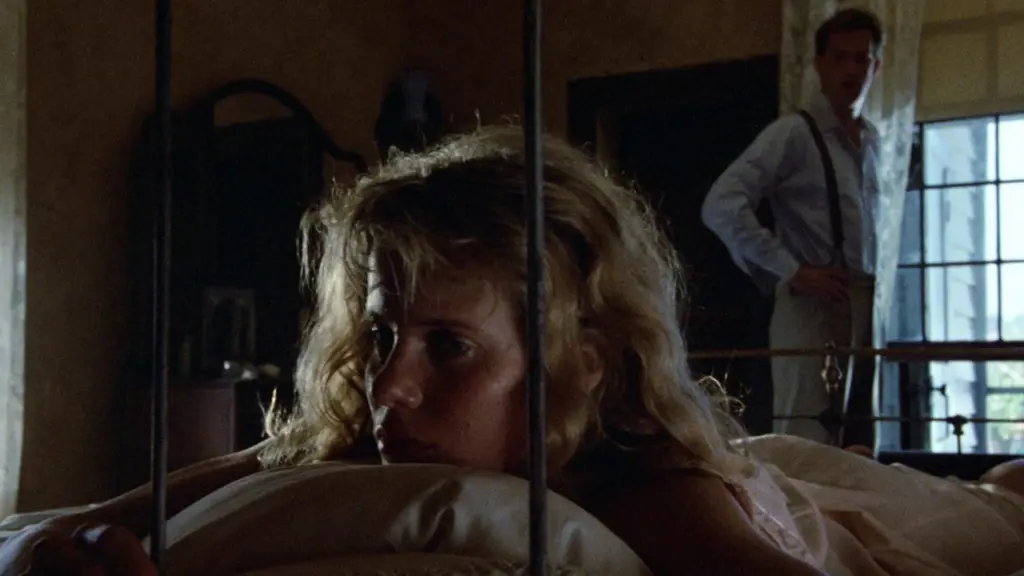
Lori Singer in Summer Heat (Photo/Atlantic Releasing Corporation)
Reception for Summer Heat
Summer Heat grossed $114,783 on its opening weekend, finishing 13th at the box office – in limited release on 36 screens.
The top film of the week was Beverly Hills Cop II, which earned $17.1 million on its second weekend.
Summer Heat grossed $350,481 in its theatrical run.
Legacy
Summer Heat‘s legacy is characterized by its evocative atmosphere and its role in the wave of “neo-noir” dramas that proliferated during the late 1980s.
It is remembered for its striking visual style and for providing a departure for Edwards, who played against his usual “nice guy” type to portray a hardened, cuckolded husband.
While it remains a lesser-known entry in the Southern Gothic genre compared to major studio releases, it has maintained a following for its lush cinematography and the chemistry between Singer and Abbott.
The movie serves as a time capsule of 1980s independent filmmaking that sought to revive the grit of 1930s pulp fiction with a modern, sensual edge.