











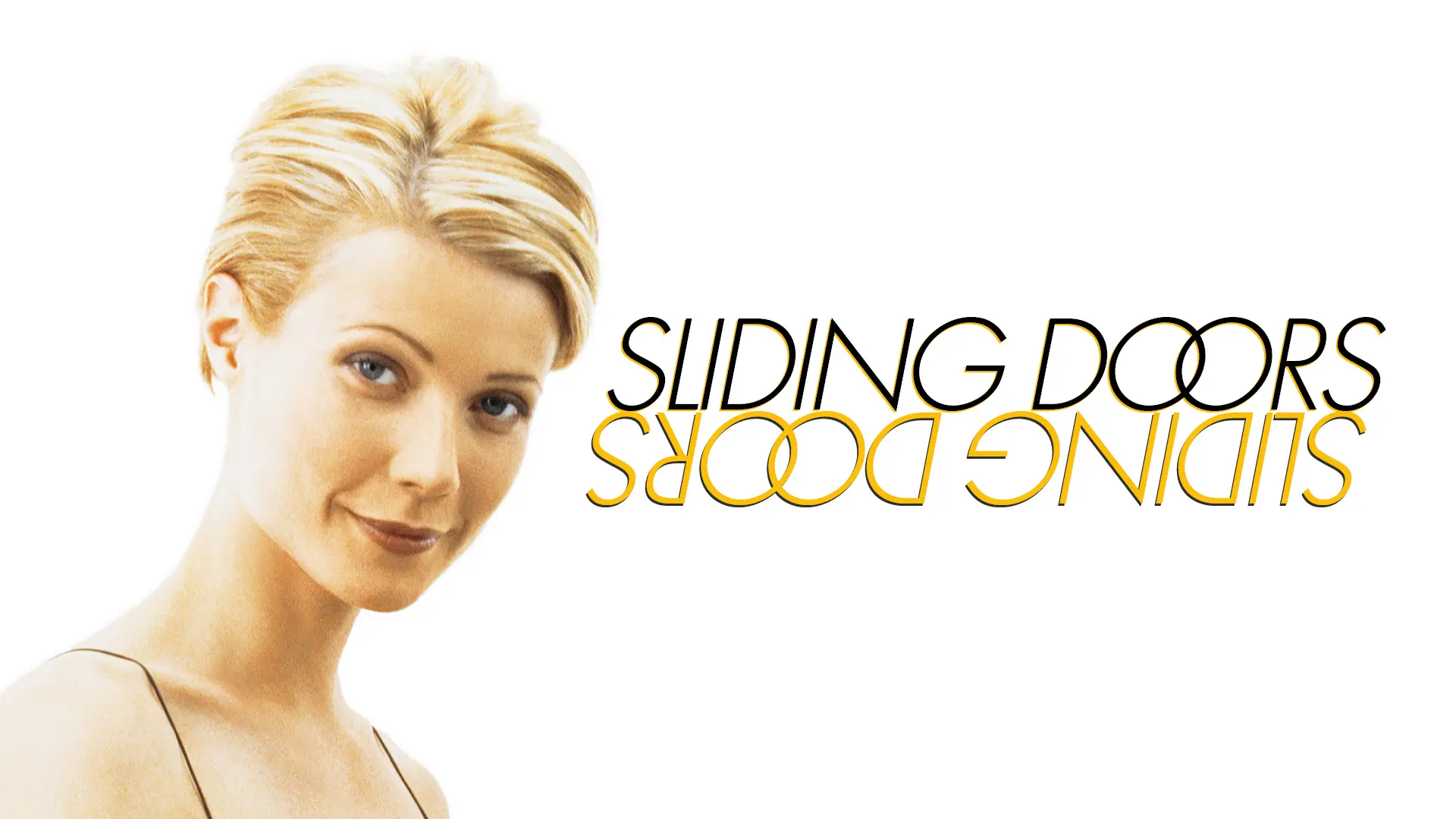
Sliding Doors (released on April 24, 1998) introduces Helen Quilley (Gwyneth Paltrow), a London public relations executive whose life fractures into two distinct, parallel realities based on a single, split-second variable. After being abruptly fired from her job, Helen rushes to the London Underground to catch a train.
In the first reality, she successfully squeezes through the train’s closing doors, striking up an immediate conversation with a charming, fast-talking stranger named James Hammerton (John Hannah).
Arriving home early, she walks in on her slacker boyfriend, Gerry (John Lynch), in bed with his conniving American ex-girlfriend, Lydia (Jeanne Tripplehorn).
Heartbroken but liberated, Helen walks out, chops her hair into a chic blonde pixie cut, establishes her own PR firm, and falls deeply in love with the supportive James.
The plot takes a drastically different path in the second reality, where Helen is momentarily delayed by a young girl and misses the train entirely.
Forced to take a taxi, she is mugged on the street, which delays her return home just long enough for Lydia to sneak out undetected.
Unaware of Gerry’s ongoing betrayal, a exhausted Helen takes multiple menial jobs to financially support his struggling writing career, while Gerry desperately juggles his double life and manages Lydia’s constant demands.
Writer-director Peter Howitt masterfully cross-cuts between these two realities, utilizing subtle visual cues like Helen’s changing hairstyles to help the audience seamlessly track her divergent journeys.
Both storylines build toward dramatic, life-altering medical emergencies, eventually converging on a bittersweet note that suggests destiny has a way of finding us regardless of the paths we take.
Howitt guides the film with an exceptionally sharp sense of rhythm, ensuring that the complex, dual-narrative structure never feels confusing.
Paltrow gives an incredibly versatile performance, successfully conveying two entirely different emotional states of the same woman with immense charm and nuance.
Hannah provides a breath of fresh air as the witty, quote-loving romantic lead, while Tripplehorn acts as a wonderfully frantic, manipulative antagonist.

Gwyneth Paltrow in Sliding Doors (Photo/Miramax Films)
Reception for Sliding Doors
Sliding Doors grossed $834,817 on its opening weekend, finishing 17th at the box office in limited release.
The film grossed $67 million worldwide.
Roger Ebert gave Sliding Doors two out of four stars in his review.
Legacy
Sliding Doors‘ legacy rests on how it successfully transformed a niche philosophical concept into a permanent, everyday pop-culture idiom. The phrase “sliding doors moment” has crossed over into the global lexicon, universally used to describe a seemingly insignificant choice or micro-moment that completely reshapes the trajectory of a person’s life.
It stands as a landmark achievement in the late-nineties British romantic comedy boom, praised for injecting fresh narrative innovation into a standard romance formula.
By seamlessly blending a high-concept multi-verse structure with down-to-earth human drama, the movie directly inspired future filmmakers across television and cinema to experiment with parallel timelines.
Sliding Doors remains a beloved, highly influential classic that continues to make audiences contemplate their own cosmic “what-ifs.”