





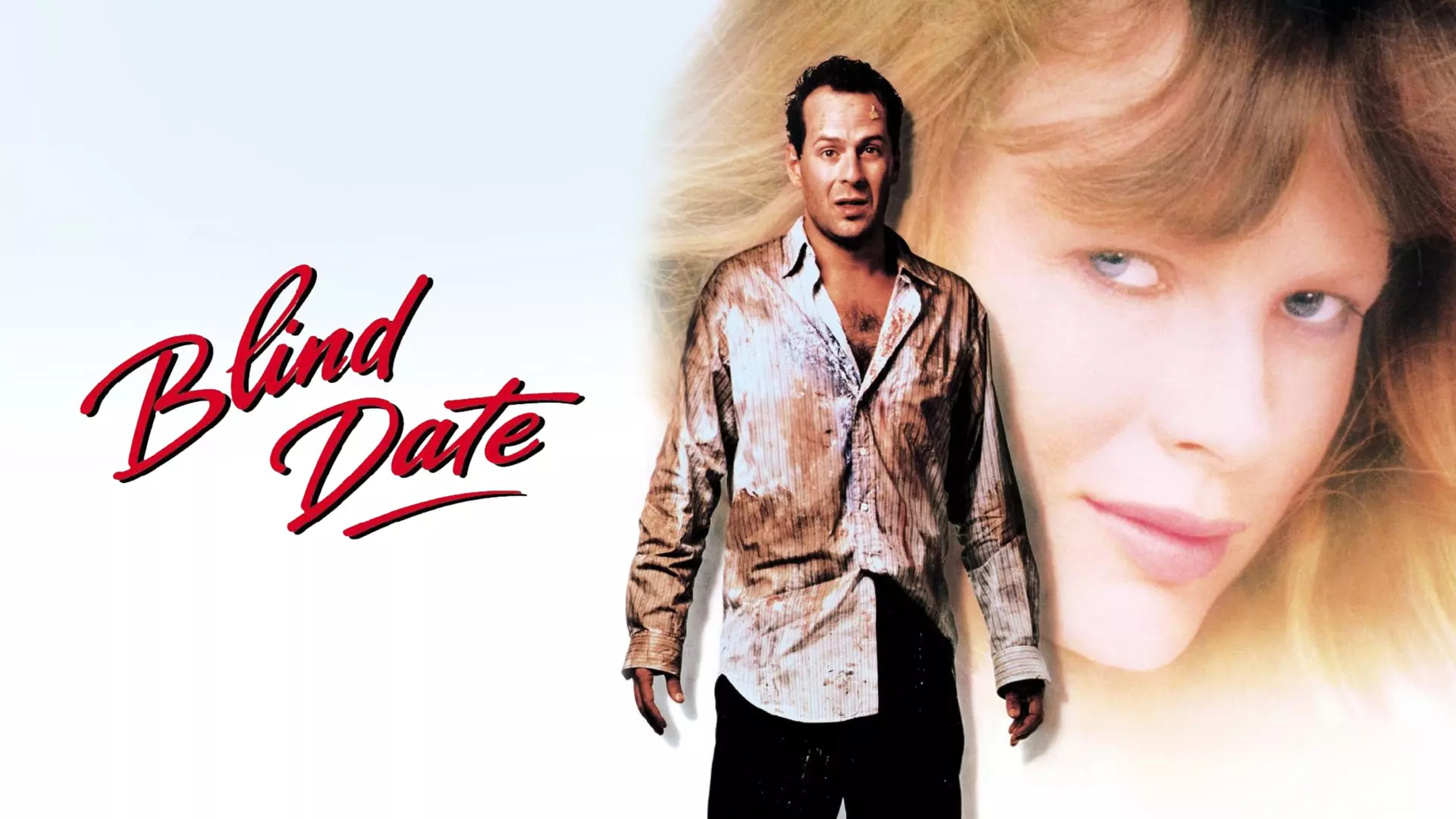
Blind Date (released in theaters on March 27, 1987) kicks off with Walter Davis, a workaholic financial analyst played by Bruce Willis, who is in desperate need of a date for a high-stakes business dinner with a traditional Japanese client.
To solve his problem, his brother (Mark Blum) sets him up with the stunning but volatile Nadia Gates (Kim Basinger).
The plot hinges on one crucial warning: whatever Walter does, he must not let Nadia drink alcohol, as she undergoes a wild and uncontrollable personality shift after just one sip.
Predictably, Walter fails to heed this advice during an early toast, and the evening quickly spirals into a chaotic odyssey through the streets of Los Angeles.
As Nadia’s inhibitions vanish, she proceeds to sabotage Walter’s career aspirations by humiliating his boss and offending his prestigious clients.
The disaster is further complicated by the appearance of David Bedford, Nadia’s pathologically jealous and wealthy ex-boyfriend played by John Larroquette, who stalks the couple in his car and repeatedly attempts to assault Walter.
William Daniels adds to the comedic friction as David’s father, a judge who eventually finds himself presiding over the legal fallout of the night’s mayhem.
The narrative follows Walter as he loses his job, his car, and his dignity, only to realize that the unpredictable Nadia might be exactly what his rigid, boring life was missing.
Directed by the legendary Blake Edwards, the film operates as a high-energy screwball comedy that relies heavily on the physical comedy and comedic timing of its leads.
Willis, in his first major leading film role, successfully transitions from his Moonlighting persona into a cinematic “everyman” capable of handling both deadpan reactions and frantic slapstick.
Basinger delivers a fearless performance, fully committing to the escalating absurdity of Nadia’s drunken antics.
Larroquette steals nearly every scene he is in, providing a cartoonishly villainous energy that keeps the pacing brisk and the stakes high.
Phil Hartman, Stephanie Faracy and George Coe round out the cast.
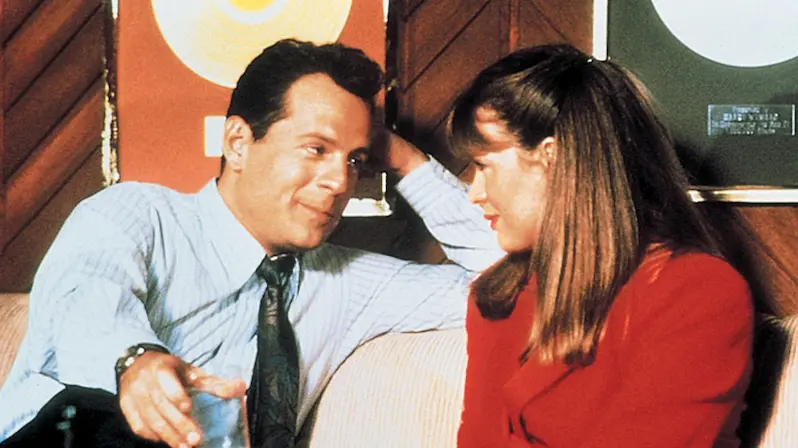
Bruce Willis and Kim Basinger in Blind Date (Photo/TriStar Pictures)
Reception for Blind Date
Blind Date grossed $7.5 million on its opening weekend, finishing No. 1 at the box office.
The film would gross $39.3 million in its theatrical run.
Roger Ebert gave Blind Date two and a half out of four stars in his review.
Legacy
The legacy of this 1987 hit is defined by its role as a vital stepping stone in Willis’ career, proving he could carry a major Hollywood production before he became an action icon in Die Hard.
Blind Date remains a quintessential example of Edwards’ late-career work, blending the sophisticated urban humor of his earlier hits with the broad, physical gags that defined 1980s cinema.
The film is frequently revisited for its nostalgic depiction of Los Angeles nightlife and its status as a foundational “night from hell” comedy.
Blind Date serves as a colorful reminder of an era when mid-budget, star-driven comedies could dominate the box office, leaving a lasting impression on the romantic-comedy genre through its unapologetic embrace of pure, unadulterated chaos.