













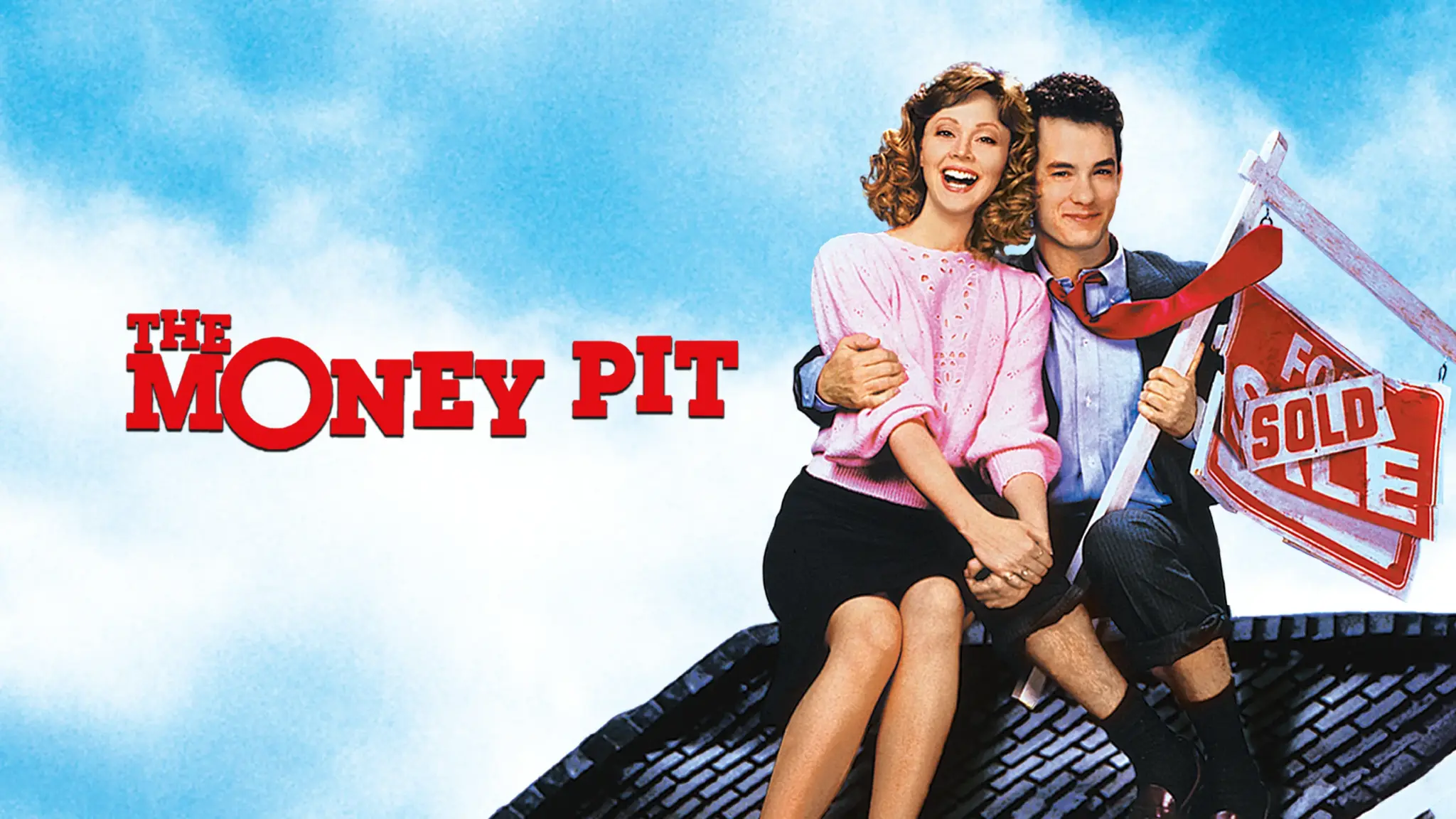
The Money Pit (released in theaters on March 26, 1986) demolishes the screen with relentless slapstick energy and manic charm, standing out as one of the quintessential home-renovation comedies of the 1980s. Directed by Richard Benjamin, the plot follows young, unmarried Manhattan couple Walter Fielding Jr. (Tom Hanks), a soft-spoken entertainment lawyer, and Anna Crowley (Shelley Long), a talented classical musician.
When Anna’s ex-husband, a flamboyant, world-renowned conductor named Max Beissart (Alexander Godunov), unexpectedly returns to reclaim his luxurious apartment, the couple is forced to find a new place to live on short notice.
They meet an eccentric elderly woman, Estelle (Maureen Stapleton), who offers them a stunning, palatial country estate in Connecticut for a shockingly low price, claiming she must sell immediately to rescue her husband.
Convinced they have stumbled onto the deal of a lifetime, Walter and Anna buy the mansion, only to discover too late that it is a structurally disastrous money trap.
The moment they move in, the house literally disintegrates around them – the front door collapses, the staircase caves in, the plumbing explodes, the electrical wiring catches fire, and a raccoon resides inside the dumbwaiter.
To fix the apocalyptic damage, Walter hires a shady contractor, Art Shirk (Joe Mantegna), who brings in an endless army of incompetent, overpriced laborers like the corrupt inspector (Philip Bosco) and tradesmen played by Frankie Faison, Josh Mostel, and Yakov Smirnoff.
As the renovation costs skyrocket out of control and the house remains a dangerous construction zone for months, the intense stress pushes Walter and Anna’s relationship to the breaking point, forcing them to fight for both their home and their love.

Tom Hanks in The Money Pit (Photo/Universal Pictures)
Reception for The Money Pit
The Money Pit grossed $5.3 million on its opening weekend, finishing No. 2 at the box office.
The film would gross $55 million in its theatrical run.
Roger Ebert gave The Money Pit one out of four stars in his review.
Legacy
The Money Pit‘s legacy is firmly established, widely celebrated as an enduring 1980s cult classic that perfected the slapstick “disaster home renovation” subgenre.
Produced by Steven Spielberg’s Amblin Entertainment, the movie served as a crucial early springboard for Hanks, showcasing his brilliant physical comedy skills, expressive face, and iconic manic laughter that foreshadowed his rise as a Hollywood superstar.
The feature pioneered the relatable comedic tropes of home-buyer nightmare scenarios that inspired dozens of future TV shows and films.
The Money Pit remains a deeply nostalgic favorite for comedy lovers, endlessly remembered for its hilarious, physics-defying destruction set pieces and the magnetic, heartwarming dynamic between Hanks and Long.
The film is a remake of the 1948 Cary Grant comedy Mr. Blandings Builds His Dream House.