
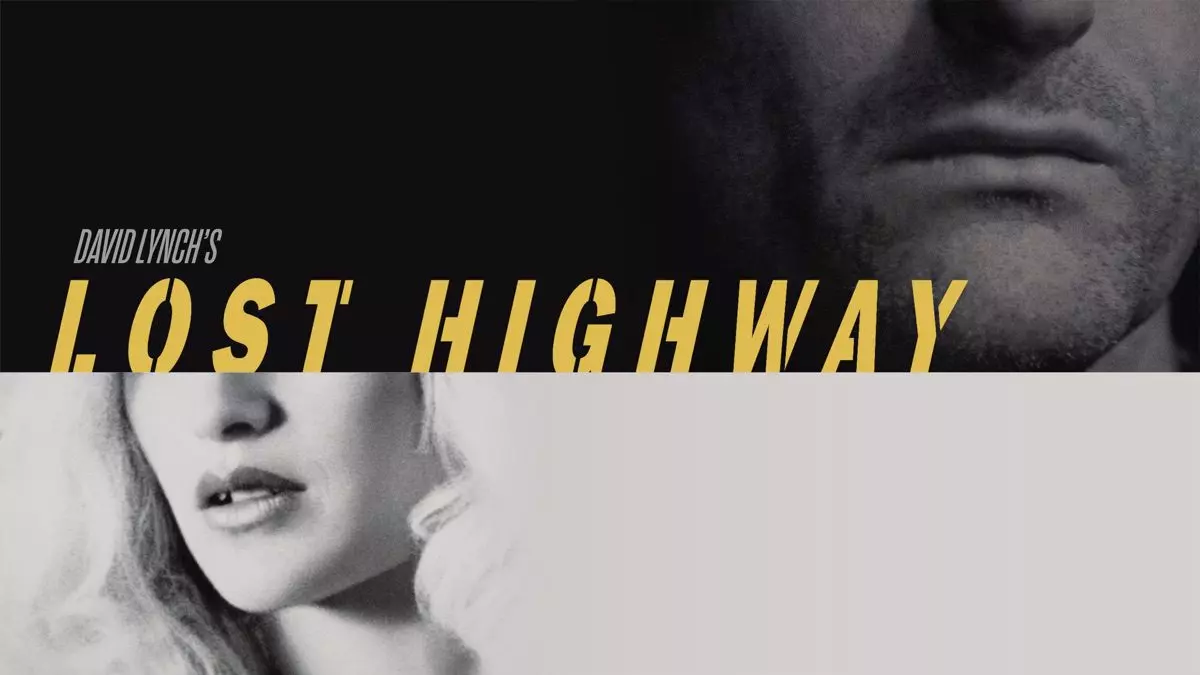
Lost Highway (released in theaters on Feb. 21, 1997), directed by the incomparable David Lynch, is a haunting, non-linear descent into the fractured psyche of a man undone by jealousy and guilt. Eschewing the traditional structure of a neo-noir thriller, the film operates entirely within the realm of “dream logic,” where identities are fluid, time is circular, and the atmosphere is thick with a sense of impending, inexplicable doom.
It is a cinematic Mobius strip that challenges the viewer to abandon rational thought in favor of a visceral, subconscious experience.
The story begins in a shadowy Los Angeles home where saxophonist Fred Madison (Bill Pullman) and his wife Renee (Patricia Arquette) begin receiving anonymous videotapes showing the interior of their house—and eventually, a recording of Fred murdering Renee.
After being imprisoned for the crime, Fred experiences a “psychogenic fugue” in his cell, inexplicably transforming into a younger man named Pete Dayton (Balthazar Getty).
Confused authorities release Pete, who returns to his life as an auto mechanic and begins an affair with Alice Wakefield (also played by Patricia Arquette), the blonde “femme fatale” mistress of a volatile gangster named Mr. Eddy (Robert Loggia).
As Pete and Alice plot to escape, the world begins to warp further, haunted by the presence of a pale, terrifying “Mystery Man” (Robert Blake).
The narrative spirals through a web of corruption involving a garage owner (Jack Kehler) and an aging associate (Jack Nance), eventually circling back to the desert and the terrifying realization that Pete and Fred are two sides of the same shattered coin.
Notably, the film features a final, poignant screen appearance by Richard Pryor as a dry-witted garage manager.
Giovanni Ribisi, Henry Rollins, Lisa Boyle, Marilyn Manson and Gary Busey round out the cast.
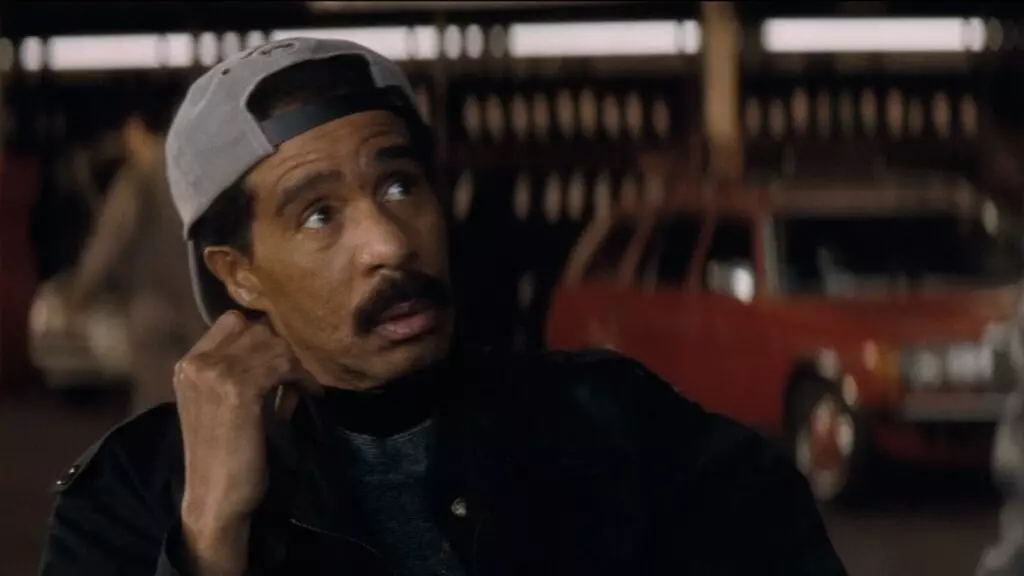
Richard Pryor in Lost Highway (Photo/October Films)
Reception for Lost Highway
Lost Highway grossed $3.8 million in its theatrical run.
Roger Ebert gave Lost Highway two out of four stars in his review.
The film had its North American premiere in January 1997 at the Sundance Film Festival.
Legacy
The legacy of Lost Highway lies in its status as the bridge between Lynch’s cult success with Twin Peaks and the surrealist heights of Mulholland Drive.
While it polarized audiences upon release, it has since been vindicated as a masterpiece of “psychological horror,” celebrated for its industrial-tinged soundtrack produced by Trent Reznor and its stunning, high-contrast cinematography.
The film’s legacy persists in its exploration of male insecurity and the “unreliable narrator,” themes that would go on to influence a generation of avant-garde filmmakers.
Lost Highway remains a definitive piece of 90s art-house cinema, remembered for its chilling “I’m at your house right now” sequence and its reminder that the most terrifying places we can lose ourselves are within our own memories.