
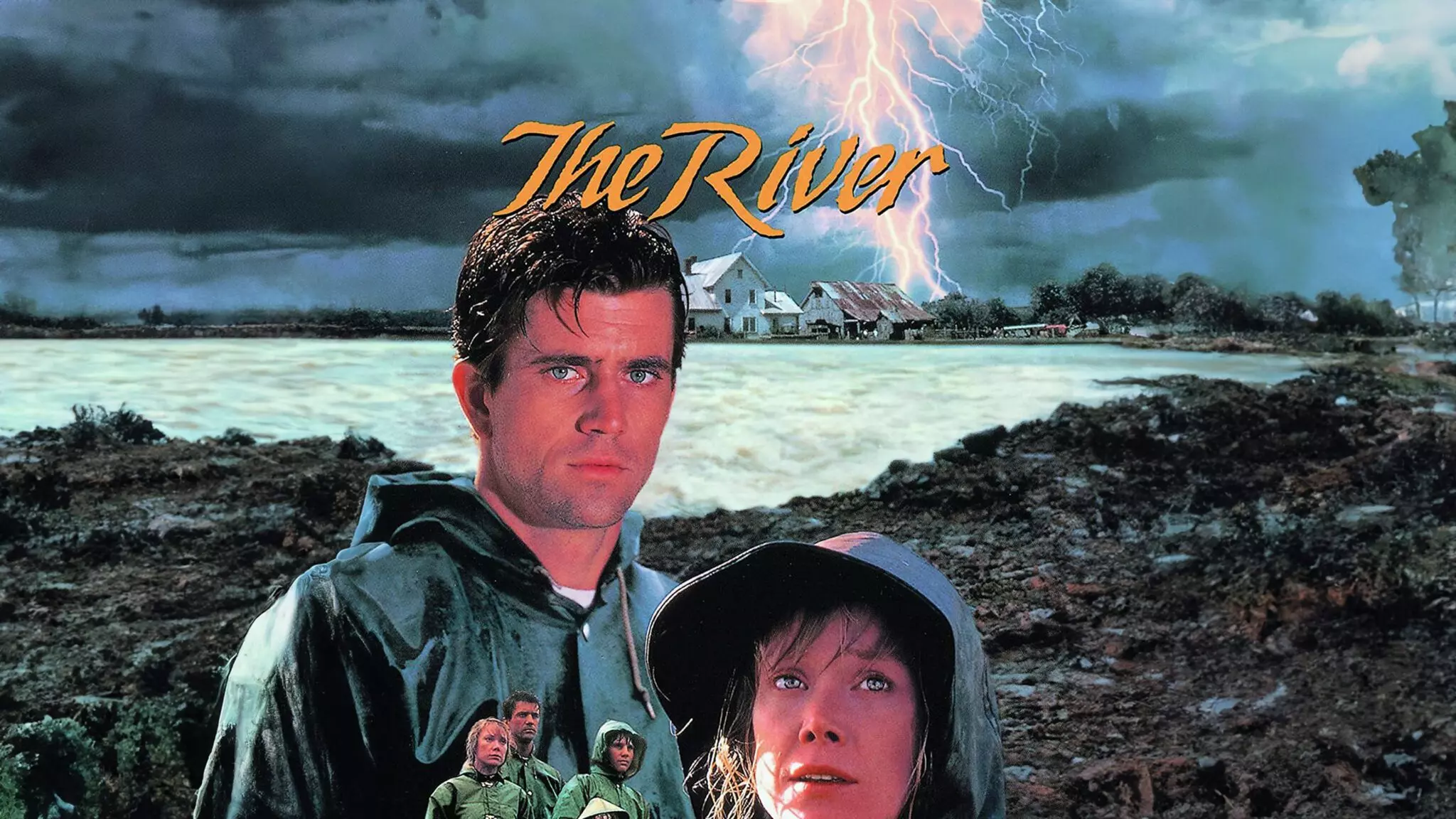
The River (released in theaters on Dec. 19, 1984), directed by Mark Rydell (On Golden Pond), stands as a sweeping, emotionally resonant entry in the “farm crisis” trilogy of its year, released alongside Places in the Heart and Country.
Unlike its contemporaries, however, this film leans into a more rugged, visceral aesthetic, pitting a blue-collar family not just against a failing economy, but against the relentless, primordial power of nature itself.
It is a film of mud, sweat, and steel, capturing a specific moment in American history when the independent farmer became an endangered species.
The story follows Tom Garvey (Mel Gibson) and his wife Mae (Sissy Spacek), a hardworking couple struggling to maintain their ancestral land along a volatile river in the Tennessee valley.
The Garveys face a dual threat: the recurring, devastating floods that threaten to wash away their livelihood and the local milling tycoon, Joe Wade (Scott Glenn).
Wade is a man who was once part of their community but has since turned into its predatory antagonist, buying up foreclosed properties and lobbying to dam the river—an act that would permanently submerge the Garvey farm to create a recreational lake.
When the bank begins to squeeze them and a disastrous harvest leaves them penniless, Tom is forced to make a desperate choice.
He travels to a distant city to work as a “scab” in a strike-troubled steel mill, leaving Mae to manage the farm and protect their children alone.
This decision introduces a gritty industrial subtext to the rural drama, highlighting the systemic exploitation of the working class.
The tension culminates in a massive, climactic storm where the Garveys and their few remaining neighbors must literally hold back the rising river with their bare hands, leading to a confrontation with Wade that determines the survival of their way of life.
Billy Green Bush, James Tolkan and Barry Primus round out the supporting cast.
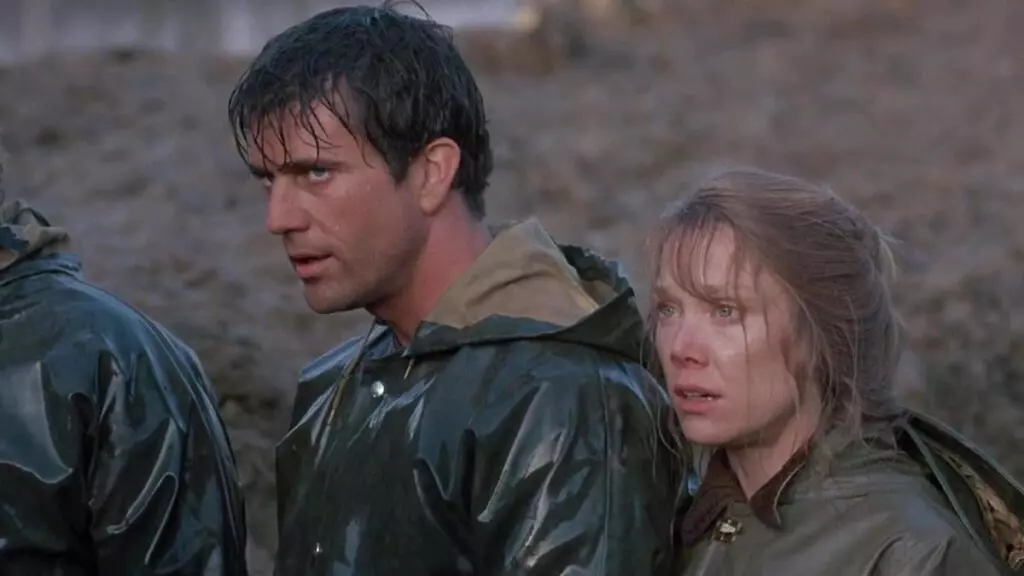
Mel Gibson and Sissy Spacek in The River (Photo/Universal Pictures)
Reception for The River
The River grossed $3 million on its opening weekend in wide release, finishing second at the box office, trailing Beverly Hills Cop, which earned $9.6 million on its sixth weekend.
The film would gross $11.5 million in its theatrical run.
Roger Ebert gave The River two out of four stars in his review.
The film received four nominations at the 57th Academy Awards: Best Actress (for Spacek), Best Original Score, Best Sound, Best Cinematography, and won the Special Achievement Award (Kay Rose for Sound Effects Editing).
Legacy
The River‘s legacy is defined by its stunning, Oscar-nominated cinematography by Vilmos Zsigmond, which captured the Tennessee landscape with a mix of pastoral beauty and terrifying scale.
The film served as a pivotal moment for Gibson, allowing him to shed his “Action Hero” persona for a performance of quiet, desperate masculinity, while Spacek solidified her reputation as the definitive voice of rural American resilience.
Beyond its performances, The River remains a cultural time capsule of the 1980s agrarian struggle, often cited for its honest depiction of the “farm strike” movement and the tension between corporate progress and tradition.