
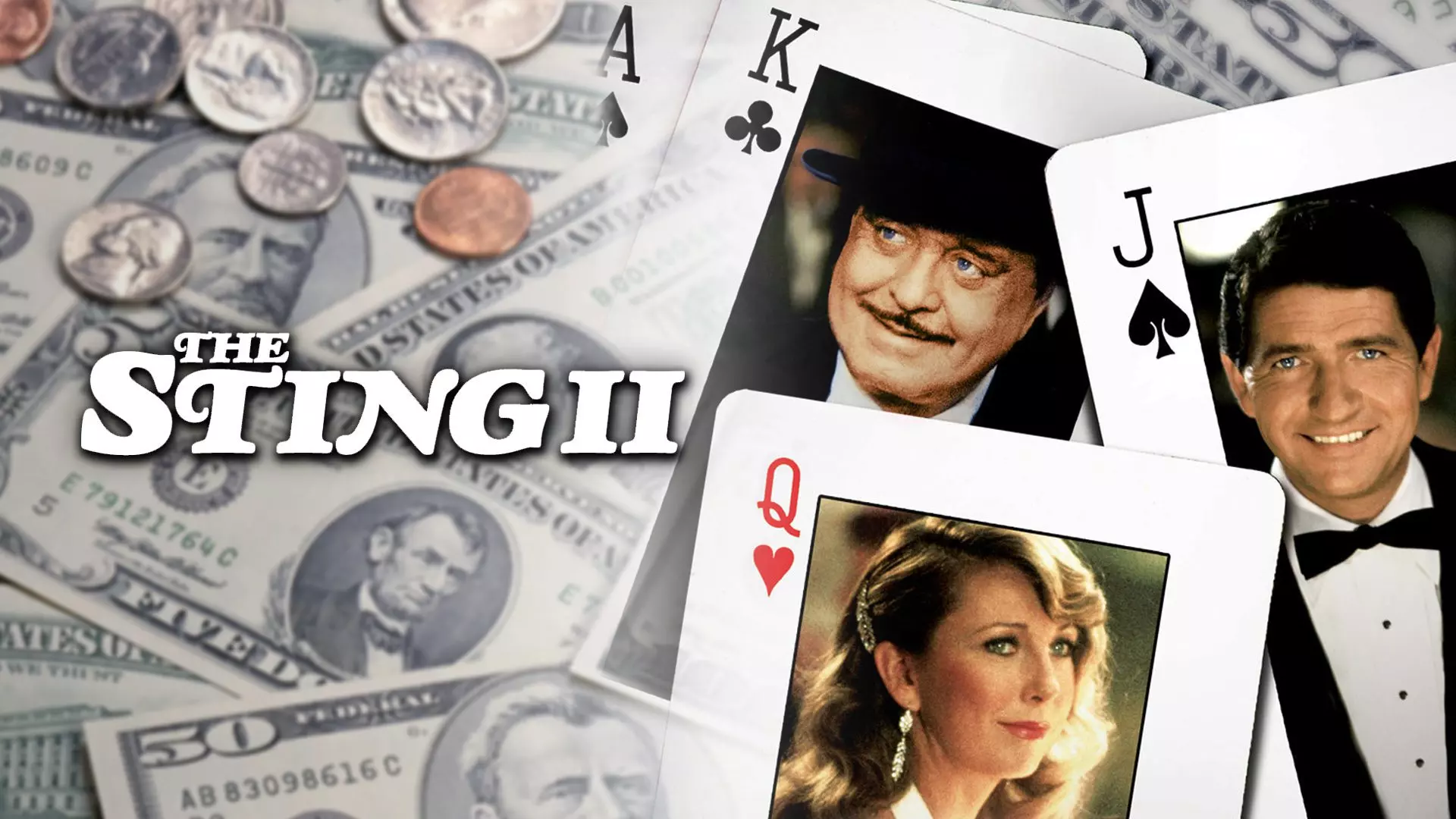
The Sting II (released in theaters o Fe. 18, 1983), written by David S. Ward, arrived as a curious sequel to one of the most beloved Best Picture winners in cinematic history. While the original 1973 classic relied on the legendary chemistry of Redford and Newman, this follow-up pivots toward a different kind of charisma, casting Jackie Gleason and Mac Davis as the new faces of the old-school grift.
Set in the late 1930s, the film attempts to recapture the “ragtime” charm and intricate plotting of its predecessor while leaning more heavily into the comedic beats of the Great Depression-era underworld.
The story follows Fargo Gondorff (Gleason), an aging but brilliant master of the “long con,” and his younger, fast-talking partner Jake Styles (Davis).
The duo finds themselves in the crosshairs of Gus Macalinski (Karl Malden), a high-stakes racketeer who is still smarting from a previous humiliation.
Seeking revenge and a massive payday, Macalinski tries to corner the duo, unaware that he is being lured into a trap far more complex than a simple double-cross.
To pull off their elaborate scheme, Gondorff and Styles recruit Veronica (Teri Garr), a sharp-witted grifter who adds a layer of sophistication to the operation.
Their target is the menacing and wealthy Doyle Lonergan (Oliver Reed, taking over the role originated by Robert Shaw).
The narrative unfolds through a series of “rounds” and theatrical setups, involving fixed boxing matches and elaborate set-pieces designed to confuse the audience and the marks alike.
As the stakes escalate, the trio must stay three steps ahead of both the mob and the law to ensure they don’t end up on the wrong side of the very sting they created.
Ron Rifkin, Val Avery, John Hancock, Larry Hankin and Tim Rossovich round out the supporting cast.
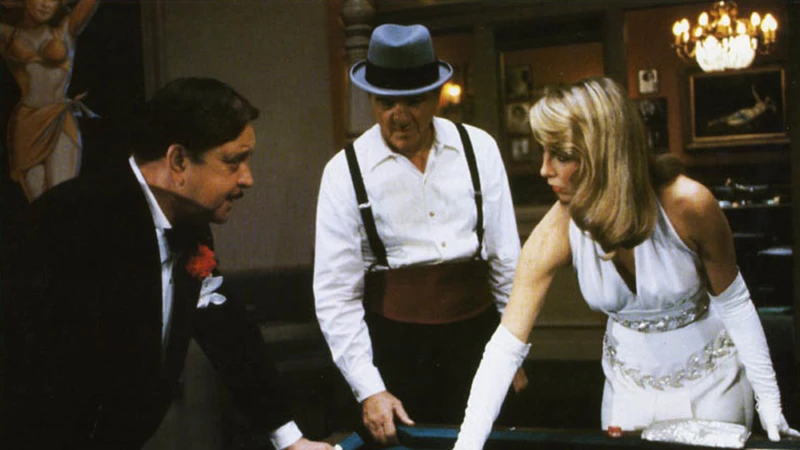
The Sting II (Photo/Universal Pictures)
Reception for The Sting II
The Sting II grossed $3.1 million on its opening weekend, finishing third at the box office behind Tootsie ($7.5 million) and Gandhi ($3.4 million).
The film would gross $6.3 million in its theatrical run.
The Sting II was nominated for an Academy Award for the Best Musical Score.
Legacy
The Sting II is often debated as a fascinating example of the “recast sequel.”
Rather than attempting a direct continuation with the original actors, the film operates as a spiritual successor that exists in a slightly more slapstick universe.
Its primary legacy lies in the performance of Gleason, who brought a “Great One” gravitas to the role of Gondorff, and Reed, whose intimidating presence provided a worthy foil to the comedic leads.
The Sting II serves as a bridge between the classic era of heist cinema and the more character-driven comedies of the 1980s.
For fans of the genre, its legacy is found in its intricate “play-within-a-play” structure, proving that even a decade later, the art of the con remained one of Hollywood’s most entertaining pastimes.