


The plot intensifies as Wilson hires an experienced local tracker named Kivu to guide him deep into the dangerous African bush.
Pete grows horrified by Wilson’s monomaniacal drive, arguing that killing a majestic animal purely for sport is an act of supreme vanity.
Ignoring Pete’s moral pleas, Wilson pushes deep into uncharted territory during a heavy storm.
The narrative reaches a tragic, sobering climax when Wilson finally comes face-to-face with a giant bull elephant; freezing at the crucial moment, he refuses to pull the trigger, prompting Kivu to step in to protect him, resulting in the tracker’s fatal trampling.
Heartbroken, humbled, and shattered by the senseless loss of life caused by his arrogance, Wilson quietly walks back to the set, sits down in his director’s chair, and finally calls out “Action” to begin filming.
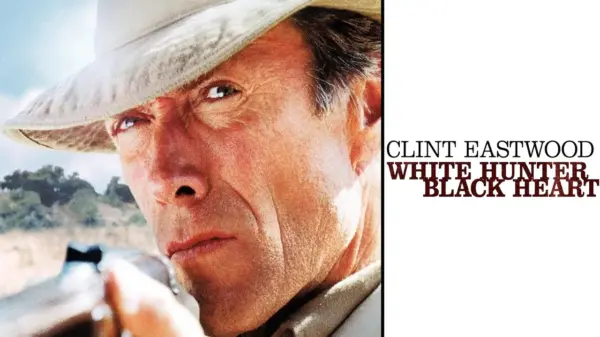
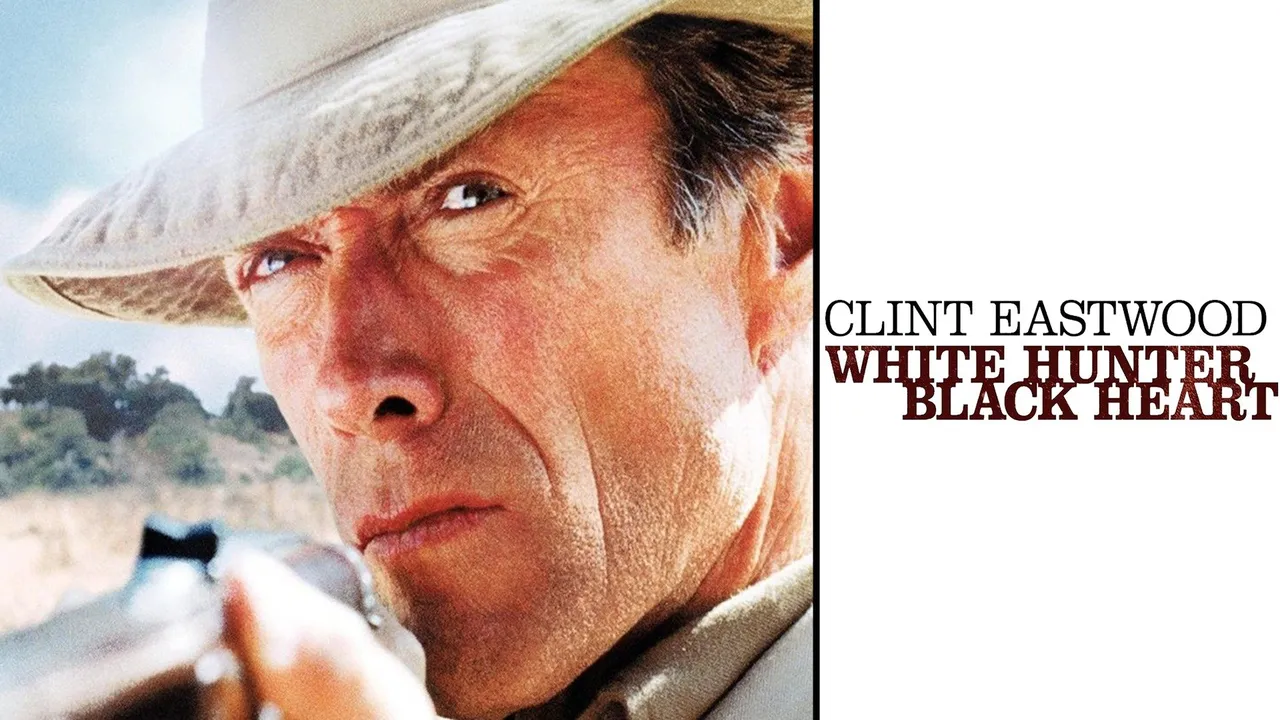
Eastwood directed the film, delivering a remarkably daring, complex character study adapted from Peter Viertel’s famous roman à clef about legendary filmmaker John Huston during the making of The African Queen.
Eastwood steps outside his usual heroic persona to deliver an unpredictable, theatrical performance capturing Huston’s Mid-Atlantic cadence and megalomaniacal charm, while Fahey offers a strong moral counterweight as the voice of reason.
Armstrong and Dzundza add sharp comic frustration as the beleaguered studio brass trying to keep the production on budget.
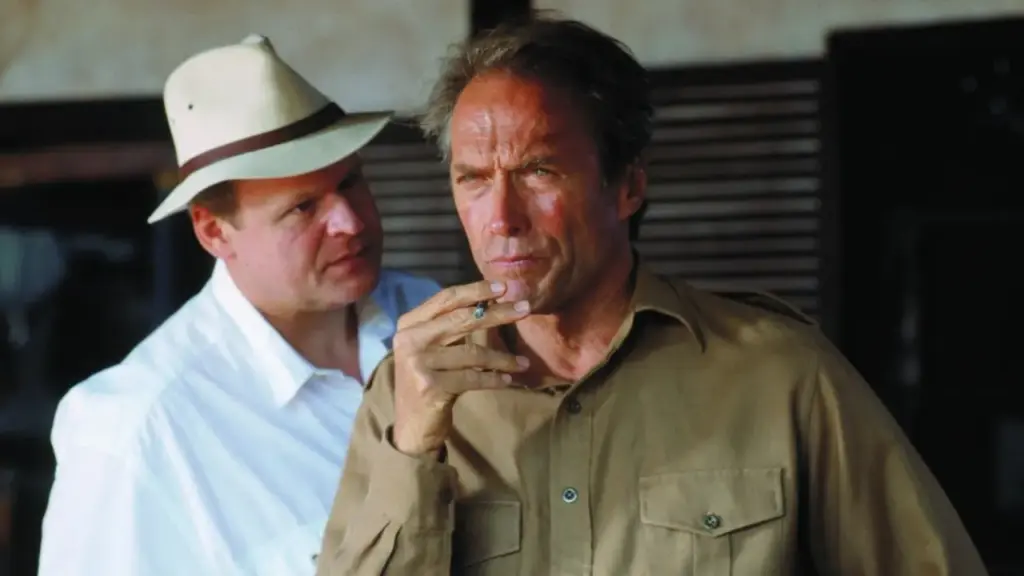
Clint Eastwood and George Dzunda in White Hunter Black Heart (Photo/Warner Bros.)
Reception for White Hunter Black Heart
White Hunter Black Heart grossed $165,450 on its opening weekend, finishing 16th at the box office in limited release on 24 screens.
The film would gross $2.3 million in its theatrical run.
Roger Ebert gave White Hunter Black Heart three out of four stars in his review.
Legacy
White Hunter Black Heart‘s legacy rests on its reputation as a pivotal, highly personal stepping stone in Eastwood’s directorial evolution, bridging his rugged action star era with the mature, deconstructive masterpieces like Unforgiven that followed.
Highly praised by film historians for its bold critique of artistic hubris, toxic masculinity, and Hollywood obsession, the drama stands as one of Eastwood’s most underrated and fascinating cinematic endeavors.
White Hunter Black Heart remains a warmly respected work among cinephiles, continuously celebrated for its lush African location photography, sharp literary dialogue, and provocative examination of the dark compulsions driving great creative minds.