




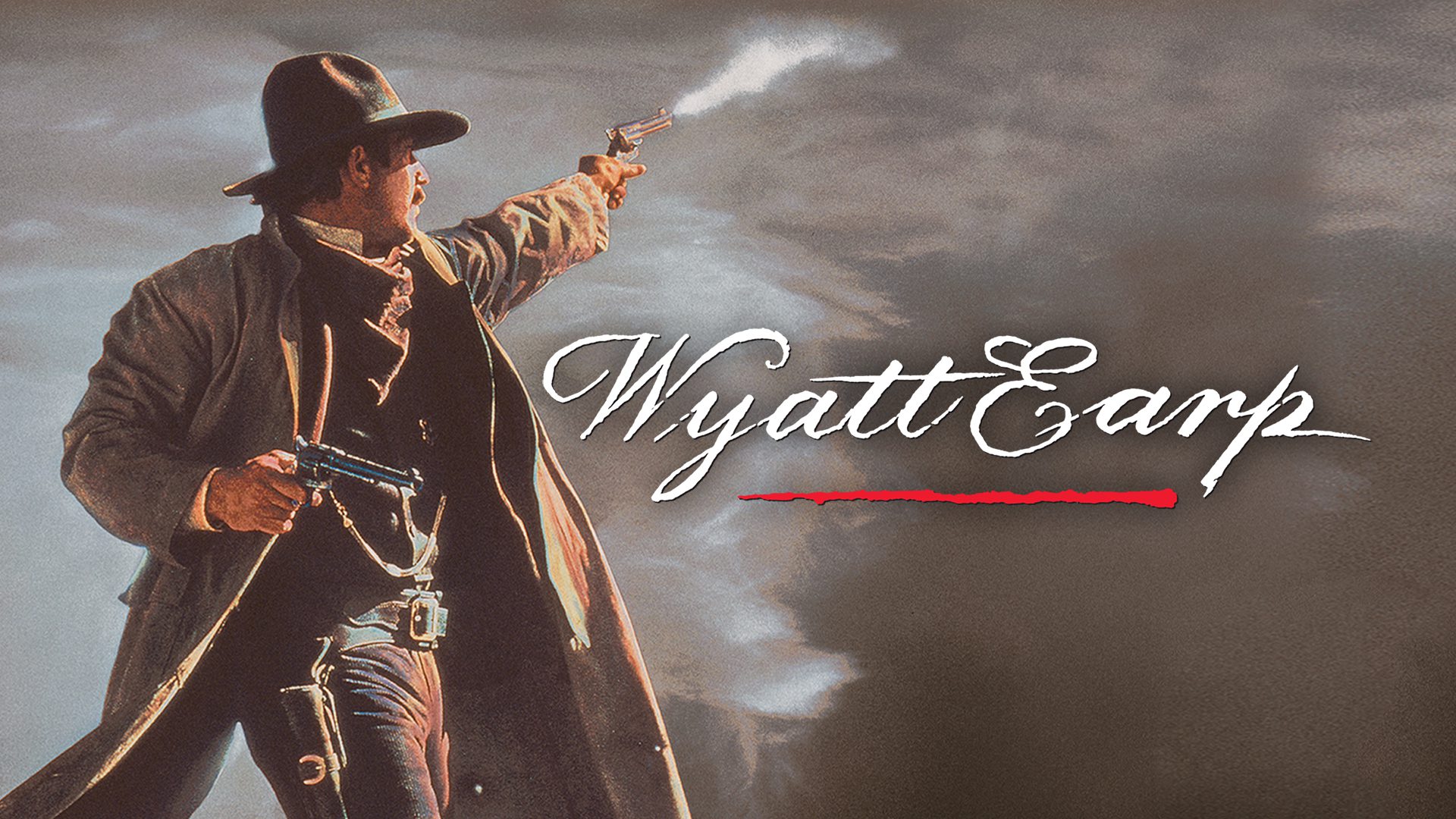
Wyatt Earp (released in theaters on June 24, 1994) is a sprawling, deliberately paced western that approaches its famous lawman not as a larger‑than‑life legend but as a complicated, sometimes haunted man shaped by loss, ambition, and duty. Directed by Lawrence Kasdan, the film trades the snappy swagger of many westerns for an epic, novelistic sweep, following its title character from boyhood to old age.
The plot traces Wyatt (Kevin Costner) from his formative years on the family farm, through the trauma of the Civil War era, to the early tragedies that harden him—most notably a devastating personal loss that nearly derails his life.
After flirting with outlaw behavior and hitting bottom, Wyatt pulls himself together, eventually drifting into law enforcement in rough frontier towns.
Along the way he marries, remarries, and navigates the uneasy tension between his craving for stability and his pull toward places where violence is always one bad night away.
The film slowly assembles the Earp clan—brothers like Virgil and Morgan—and the supporting figures who define Wyatt’s story, including a rich roster of frontier personalities.
At the center of that orbit is Doc Holliday, played with gaunt intensity by Dennis Quaid, whose sickly charm and fatalistic wit form a compelling counterpoint to Costner’s stoic resolve.
As the narrative moves toward Tombstone, the vendettas with the Cowboys, and the fateful gunfight at the O.K. Corral, Wyatt Earp emphasizes process and consequence over simple triumph.
The aftermath—scores settled, lives shattered, reputations cemented—reminds viewers that legends are built on blood and regret as much as heroics.
Costner’s performance is restrained and earnest, painting Wyatt as proud, stubborn, and deeply committed to his own sense of order.
Quaid’s Doc brings a jolt of danger and melancholy, embodying a man who knows he’s dying and chooses to go out on his own terms.
Gene Hackman appears as Nicholas Porter Earp and Mark Harmon stars as Johnny Behan.
Michael Madsen, Bill Pullman, Linden Ashby, Isabella Rossellini, Catherine O’Hara, Tom Sizemore, JoBeth Williams, Mare Winningham, James Gammon, Rex Linn, Adam Baldwin, Annabeth Gish, Lewis Smith, Betty Buckley, Mackenzie Astin, Jim Caviezel, Tea Leoni, Jeff Fahey, John Doe and Martin Kove round out the stellar supporting cast.
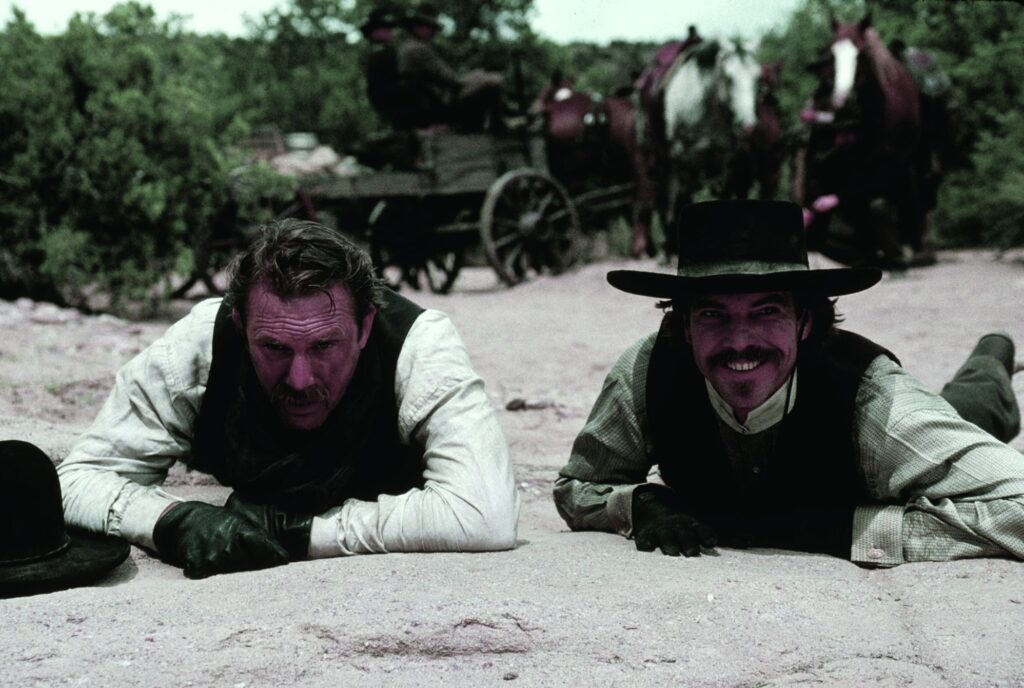
Kevin Costner and Dennis Quaid in Wyatt Earp (Photo/Warner Bros.)
Reception for Wyatt Earp
Wyatt Earp grossed $7.5 million on its opening weekend, finishing fourth at the box office behind The Lion King ($40.9 million on its second weekend), Speed ($12.4 million) and Wolf ($12.1 million).
The film would gross $55.9 million in its theatrical run.
Roger Ebert gave Wyatt Earp two out of four stars in his review.
Legacy
Wyatt Earp is often overshadowed by the more raucous, quotable Tombstone, but it has earned appreciation among western fans as a serious, ambitious character study.
Its length and somber tone may put off casual viewers, yet those same qualities let it explore the cost of frontier justice with unusual depth.
Over time, the film has settled into a niche as a thoughtful, expansive take on an American myth—a reminder that behind every legend is a lifetime of choices, compromises, and ghosts.