









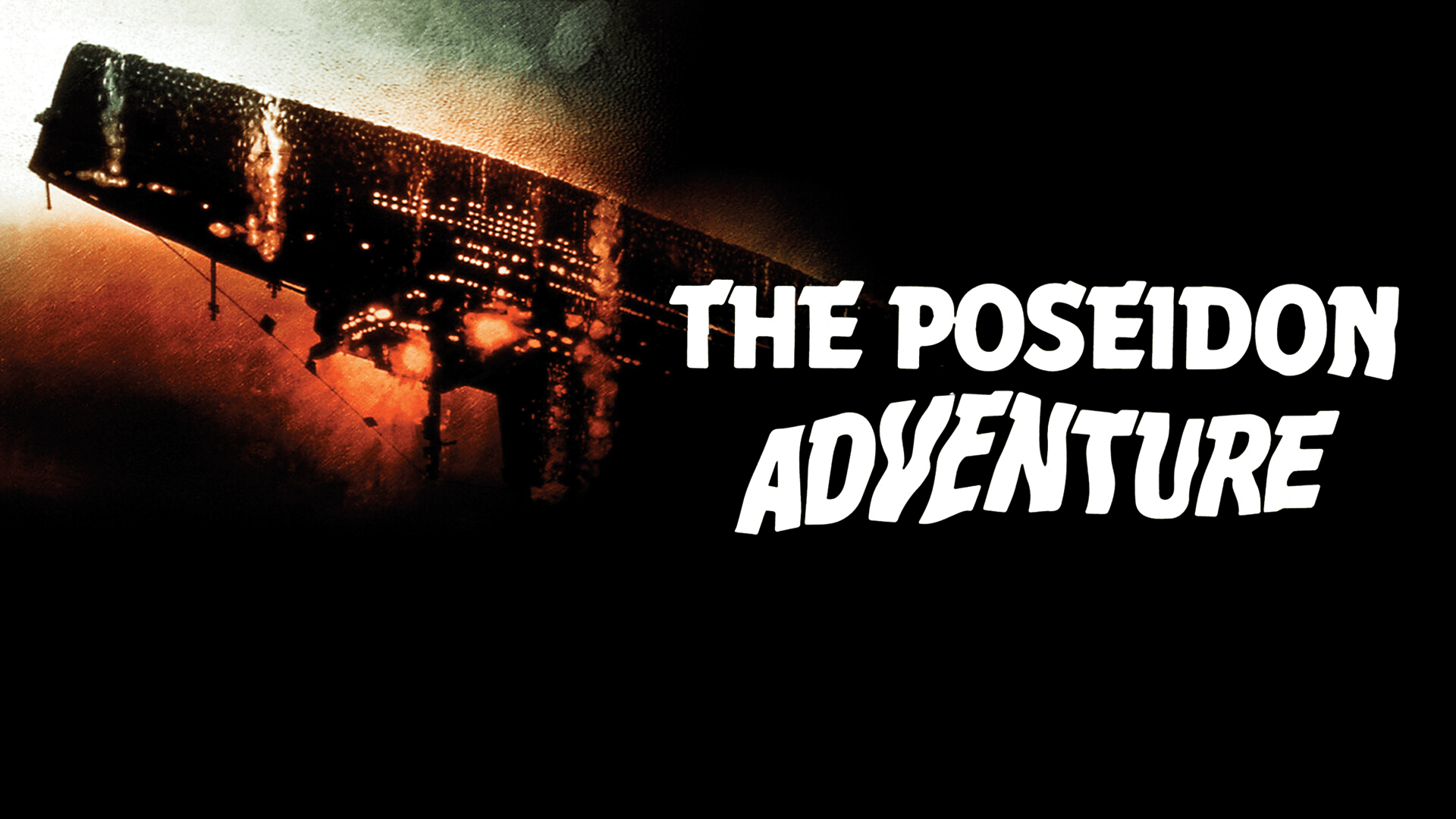
The Poseidon Adventure (released in theaters on December 12, 1972) is the quintessential 1970s disaster movie, produced by the master of the genre, Irwin Allen. The film begins aboard the majestic S.S. Poseidon, a luxurious, aging ocean liner making its final voyage from New York to Athens on New Year’s Eve. As the passengers celebrate, a massive rogue wave, triggered by a submarine earthquake, strikes the ship broadside, causing it to capsize.
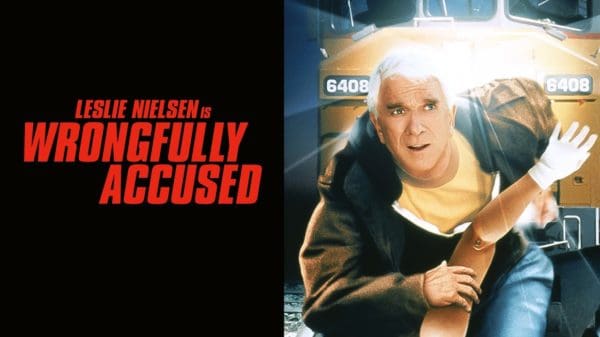
The harrowing immediate aftermath finds the ship fully inverted: the ceiling is now the floor, and the once-grand ballroom is a wreckage-filled, flooded chamber. Most of the surviving passengers wait passively for rescue in the ballroom, heeding the call of the ship’s officer, Captain Harrison (Leslie Nielsen).
However, a small, dissenting group led by the renegade preacher Reverend Frank Scott (Gene Hackman) believes their only chance of survival is to climb up to the ship’s hull.
This group includes Detective Lieutenant Mike Rogo (Ernest Borgnine) and his former prostitute wife, Linda (Stella Stevens); the worried parents, Manny and Belle Rosen (Jack Albertson and Shelley Winters); the lonely tailor, James Martin (Red Buttons); the ship’s singer, Nonnie Parry (Carol Lynley); and the young siblings, Robin and Susan Shelby (Eric Shea and Pamela Sue Martin).
Roddy McDowall plays the ship’s purser.
The film is a suspenseful, claustrophobic trek through the inverted vessel, forcing the group to face collapsing decks, raging fires, steam pipes, and rising water. The characters are repeatedly pushed to their physical and emotional limits, with sacrifices made as they desperately seek the relative safety of the outside world.
A sequel, Beyond the Poseidon Adventure, was released in 1979.
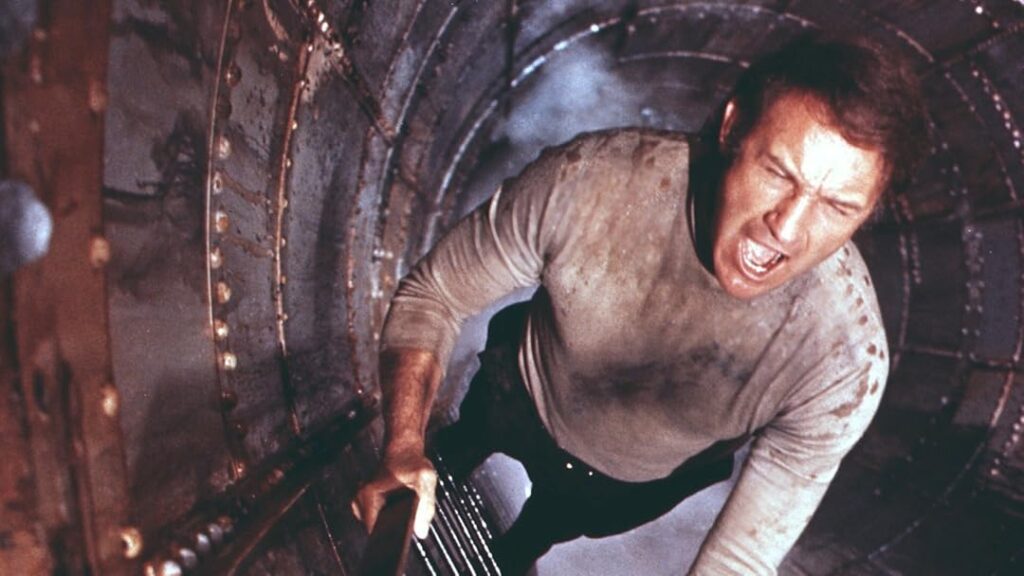
Gene Hackman in The Poseidon Adventure (Photo/20th Century Fox)
Reception for The Poseidon Adventure
The Poseidon Adventure grossed $84.6 million in its theatrical run.
Roger Ebert gave the film two-and-a-half out of four stars in his review.
Legacy
The Poseidon Adventure was a massive box-office hit, earning eight Academy Award nominations and defining the golden age of the disaster film.
While the characters are somewhat two-dimensional (a hallmark of the genre), the film’s success rests on its groundbreaking special effects, thrilling set pieces, and the powerful, Oscar-nominated performance by Winters as the courageous, determined Belle Rosen. Her desperate swim through a submerged passageway is an iconic moment in cinema history.
The movie’s enduring legacy is tied to its status as a high-water mark for Allen’s brand of high-stakes, star-studded suspense. It proved the viability of the “all-star cast trapped in a catastrophic event” formula, directly inspiring subsequent blockbusters like The Towering Inferno.
It perfectly captured the early 1970s zeitgeist—a sense of vulnerability and a fascination with large-scale destruction.
The film is still celebrated today for its taut pacing and its unforgettable visual signature: the terrifying, upside-down world of the S.S. Poseidon.