









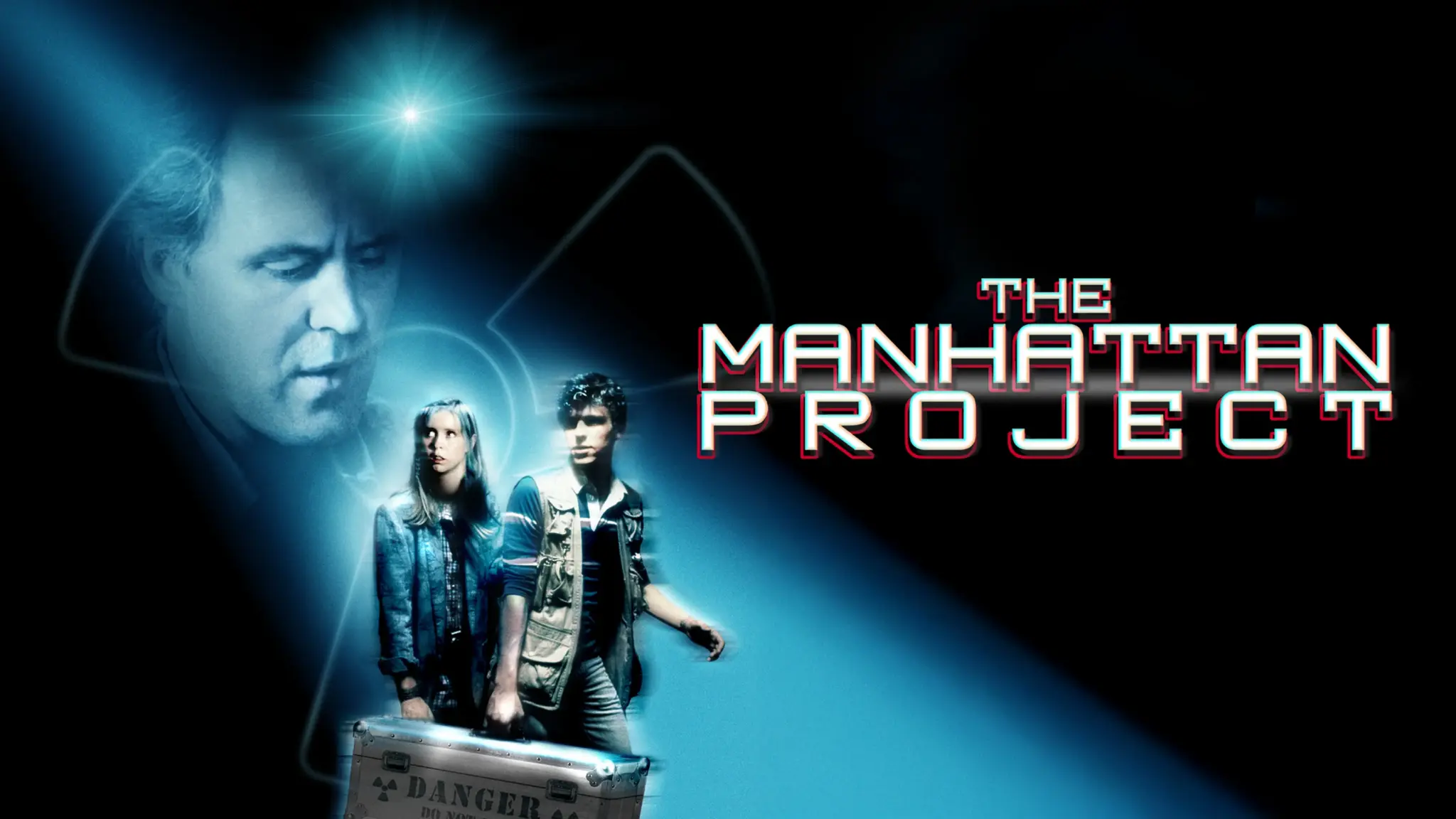
The Manhattan Project (released in theaters on June 13, 1986) follows Paul Stephens (Christopher Collet), a brilliant but rebellious high school science prodigy living in Ithaca, New York. His quiet life changes when his single mother, Elizabeth (Jill Eikenberry), begins dating Dr. John Mathewson (John Lithgow), a charming scientist who has recently moved to town.
John invites Paul to tour his workplace, a mysterious facility disguised as a medical research laboratory.
Paul’s sharp intellect quickly sees through the cover story, realizing that the plant is actually a secret government breeder reactor refining weapons-grade plutonium.
Insulted by the government’s deception in his own backyard, Paul decides to expose the operation by pulling off the ultimate high school science fair project: stealing a canister of liquid plutonium to build a fully functional, nuclear device.
The plot accelerates into a high-stakes thriller when Paul enlists the help of his skeptical girlfriend, Jenny Andelson (Cynthia Nixon), an aspiring student journalist who helps him infiltrate the high-tech facility.
Utilizing a clever mixture of toys, household tools, and sheer ingenuity, Paul successfully swipes the radioactive material and constructs the atomic bomb in his bedroom.
However, his grand plan to expose the government at a New York City science exhibition collapses when Dr. Mathewson and military officials, led by the stern Lt. Col. Conroy (John Mahoney), uncover the theft.
A tense, localized military lockdown sweeps the area, drawing in law enforcement figures like Officer radiation controller (Richard Jenkins).
Realizing the global catastrophe a simple mistake could trigger, Paul barricades himself inside the laboratory with the device.
The narrative builds to a heart-pounding, claustrophobic standoff as John and Paul must work together against a ticking countdown to safely disarm the highly volatile weapon.
Director Marshall Brickman delivers a highly engaging, thought-provoking thriller that expertly balances teenage rebellion with the terrifying reality of nuclear proliferation.
Collet brings a sharp, relatable sincerity to the teenage lead, while Lithgow shines as a deeply conflicted scientist whose paternal warmth contrasts with his dangerous occupation.
Mahoney anchors the military opposition with a grounded, authoritative intensity that keeps the stakes incredibly real.
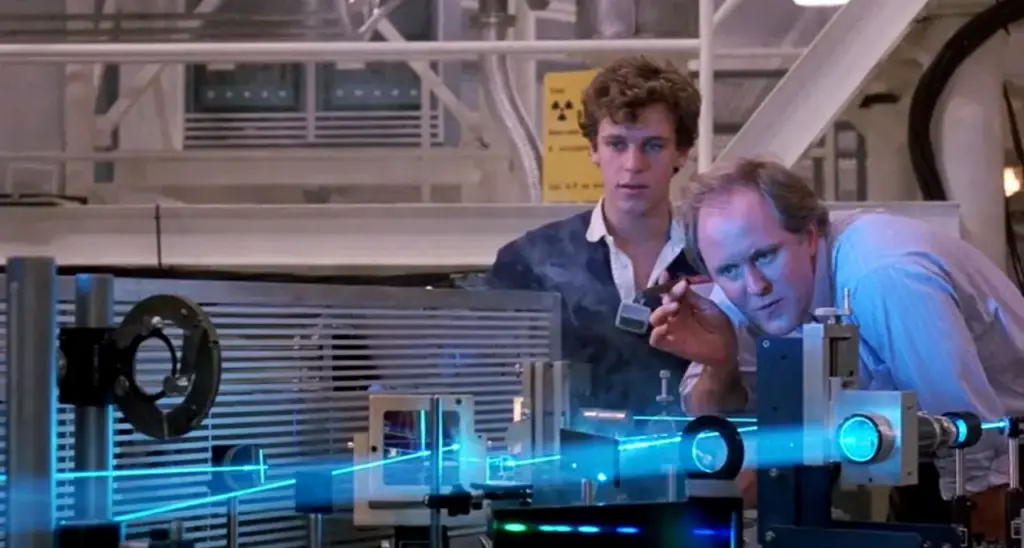
John Lithgow and Christopher Collet in The Manhattan Project (Photo/20th Century Fox)
Reception for The Manhattan Project
The Manhattan Project grossed $1.5 million on its opening weekend, finishing ninth at the box office.
The film would gross $3.9 million in its theatrical run.
Roger Ebert gave The Manhattan Project four out of four stars in his review.
Legacy
The Manhattan Project‘s legacy rests on its enduring status as a sharp, culturally significant time capsule of late-Cold War nuclear anxiety and anti-nuclear sentiment.
It remains a heavily discussed cult favorite for its highly accurate, technically detailed depiction of nuclear mechanics, which actually drew scrutiny from government agencies at the time of its release.
It stands alongside films like WarGames as a quintessential eighties techno-thriller that tapped into youth counterculture and skepticism toward government secrecy.
The Manhattan Project is remembered for its intelligent screenplay, its memorable electronic score, and its haunting reminder of the delicate balance between scientific curiosity and existential danger.