




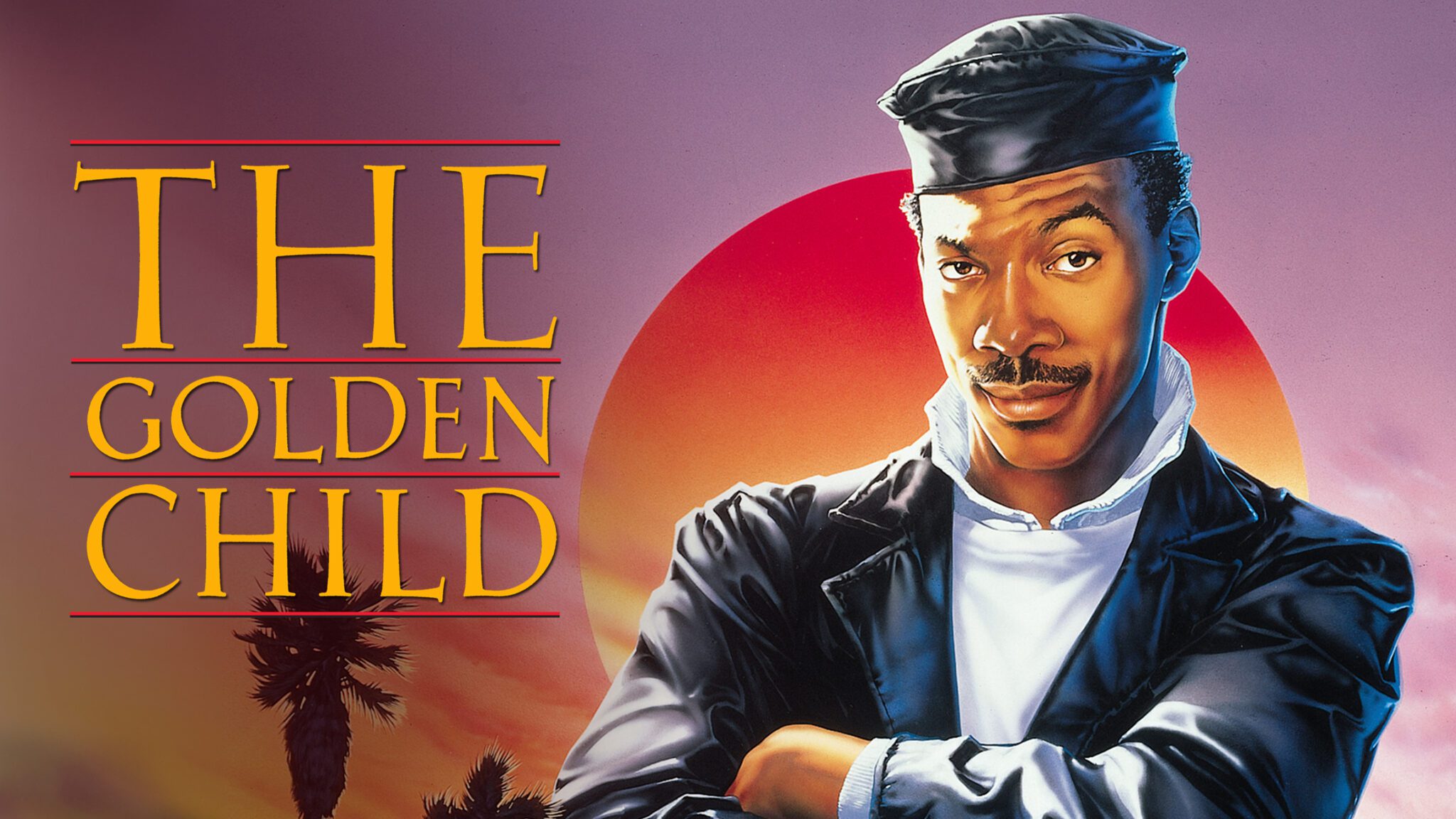
The Golden Child, released in theaters on Dec. 12, 1986, is a glossy, oddball mash‑up of Eddie Murphy star vehicle and Eastern‑mysticism fantasy, never fully coherent but often entertaining on sheer personality.
The film leans heavily on Murphy’s fast-talking charisma, dropping his streetwise Los Angeles social worker into a prophecy‑driven quest about a Tibetan child messiah and a demonic villain who wants to plunge the world into darkness.
What results is a tonal tug-of-war: half action‑comedy and half supernatural adventure.
Chandler Jarrell (Murphy) is a L.A. social worker specializing in missing kids when he is approached by Kee Nang (Charlotte Lewis), a poised Tibetan emissary who insists he is the “Chosen One” destined to rescue the Golden Child.
The child, a serene boy with miraculous powers like reviving the dead, has been kidnapped from a hidden temple in Tibet by Sardo Numspa (Charles Dance), a suave occultist who serves darker, demonic forces.
Initially dismissive of Kee’s mysticism, Chandler is drawn in as clues from a local case point to ritual killings and Tibetan symbols, forcing him to accept that something larger is at work.
His search leads through L.A. biker gangs and Chinatown hideouts to a quest in Tibet for the Ajanti Dagger, the only weapon that can kill the Child—and, by extension, either doom or save humanity.
Along the way, Chandler and Kee grow closer, facing Numspa’s sorcery, monstrous henchmen, and reality‑bending set pieces before a final confrontation where Chandler must embrace his reluctant destiny to defeat evil and protect both the Child and Kee.
Murphy plays Chandler as pure mid‑80s Eddie: skeptical, flippant, always ready with a digression or deadpan aside that undercuts the surrounding mystic solemnity. His comic timing keeps scenes buoyant even when the exposition grows dense, though the reliance on his improvised‑feeling riffs sometimes clashes with the film’s more earnest fantasy elements.
Lewis brings a measured, almost formal presence as Kee, functioning as both guide and romantic interest, while Dance leans into icy elegance as Numspa, projecting a dry, theatrical menace that anchors the villainy.
Victor Wong and James Hong add genre‑movie gravitas as mystic figures and intermediaries between the earthly and supernatural worlds, and Randall “Tex” Cobb turns up as a hulking heavy, giving the action beats some bruising physicality.
Visually, the movie swings between atmospheric temple sequences and neon‑tinted Los Angeles streets, mixing practical creature work and optical effects that now play as charmingly dated rather than fully convincing.
Michael Ritchie (Fletch, Semi-Tough, The Bad New Bears, Cool Runnings, Diggstown, Wildcats, The Couch Trip) directed the film.
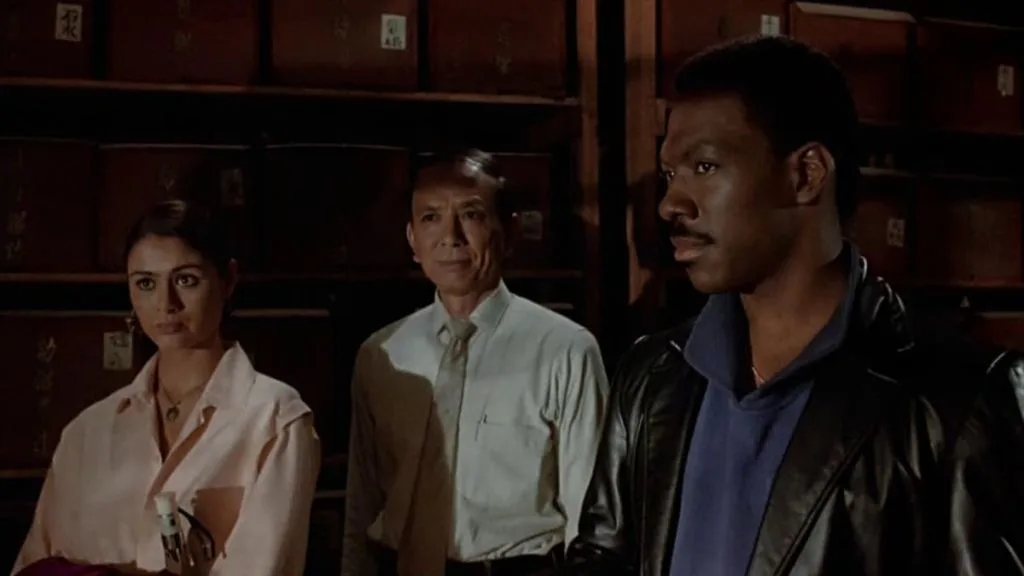
Charlotte Lewis, James Hong and Eddie Murphy in The Golden Child (Photo/Paramount Pictures)
Reception for The Golden Child
The Golden Child grossed $11.5 million on its opening weekend, finishing No. 1 at the box office.
The film would remain atop the box office for its first five weeks of release en route to grossing $149.4 million worldwide.
Roger Ebert gave the film three out of four stars in his review.
Legacy
The Golden Child arrived on the heels of Beverly Hills Cop, positioned as another Murphy blockbuster and performing strongly at the box office even as critics were mixed on its tonal confusion and reliance on cliché “Oriental” fantasy tropes.
Contemporary reviewers often noted that the script felt like a straight fantasy‑adventure awkwardly retrofitted into an Murphy movie, with his comedy sometimes feeling pasted onto a preexisting plot.
Over time, the film has settled into cult‑curio status: fondly remembered by some for its quotable Murphy moments, surreal set pieces, and Dance’s villain, while others see it as a missed opportunity that never lets its mystical world‑building and its star’s persona fully harmonize.
In retrospect, it stands as an emblematic 80s artifact—part of Hollywood’s then-fashionable flirtation with Asian fantasy aesthetics—and an early sign that Murphy’s box‑office power could sometimes outstrip the material he was given, turning even a muddled dark fantasy into a pop‑culture touchstone for a certain generation of viewers.