

Grand Canyon (released in theaters on Dec. 25, 1991) is a sprawling, meditative drama that attempts to capture the existential anxiety and social fragmentation of early-nineties Los Angeles. Directed by Lawrence Kasdan, who co-wrote the Academy Award nominated script with his wife Meg Kasdan, the film serves as a spiritual successor to his earlier work, The Big Chill.
However, where that film focused on the nostalgia of a specific generation, this narrative looks outward at the vast “canyons” that divide us: race, class, and the random violence of urban life. It is a cinematic tone poem that balances grim realism with a sense of cosmic wonder, asking if human connection can survive in a world that feels increasingly out of control.
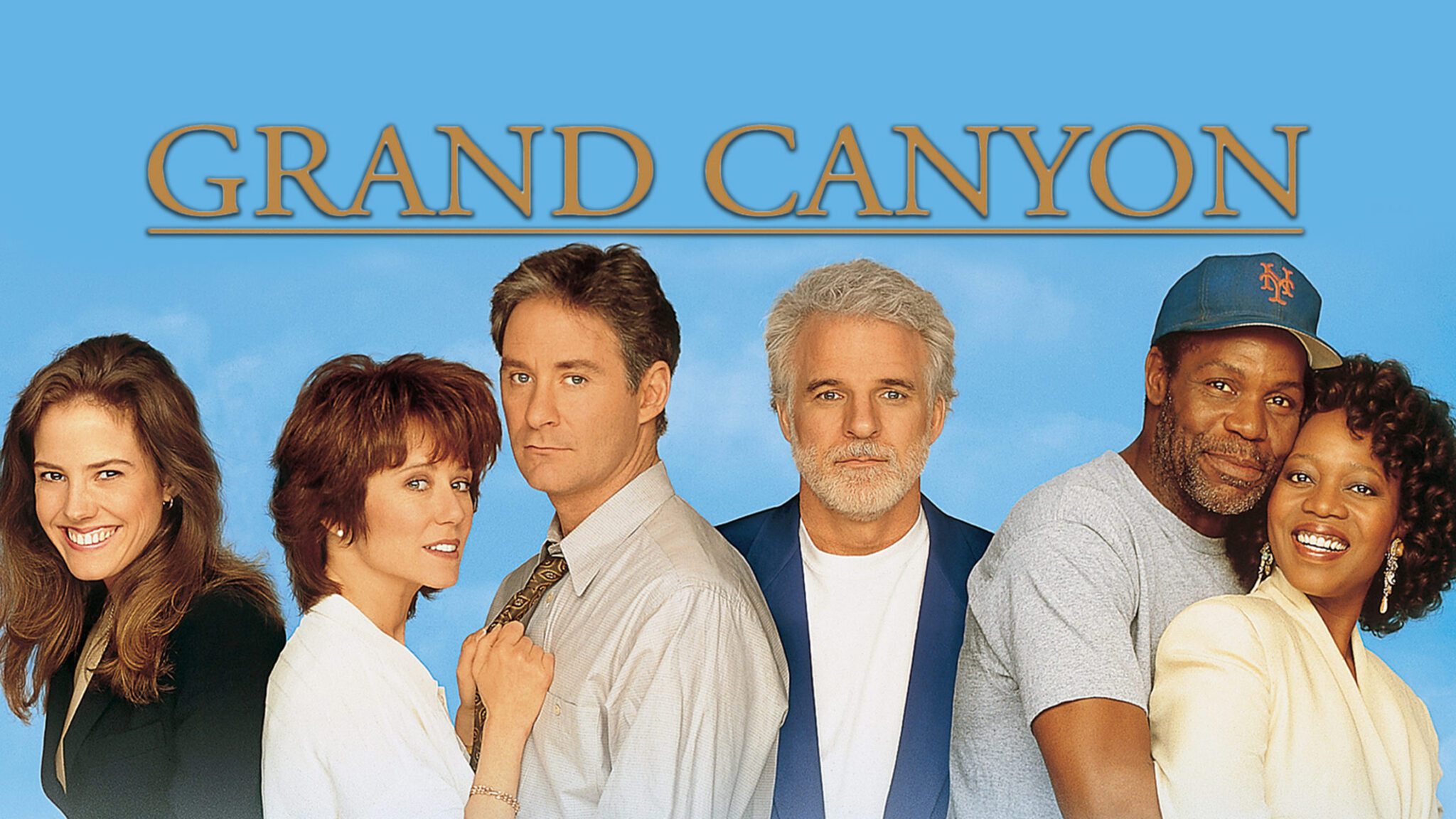
The story is set in motion when Mack (Kevin Kline), a successful immigration lawyer, takes a wrong turn into a dangerous neighborhood after a Lakers game.
When his car breaks down, he finds himself threatened by a gang, only to be rescued by Simon (Danny Glover), a philosophical tow-truck driver.
This chance encounter sparks an unlikely friendship that bridges the socioeconomic gap between them.
As Mack attempts to repay Simon by helping his family, the film expands into an ensemble study of their interconnected lives.
Mack’s wife, Claire (Mary McDonnell), finds a discarded infant while jogging, leading her to contemplate the purpose of her life and the possibility of adoption.
Meanwhile, Mack’s friend Davis (Steve Martin), a producer of ultra-violent action movies, undergoes a radical spiritual awakening – albeit a temporary one – after being shot in the leg during a random robbery.
The cast is rounded out by Mary-Louise Parker as Mack’s lovelorn assistant, Alfre Woodard as a potential romantic interest for Simon, and a young Jeremy Sisto as Mack’s son, who is navigating the awkward transition into adulthood.
The narrative weaves these threads together through dreams, coincidences, and moments of quiet grace, culminating in a group trip to the Grand Canyon. There, the characters stand on the rim of the ancient abyss, finding a fleeting sense of peace in the realization of their own insignificance.
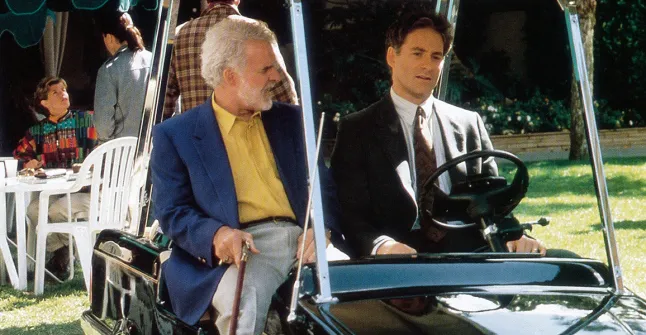
Steve Martin and Kevin Kline in Grand Canyon (Photo/20th Century Fox)
Reception for Grand Canyon
Grand Canyon grossed $6 million on its opening weekend in wide release, finishing fifth at the box office.
The film would gross $33.2 million in its theatrical run.
Roger Ebert gave Grand Canyon four out of four stars in his review.
Lasting Legacy
Grand Canyon is remembered as a definitive “pre-L.A. Riots” time capsule, capturing the palpable tension and yearning for empathy that defined the era.
The film is celebrated for its stellar ensemble performances, particularly the chemistry between Kline and Glover, and for Martin’s brilliant, self-aware performance as a Hollywood producer grappling with the morality of the violence he sells.
The movie is also noted for its significant impact on the “interconnected lives” subgenre, influencing later films like Short Cuts and Crash with its mosaic-style storytelling.
Today, Grand Canyon is viewed as Lawrence Kasdan’s most personal and philosophical work, a poignant reminder that while the chasms between us are deep, the bridges we build through simple acts of kindness are the only things that keep us from falling.