




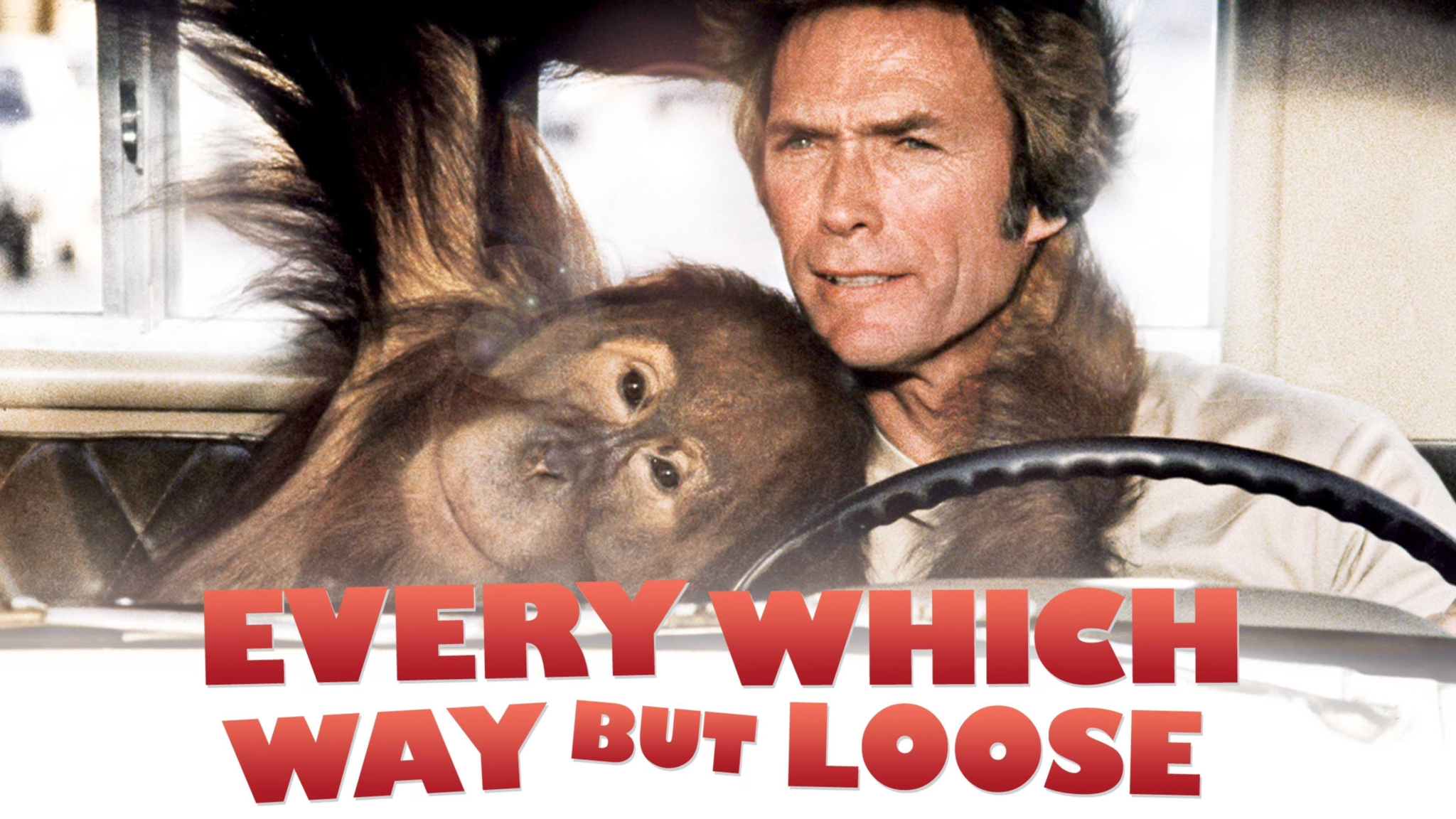
Every Which Way but Loose (released on Dec. 20, 1978) was a shocking departure for Clint Eastwood, who was then the reigning king of the gritty “Man with No Name” and Dirty Harry personas. Trading his Magnum .44 for bare knuckles and a scene-stealing orangutan, Eastwood ventured into the world of the blue-collar slapstick comedy.
Philo Beddoe (Eastwood) is a laid-back truck driver and legendary bare-knuckle brawler living in the San Fernando Valley.
He shares a small house with his brother and promoter, Orville (Geoffrey Lewis), their foul-mouthed, shotgun-toting Ma (Ruth Gordon), and his best friend—a 165-pound orangutan named Clyde.
Philo makes extra cash fighting in unsanctioned bouts arranged by Orville, but his uncomplicated life is disrupted when he falls hard for Lynn Halsey-Taylor (Sondra Locke), an elusive country singer with a checkered past.
When Lynn abruptly disappears, Philo and Clyde hit the road in a beat-up Chevy truck to find her, with Orville and his new girlfriend, Echo (Beverly D’Angelo), in tow.
The journey becomes a chaotic odyssey across the American West.
Philo is pursued by a variety of colorful antagonists, including a bumbling neo-Nazi biker gang known as the Black Widows, led by Dallas (Bill McKinney), and a pair of vengeful police officers whom Philo embarrassed in a bar fight.
Between impromptu street fights and avoiding his pursuers, Philo’s search for Lynn leads him to Colorado, where he discovers that his romantic idol isn’t exactly who she claimed to be.
The film reaches its climax with a high-stakes fight against the legendary Tank Murdock (Walter Barnes), where Philo must decide if the glory of the win is worth more than the integrity of his spirit.
Despite initial skepticism from critics, the film became a massive box-office phenomenon, proving that Eastwood’s star power could translate into a lighter, more eccentric brand of Americana.
Every Which Way but Loose would be followed by its successful sequel, Any Which Way You Can.
The film’s soundtrack album included two songs that reached No. 1 on the Billboard Hot Country Singles chart in 1979: the title track “Every Which Way but Loose” by Eddie Rabbitt and “Coca-Cola Cowboy” by Mel Tillis.
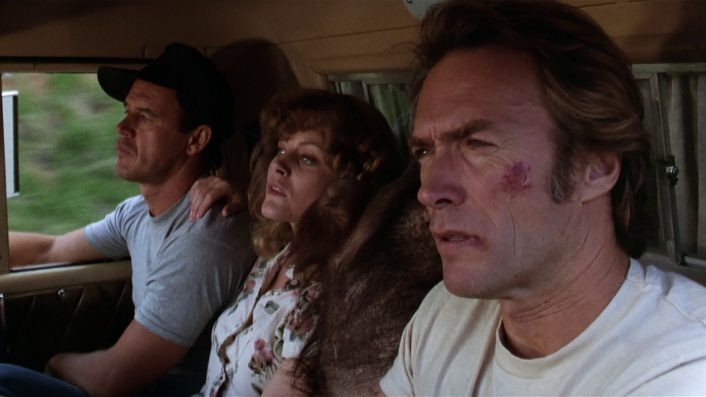
Every Which Way But Loose (Photo/Warner Bros.)
Reception for Every Which Way but Loose
Every Which Way but Loose grossed $10.3 million on its opening weekend, finishing No. 1 at the box office.
The film would gross $104.3 million and would finish as the No. 4 film for 1978.
Legacy
Every Which Way but Loose is one of the most successful “curveballs” in cinematic history and it remains one of Eastwood’s highest-grossing films, proving his immense appeal to the American heartland and his willingness to satirize his own tough-guy image.
While it initially polarized critics, it has earned a lasting reputation as a quintessential piece of 1970s blue-collar cinema, praised for its rugged charm and its catchy country soundtrack.