


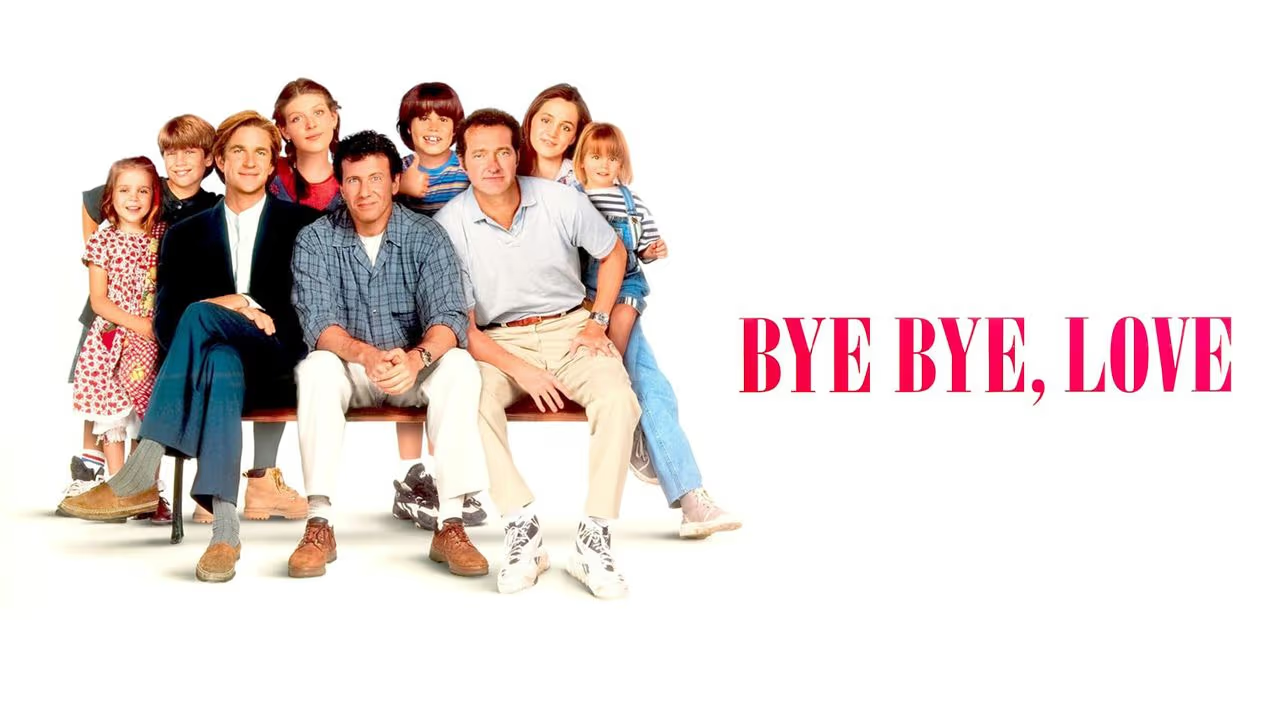
Bye Bye Love (released in theaters on March 17, 1995) is a refreshingly honest and humorous ensemble piece that tackles the complexities of post-divorce life in suburban America. Released during a decade defined by the “slacker” aesthetic, the film instead focuses on the “weekend warrior” fathers navigating shared custody, alimony, and the daunting world of mid-life dating.
It is a movie that balances its sitcom-style energy with a genuine, sometimes melancholic, look at the fractured modern family, proving that while a marriage might end, the chaotic business of being a parent never does.
The story follows three friends over the course of a single, frantic weekend in Los Angeles.
Dave (Matthew Modine) is a serial philanderer struggling to reconcile his lifestyle with his role as a father; Vic (Randy Quaid) is a volatile, embittered man whose explosive personality makes every social interaction a minefield; and Donny (Paul Reiser) is a sensitive soul still deeply in love with his ex-wife (Jayne Brook) while spending time with Dave’s ex-wife Susan (Amy Brenneman).
The trio spends their time at a local McDonald’s, the unofficial neutral ground for custody hand-offs, where they interact with their children, including Donny’s rebellious daughter Emma (Eliza Dushku) and his younger daughter Meg (Amber Benson).
As the weekend progresses, the men find themselves in a series of comedic and awkward romantic entanglements. Vic embarks on a disastrously funny “blind date from hell” with Lucille (Janeane Garofalo), whose cynical, chain-smoking intensity provides a perfect foil to his insecurity.
Meanwhile, Dave attempts to charm his way into a new relationship while dodging his ex-wife (Lindsay Crouse), and Donny must decide if he is ready to finally move on.
The ensemble also includes a local radio personality (Rob Reiner) who provides a Greek chorus of relationship advice over the airwaves.
The narrative builds to a high school party where the fathers and their children’s lives collide, forcing everyone to confront the messy reality that growing up isn’t just for the kids.
Wendell Pierce, Dana Wheeler-Nicholson, Ross Mallinger, Mae Whitman, Ed Flanders, Danny Masterson and Stephen Root round out the supporting cast.
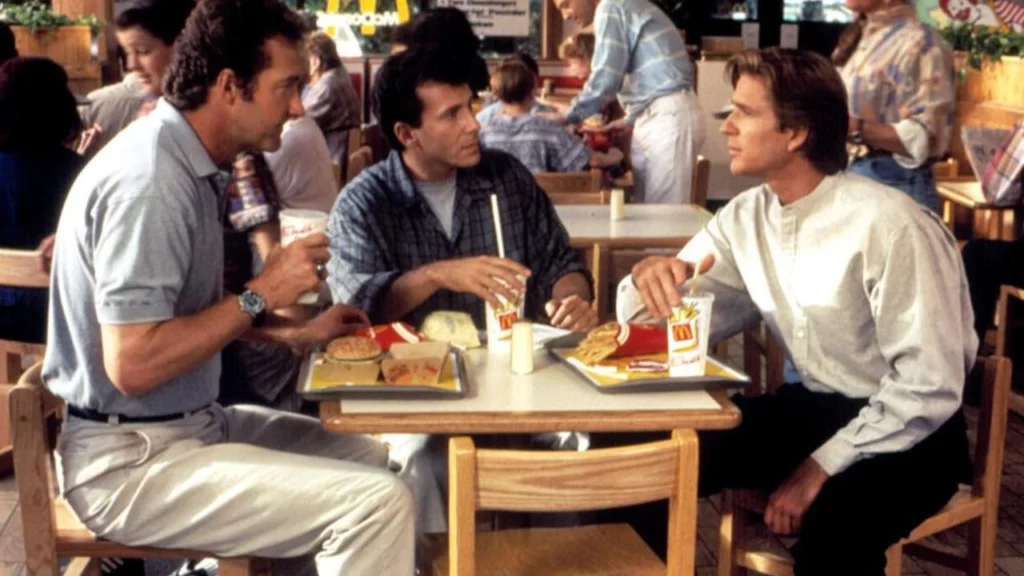
Randy Quaid, Paul Reiser and Matthew Modine in Bye Bye Love (Photo/20th Century Fox)
Reception for Bye Bye Love
Bye Bye Love grossed $4.5 million on its opening weekend, finishing fourth at the box office.
The film would gross $12.1 million in its theatrical run.
Roger Ebert gave Bye Bye Love two out of four stars in his review.
Legacy
Bye Bye Love‘s legacy lies in its status as a foundational “divorce comedy” that paved the way for more nuanced depictions of fatherhood in the years to follow.
It is remembered for its sharp, observational script and the standout comedic performance of Garofalo, whose cameo-turned-lead-role became a definitive moment for 90s alternative comedy.
While it was a modest success upon release, it gained a loyal following on cable and home video for its relatable, “slice-of-life” approach to a topic that was often treated with either too much melodrama or too much slapstick.