



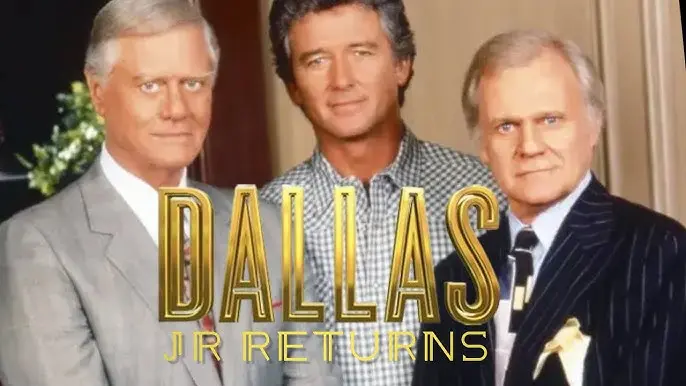
The plot accelerates into a classic, multi-layered Ewing chess match. J.R. manipulates a fierce corporate buyout, pitting Barnes against a powerful competitor named Carter McKay (George Kennedy).
Meanwhile, J.R. also tries to mend his fractured relationship with his ex-wife, Sue Ellen (Linda Gray), who has carved out an independent life for herself.
The emotional landscape is further enriched by appearances from Audrey Landers as Afton Cooper, Tracy Scoggins as Anita Smithfield and Buck Taylor as Steve Grisham, adding traditional western grit to the high-society drama.
As secret contracts are forged and familial loyalties are tested, the film builds toward a satisfying climax where J.R. reminds everyone exactly why he is the most dangerous—and captivating—man in the oil business.
Hagman steps back into his most famous role with effortless charisma, slipping on the Stetson hat and mischievous grin like he never left. His banter with Duffy and Gray feels instantly familiar, recapturing the lightning-in-a-bottle chemistry that defined prime-time television for over a decade.
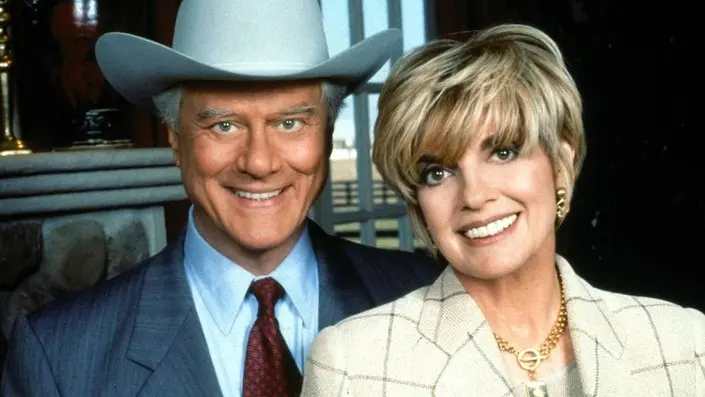
Larry Hagman and Linda Gray in Dallas: J.R. Returns (Photo/Warner Bros. Televison)
Reception for Dallas: J.R. Returns
Dallas: J.R. Returns was a ratings success for CBS, ranking 14th place for the week it was shown, with a 13.4 rating. A second Dallas TV movie, War of the Ewings, would follow on CBS on April 24, 1998
Legacy
The legacy of Dallas: J.R. Returns rests on its historic success in pioneering the modern “reunion movie” trend, proving that audiences possessed an insatiable appetite for long-form television continuations.
It successfully corrected the ambiguous, surreal tone of the original series finale, giving millions of faithful fans the definitive, grounded continuation they had actively campaigned for since 1991.
By proving that the Ewing family dynamic could still command impressive network ratings, this film paved the way for a second reunion special and, ultimately, the major TNT continuation series decades later.
Dallas: J.R. Returns remains a masterfully executed, nostalgic celebration of a cultural phenomenon, cementing J.R. Ewing’s status as the ultimate, beloved villain of American broadcasting history.