



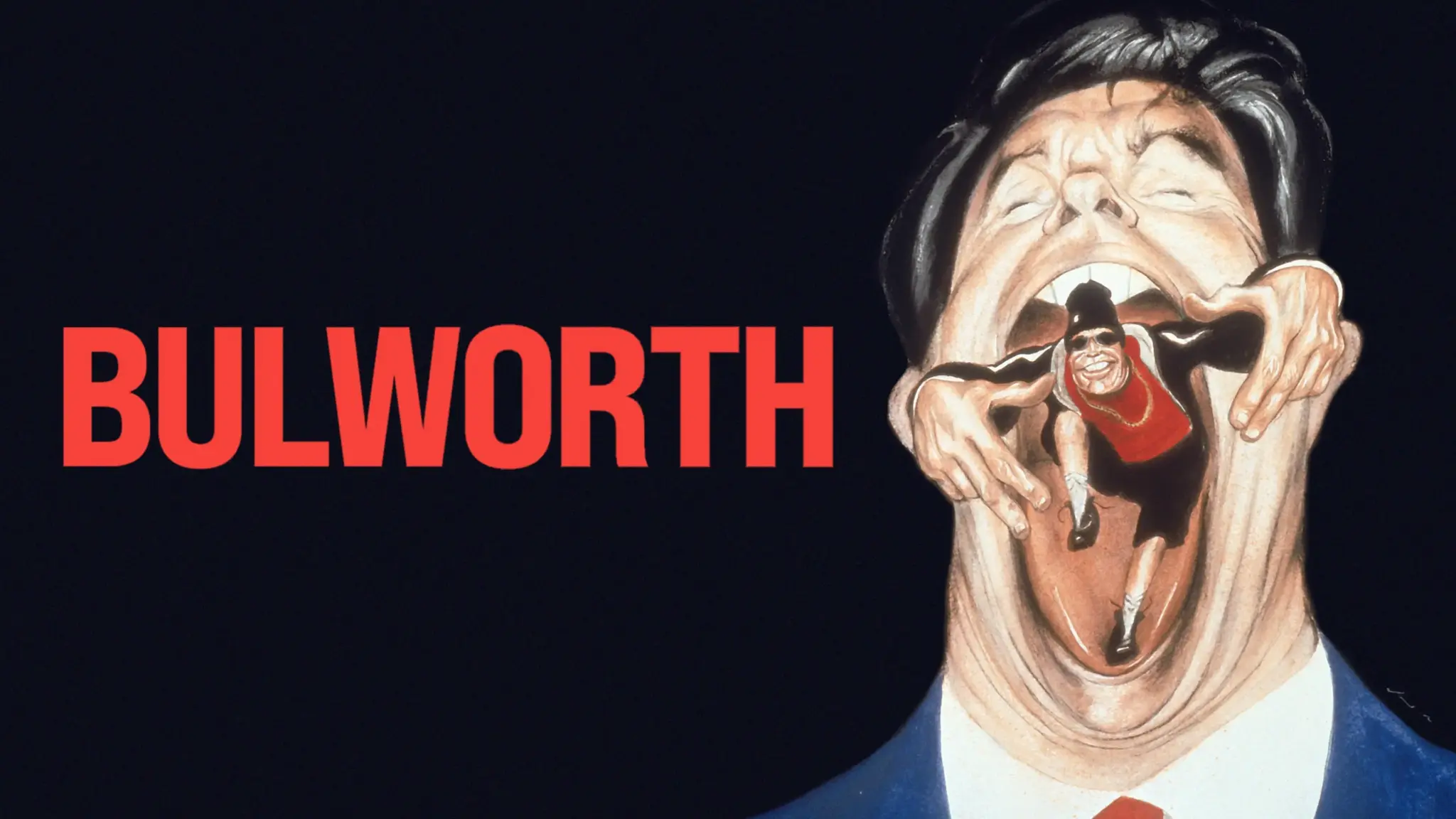
Bulworth (released in theaters on May 15, 1998) follows Jay Billington Bulworth (Warren Beatty), a disillusioned U.S. Senator from California who is facing financial ruin and a soul-crushing re-election campaign.
Driven to total despair by his own corporate-sponsored platitudes, Bulworth takes out a massive $10 million life insurance policy to secure his daughter’s future and subsequently hires a hitman to assassinate him over the weekend.
Believing he has nothing left to lose, a sleep-deprived Bulworth completely abandons his carefully manufactured political persona during a campaign stop at an African American church. Instead of delivering his rehearsed speech, he begins speaking with brutal, unfiltered honesty about corruption, race, and corporate greed.
The plot takes a chaotic turn when Bulworth visits an underground hip-hop club and encounters Nina (Halle Berry), a sharp, young political activist who captivates him.
Immersing himself in hip-hop culture, the senator begins expressing his radical new political truths through rap music, shocking his panicked campaign manager, Dennis Murphy (Oliver Platt).
As Bulworth’s raw, rhythmic truth-telling unexpectedly skyrockets his popularity with the public, he frantically tries to call off the hit on his life, realizing too late that the labyrinthine chain of brokers makes the assassin impossible to stop.
Along the way, he navigates a treacherous media landscape populated by shady lobbyists like Graham Crockett (Paul Sorvino), veteran political fixers (Jack Warden), and local figures like Darnell (Isaiah Washington) and L.D. (Don Cheadle), leading to a manic race against time.
Sean Astin, Joshua Malina, Christine Baranski, Laurie Metcalf, Wendell Pierce and Michael Clarke Duncan round out the supporting cast.
Beatty pulls quadruple duty as director, producer, co-writer, and star, delivering a fearless performance that masterfully walks the tightrope between farce and tragedy.
Berry shines as Nina, providing the film with its grounded, cynical heart, while Platt’s frantic energy perfectly mirrors the sheer panic of the political establishment.
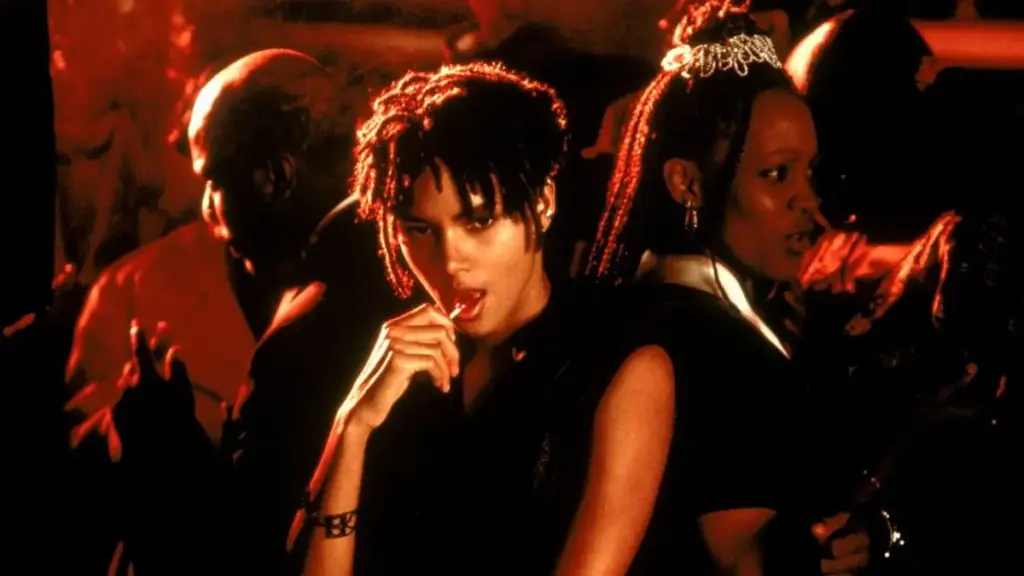
Halle Berry in Bulworth (Photo/20th Century Fox)
Reception for Bulworth
Bulworth grossed $141,816 on its opening weekend, finishing 16th at the box office in limited release with a per screen average of $70,908 on two screens.
The following week, Bulworth grossed $10.5 million in wide release, grossing $10.5 million to finish fourth at the box office.
The film would gross $29.2 million worldwide.
Roger Ebert gave Bulworth three and a half out of four stars in his review.
Legacy
Bulworth‘s legacy rests on its status as one of the final, great studio-backed political satires of the 20th century, a movie that grew more prophetic with each passing decade.
It anticipated the modern intersection of entertainment, music, and politics, accurately predicting how a populist figure speaking without a filter could completely upend the traditional media establishment.
By utilizing hip-hop as a medium for raw political discourse, it challenged Hollywood’s standard approach to race relations and economic inequality.
Decades after its release, Bulworth remains a fiercely discussed cult classic, celebrated for its cynical, unapologetic look at the corporate stranglehold on democracy and its willingness to make audiences deeply uncomfortable.