




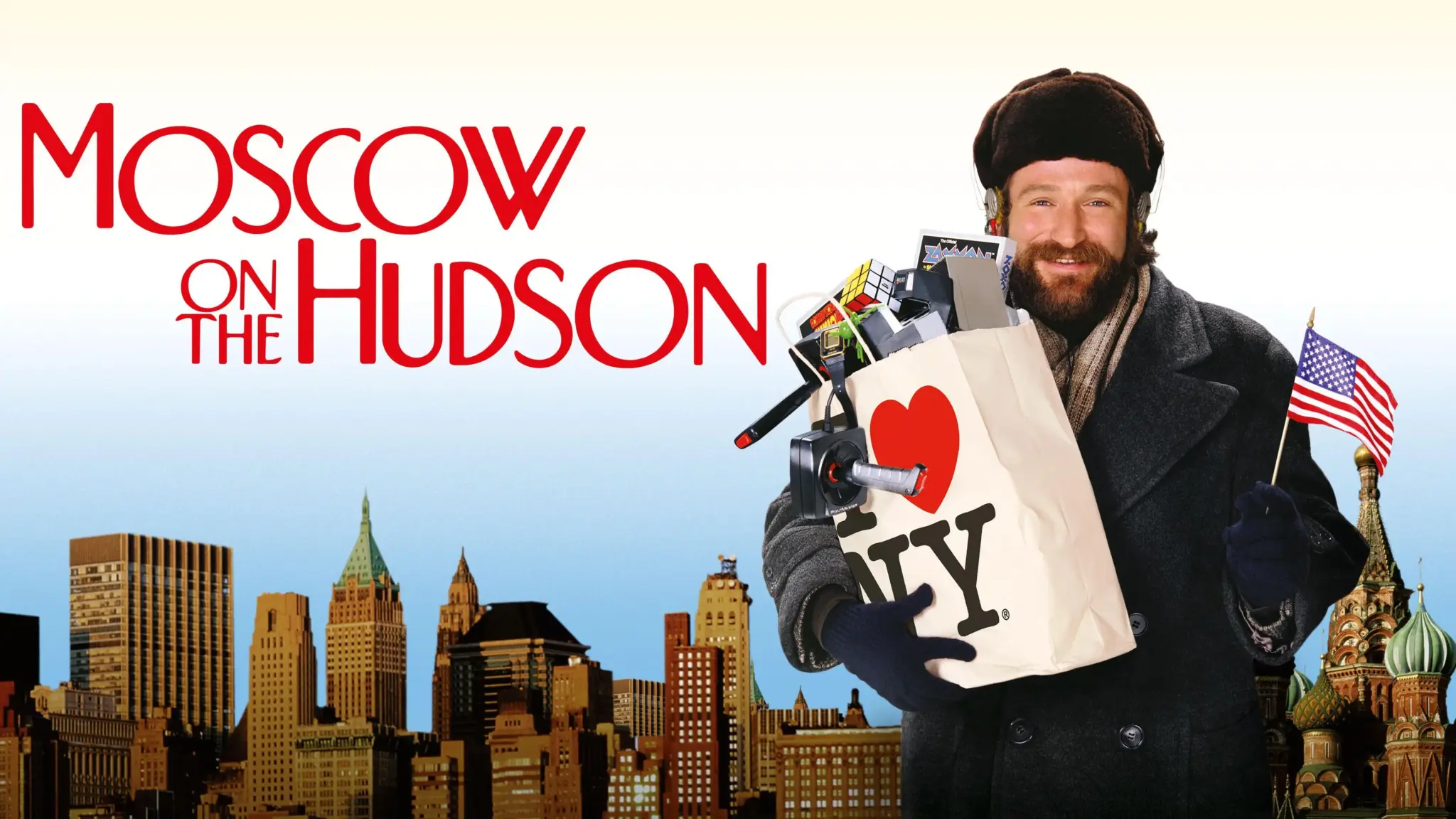
Moscow on the Hudson (released in theaters on April 6, 1984) tells the poignant and humorous story of Vladimir Ivanoff (Robin Williams), a talented saxophonist in a Soviet circus troupe who dreams of a life beyond the stifling shortages and political oppression of 1980s Russia.
While on a state-sanctioned trip to New York City, the troupe visits Bloomingdale’s, where Vladimir makes a split-second, life-altering decision to defect right in the middle of the department store.
Abandoning his best friend Anatoly and the only life he has ever known, he is thrust into the dizzying, neon-lit chaos of Manhattan.
Taken in by a security guard named Lionel and finding romance with an Italian immigrant named Lucia, Vladimir navigates the difficult transition from a man who had nothing to a man who has the freedom to be anything.
The plot masterfully balances the initial euphoria of liberty with the harsh realities of loneliness, menial labor, and the deep-seated yearning for the family he left behind.
Williams delivers one of the most disciplined and moving performances of his career, capturing Vladimir’s wide-eyed wonder and quiet desperation with a convincing Russian accent and soulful vulnerability.
He is beautifully supported by María Conchita Alonso, who shines as the spirited Lucia, and Cleavant Derricks, who provides the film’s moral compass as Lionel.
Yakov Smirnoff also appears, adding a layer of authenticity to the immigrant experience that director Paul Mazursky so carefully crafts.
Mazursky’s direction ensures the film never devolves into simple Cold War propaganda, instead focusing on the universal human desire for self-determination and the diverse melting pot that defines the American experience.
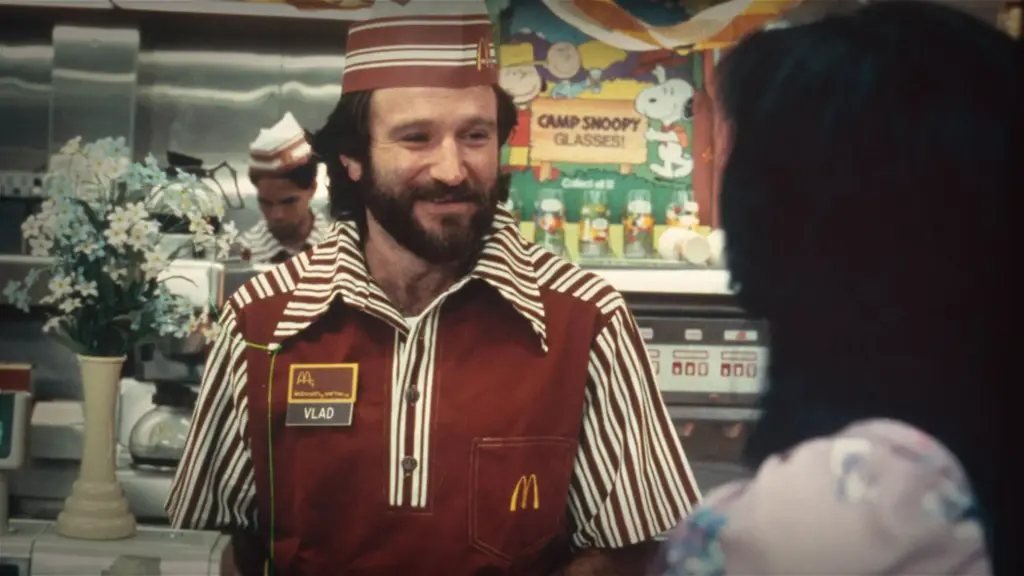
Robin Williams in Moscow on the Hudson (Photo/Columbia Pictures)
Reception for Moscow on the Hudson
Moscow on the Hudson grossed $3.5 million on its opening weekend, finishing sixth at the box office.
The film would gross $25.1 million in its theatrical run.
Roger Ebert gave Moscow on the Hudson four out of four stars in his review.
Legacy
Moscow on the Hudson‘s legacy remains significant for its empathetic and nuanced portrayal of the immigrant journey, standing as one of the most thoughtful cinematic explorations of patriotism and personal freedom.
It is often remembered as the moment the world realized Williams was a powerhouse dramatic actor, capable of much more than the manic energy that made him a star.
By focusing on the small, everyday struggles of New York’s working-class immigrants, the movie avoids grand political statements in favor of a deeply personal narrative about what it means to truly be free.
It continues to resonate as a celebration of the American spirit, viewed through the eyes of those who have sacrificed everything to reach its shores, and remains a vital piece of 1980s cinema for its warmth, humor, and enduring humanity.