







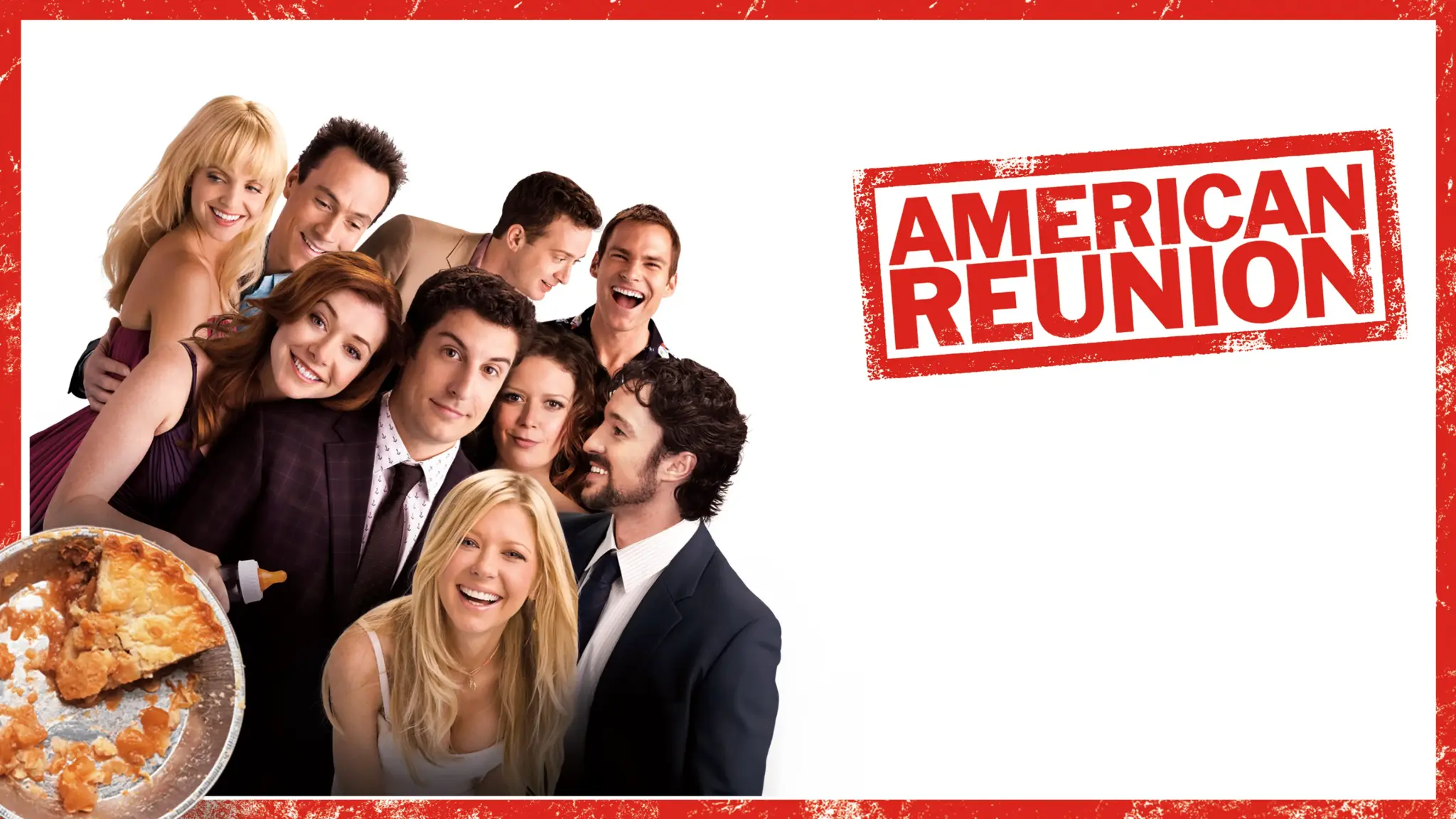
American Reunion (released in theaters on April 6, 2012) catches up with the East Great Falls crew thirteen years after their high school graduation, proving that while people age, their capacity for public embarrassment remains timeless.
The plot finds Jim and Michelle struggling with the “spark” after becoming parents, while Kevin, Oz, and Finch have all settled into various levels of adult dissatisfaction.
When they return home for their high school reunion, the group attempts to recapture their youth.
Naturally, Stifler is the only one who hasn’t tried to change at all, serving as the catalyst for a weekend of binge drinking, awkward sexual encounters, and the inevitable realization that growing up doesn’t mean having all the answers.
Between Jim’s latest viral mishap involving a clear kitchen lid and the group’s attempts to navigate old flames like Vicky and Heather, the film balances its crude DNA with a surprising amount of heart.
The ensemble cast returns with remarkable chemistry, led by Jason Biggs and Alyson Hannigan, who anchor the film with a relatable, albeit frantic, domesticity.
Seann William Scott steals every scene as Steve Stifler, providing the high-octane chaos necessary to keep the pace moving.
Seeing Chris Klein, Thomas Ian Nicholas, and Eddie Kaye Thomas slip back into their roles feels like a genuine catch-up with old friends, while Eugene Levy remains the franchise’s secret weapon as Jim’s Dad, finding a new lease on life with Jennifer Coolidge’s iconic Stifler’s Mom.
Appearances by Tara Reid, Mena Suvari, Shannon Elizabeth, John Cho, Chris Owen and Natasha Lyonne round out a full-circle moment for the series.
Rebecca De Mornay has an uncredited appearance as Finch’s mom.
American Reunion, the fourth and final installment in the American Pie theatrical series, was written and directed by Jon Hurwitz and Hayden Schlossberg.
The film follows American Pie, American Pie 2 and American Wedding.
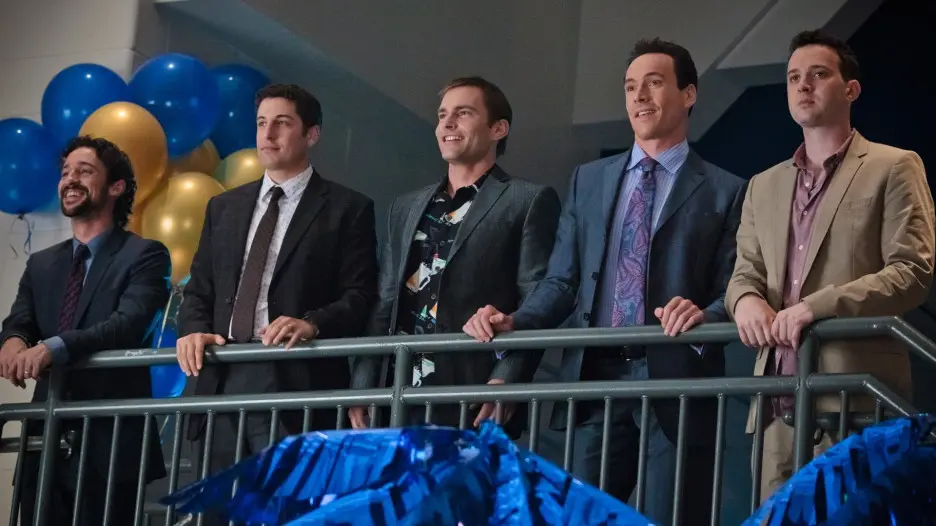
American Reunion (Photo/Universal Pictures)
Reception for American Reunion
American Reunion grossed $23.8 million on its opening weekend, finishing second at the box office behind The Hunger Games ($37.3 million).
The film would gross $235.1 million worldwide.
Roger Ebert gave American Reunion three out of four stars in his review.
Legacy
American Reunion‘s legacy lies in its ability to serve as a bridge between the raunchy comedy boom of the late nineties and the more reflective, “dad-comedy” subgenre.
It successfully transitioned the American Pie brand from a story about losing virginity to a story about maintaining identity in the face of middle age.
Unlike many legacy sequels that feel like a cynical cash grab, this entry was praised for its genuine affection for its characters.
It solidified the franchise as a cultural touchstone for a specific generation, proving that the bond between this specific group of friends was the true heart of the series all along, far outweighing the shock-value gags that initially made them famous.
American Reunion remains a definitive example of how to execute a reunion film with equal parts vulgarity and sincerity.