





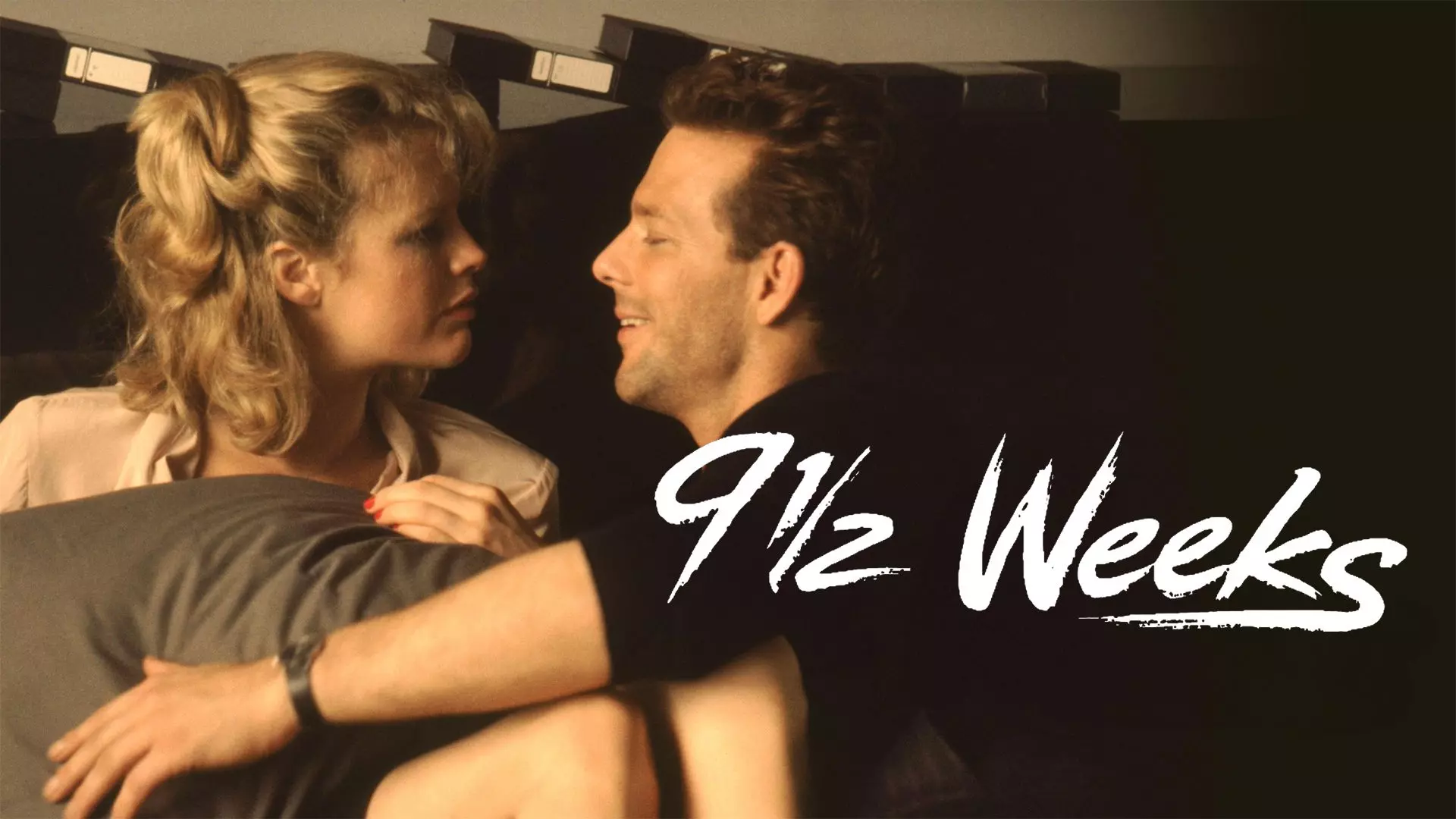
9½ Weeks (released in theaters on Feb. 21, 1986) redefined the erotic drama, stripping away the conventions of the traditional romance to focus on the sensory, the obsessive, and the temporary. Directed by Adrian Lyne, the film transformed the grimy, pre-gentrified streets of New York City into a claustrophobic playground for two beautiful strangers.
The story begins with a chance encounter between Elizabeth McGraw (Kim Basinger), a sophisticated but emotionally guarded art gallery assistant, and John Gray (Mickey Rourke), a wealthy, enigmatic Wall Street arbitrageur.
What starts as a flirtatious courtship rapidly descends into a structured, 9½-week-long experiment in power dynamics and sensory deprivation.
John systematically deconstructs Elizabeth’s inhibitions through a series of increasingly daring games.
From the iconic refrigerator scene to a blindfolded tasting of honey and peppers, the film prioritizes texture and atmosphere over traditional dialogue.
As the relationship progresses, the games shift from playful to manipulative.
Elizabeth finds herself caught between the intoxicating thrill of John’s spontaneity and the realization that she knows nothing about the man behind the control.
Supporting characters, such as Elizabeth’s friend Molly (Margaret Whitton), serve as brief tethers to the real world, but the narrative remains intensely focused on the two leads.
As the titular deadline approaches, the emotional cost of their “no-strings-attached” arrangement becomes unbearable, leading to a heartbreaking realization that physical intimacy cannot substitute for a genuine human connection.
Christine Baranski, David Margulies and Karen Young round out the cast.
A sequel titled Another 9½ Weeks starring Rourke and Angie Everhart was released direct-to-video in 1997.
A prequel, The First 9½ Weeks starring Paul Mercurio and Clara Bellar, was released straight-to-video in 1998.
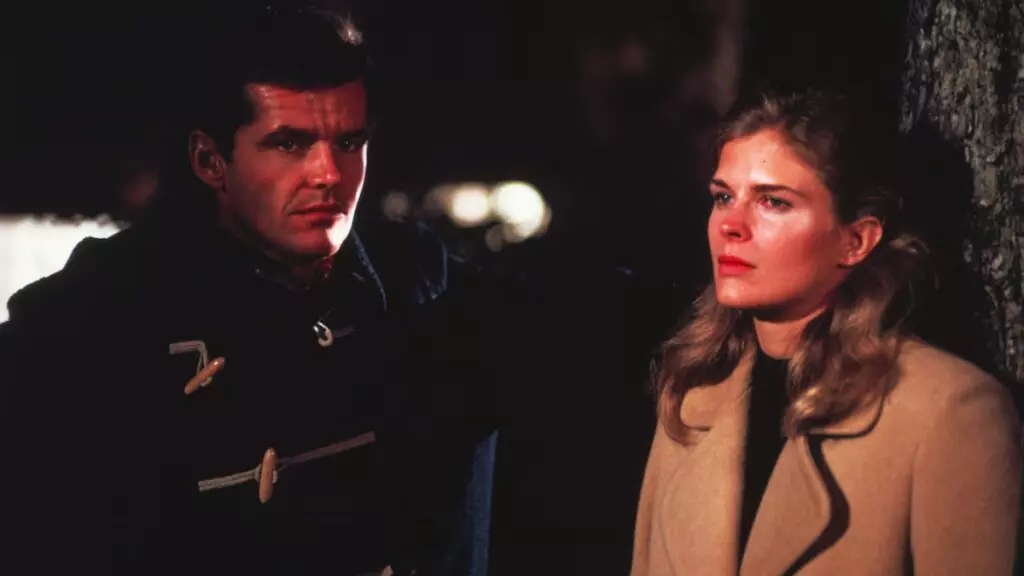
Kim Basinger and Mickey Rourke in 9½ Weeks (Photo/MGM)
Reception for 9½ Weeks
9½ Weeks grossed $328,804 on its opening weekend, finishing 16th in limited release.
The film would gross $6.7 million in its theatrical run.
Roger Ebert gave 9½ Weeks three and a half out of four stars in his review.
The film originally released an X rating, but three minutes were edited in order to ensure an R rating in America.
Legacy
The initial reception of 9½ Weeks was notoriously rocky, particularly in the United States. Domestic critics were largely dismissive, often labeling the film as a “glorified music video” or “hollow voyeurism.”
It struggled to find an audience comfortable with its frank depiction of fetishism and its lack of a “happy” Hollywood ending. However, the film found a second, massive life internationally and on the burgeoning home video market. In Europe—particularly France and Italy—it was hailed as a stylistic masterpiece and ran in theaters for years.
Over time, critical reappraisal has been kinder to Lyne’s vision, praising the breathtaking cinematography and the raw, vulnerable performances of Basinger and Rourke.
It is now regarded as a definitive time capsule of 80s aesthetics and a pioneer of the “slick” erotic thriller genre that would dominate the following decade.