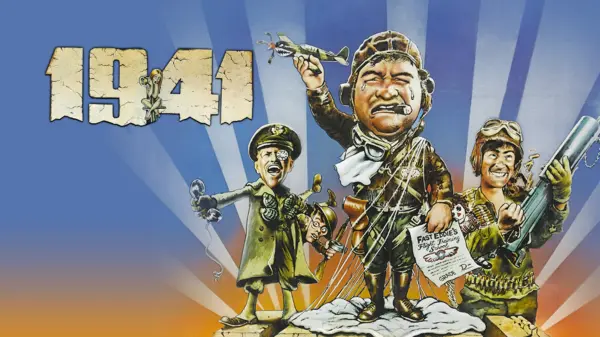

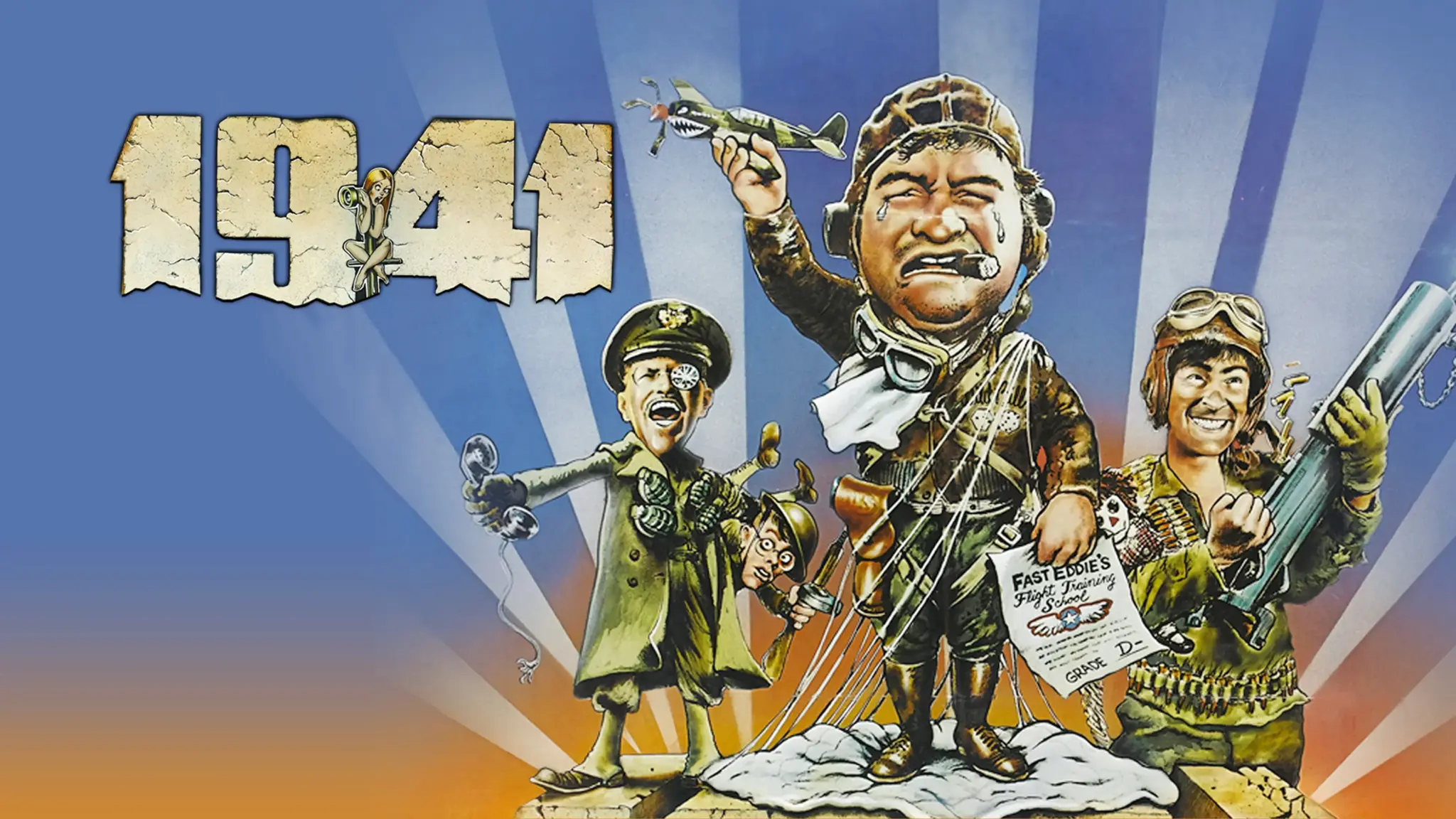
1941 (released in theaters on December 14, 1979) unleashes a massive, loud, and deliriously chaotic slapstick spectacle set in the anxious days immediately following the attack on Pearl Harbor, directed by Steven Spielberg and written by Robert Zemeckis and Bob Gale. The story takes place in Southern California during December 1941, where widespread rumors of an imminent Japanese invasion push both military personnel and everyday citizens into hilarious states of paranoia.
Off the coast, an Imperial Japanese Navy submarine commanded by Akiro Mitamura (Toshiro Mifune) and accompanied by German liaison officer Captain Wolfgang von Kleinschmidt (Christopher Lee) surfaces near Los Angeles, searching for a prominent Hollywood target to strike.
Meanwhile, on land, a sprawling web of eccentric characters collides across the city as panic spirals wildly out of control.
Among the key figures caught in the escalating madness are Wild Bill Kelso (John Belushi), an unhinged, cigar-chomping Army Air Forces pilot patrolling the skies in a battered fighter plane, and Sergeant Frank Tree (Dan Aykroyd), an overly zealous tank commander determined to defend the coast at all costs.
Across town, Major General Joseph Stilwell (Robert Stack) tries to maintain order amidst civilian hysteria, while amorous pilot Captain Loomis Birkhead (Tim Matheson) pursues secretary Donna Stratton (Nancy Allen) in a stolen bomber.
Elsewhere, ordinary citizens including Ward Douglas (Ned Beatty), Private Foley (John Candy), Colonel Maddox (Warren Oates), Hollis Wood (Slim Pickens), and Private Reese (Mickey Rourke) get swept into runaway tanks, Ferris wheel disasters, and USO dance riots as misunderstandings multiply across every block.
Belushi steals every frame he enters with anarchic physical energy, while Aykroyd and Candy bring sharp comedic precision to their military roles.
Stack plays the straight man to perfection, anchoring the surrounding lunacy with deadpan authority, and Mifune lends genuine gravitas to the submarine sequences.
Spielberg orchestrates the mayhem on an enormous technical scale, packing the frame with elaborate miniatures, roaring aircraft, and John Williams’ bombastic, march-driven musical score.
Lorraine Gary, Michael McKean, Patti LuPone, Penny Marshall, Bobby Di Cicco, Murray Hamilton, Frank McRae, Wendie Jo Sperber, Dub Taylor, Don Calfa, Joe Falherty, Dick Miller, Perry Lang, Eddie Deezen, and Audrey Landers round out the ensemble cast.
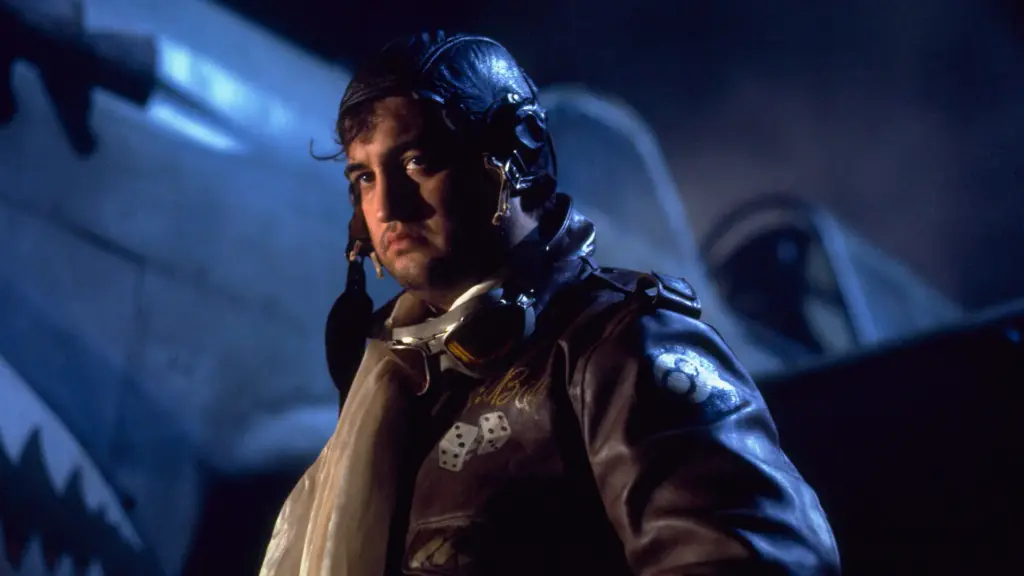
John Belushi in 1941 (Photo/Universal Pictures)
Reception for 1941 directed by Steven Spielberg
1941 grossed $2.7 million on its opening weekend, finishing third at the box office. The top film was Star Trek: The Motion Picture, which earned $7.2 million on its second weekend.
The film would gross $31.8 million in its theatrical run.
Roger Ebert gave 1941 one and a half stars in his review.
Legacy
1941‘s legacy stands as one of Hollywood’s most fascinating big-budget curiosities, famously marking Spielberg’s first critical and commercial stumble after the monumental triumphs of Jaws and Close Encounters of the Third Kind.
While initial audiences and reviewers found its relentless noise and sprawling subplots overwhelming in 1979, subsequent generations of cinephiles have re-evaluated it as an audacious, technically dazzling comedy experiment featuring a remarkable ensemble of future legends.
1941 endures as a cult favorite admired for its sheer physical ambition, intricate practical effects, and fearless commitment to maximalist farce.