











Yes Man (released in theaters on Dec. 19, 2008) serves as a vibrant reminder of Jim Carrey’s unique ability to blend elastic physical comedy with genuine heart. Directed by Peyton Reed and loosely based on the memoir by Danny Wallace, the film arrived at a time when audiences were looking for a hopeful, high-concept comedy that offered both big laughs and a relatable existential question: are we living life, or just watching it pass by?
Carl Allen (Carrey) is a man stuck in a perpetual state of “no.” Since his divorce, he has become a hermit, dodging calls from his best friends Peter (Bradley Cooper) and Rooney (Danny Masterson), and stagnating in a dead-end job as a bank loan officer.
His life changes when his former colleague Nick (John Michael Higgins) drags him to a self-help seminar led by the charismatic and intense Terrence (Terence Stamp).
Under pressure, Carl makes a “covenant” with the universe: he must say “yes” to every single opportunity, request, or invitation that comes his way, regardless of how absurd it might be.
This new philosophy leads to a whirlwind of chaos and discovery.
Carl learns Korean, takes flying lessons, says “yes” to every loan application, and finds himself in increasingly bizarre situations orchestrated by his eccentric boss, Norman (Rhys Darby).
Along the way, he meets Allison (Zooey Deschanel), a quirky, free-spirited musician and photographer who is the antithesis of his former self.
While his “yes” streak brings him romance and adventure, it eventually leads to a legal misunderstanding involving a federal investigation and forces Carl to realize that the spirit of the philosophy is more important than the literal word.
Molly Sims, Fionnula Flanagan, Luis Guzman and Spencer Garrett round out the cast.
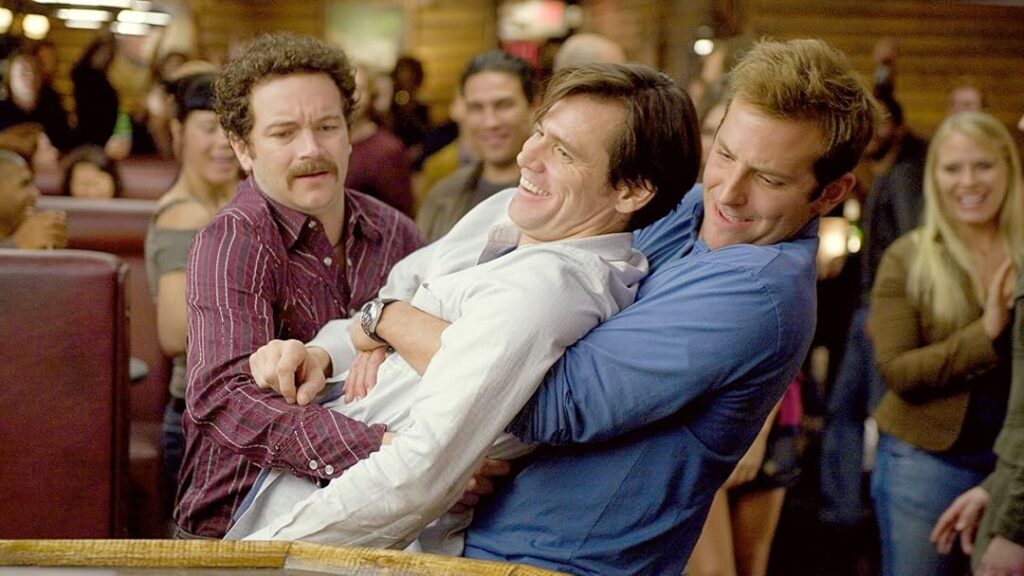
Yes Man (Photo/Warner Bros.)
Reception for Yes Man
Yes Man grossed $18.3 million on its opening weekend, finishing No. 1 at the box office.
The film would $223.2 million worldwide.
Roger Ebert gave Yes Man two out of four stars in his review.
Legacy
Yes Man is remembered for its enduring status as a “feel-good” staple that successfully bridged the gap between Jim Carrey’s manic 90s persona and his more grounded later work.
It is often cited as one of the most effective examples of the “Man-Child” redemption arc that dominated 2000s comedy, but it distinguishes itself through its earnestness and the palpable chemistry between Carrey and Deschanel.
Culturally, the film sparked a real-world “Yes Man” trend, with fans attempting their own versions of the challenge to break out of personal ruts.
Beyond the jokes about Red Bull and Harry Potter-themed parties, the film remains a popular philosophical touchstone, encouraging viewers to step outside their comfort zones and embrace the unpredictable nature of human connection.