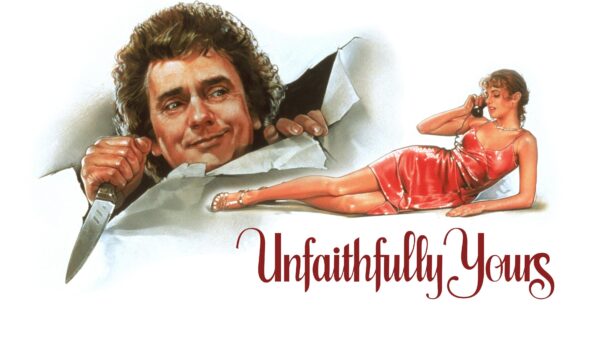






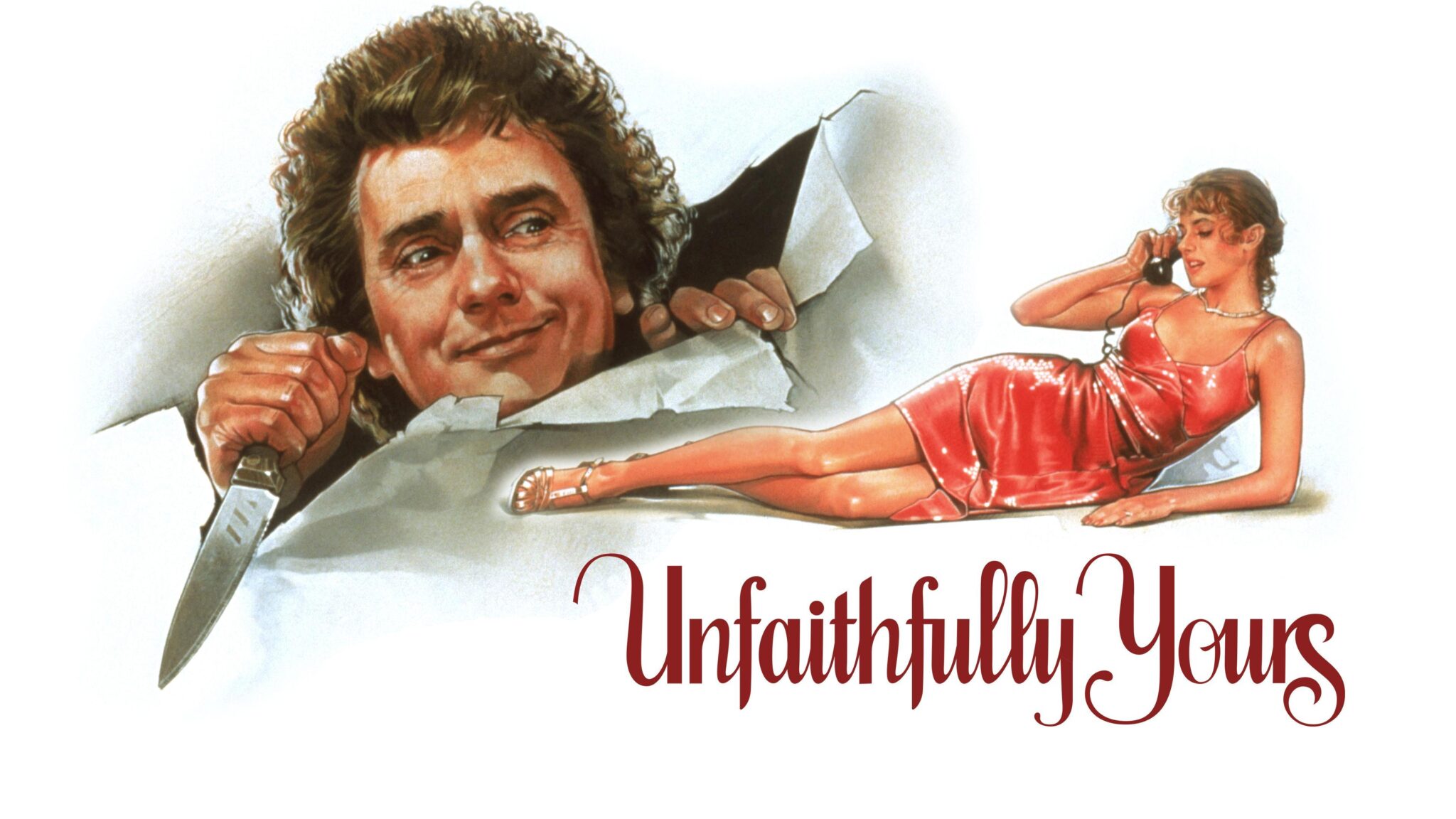
In Unfaithfully Yours (released in theaters on Feb. 10, 1984), Claude Eastman (Dudley Moore) is a world-renowned, highly temperamental symphony conductor who seems to have found domestic bliss with his much younger, stunningly beautiful wife, Daniella (Nastassja Kinski).
However, Claude’s insecurities begin to spiral out of control due to a series of absurd misunderstandings.
Encouraged by his cynical brother, Norman (Albert Brooks), and a bumbling private investigator (Richard B. Shull), Claude becomes erroneously convinced that Daniella is having a passionate affair with his friend and protégé, the handsome, violin-playing virtuoso Maxmilian Stein (Armand Assante).
The plot reaches a fever pitch during a prestigious concert performance.
As Claude conducts a stirring program of Tchaikovsky and Rossini, he vividly hallucinates three distinct scenarios for dealing with the perceived betrayal. In his mind, he is a suave, calculating mastermind executing a flawless murder-suicide, then a martyr granting a dignified divorce, and finally a pathetic loser begging for forgiveness.
The comedy stems from the vast chasm between these polished fantasies and reality; when Claude actually attempts to carry out his elaborate revenge plot after the curtain falls, he is thwarted by his own physical clumsiness and the interference of his quirky household staff, including his valet (Richard Libertini).
Directed by Howard Zieff, the film is a frantic comedy of errors that explores how imagination can be a far more dangerous weapon than reality.
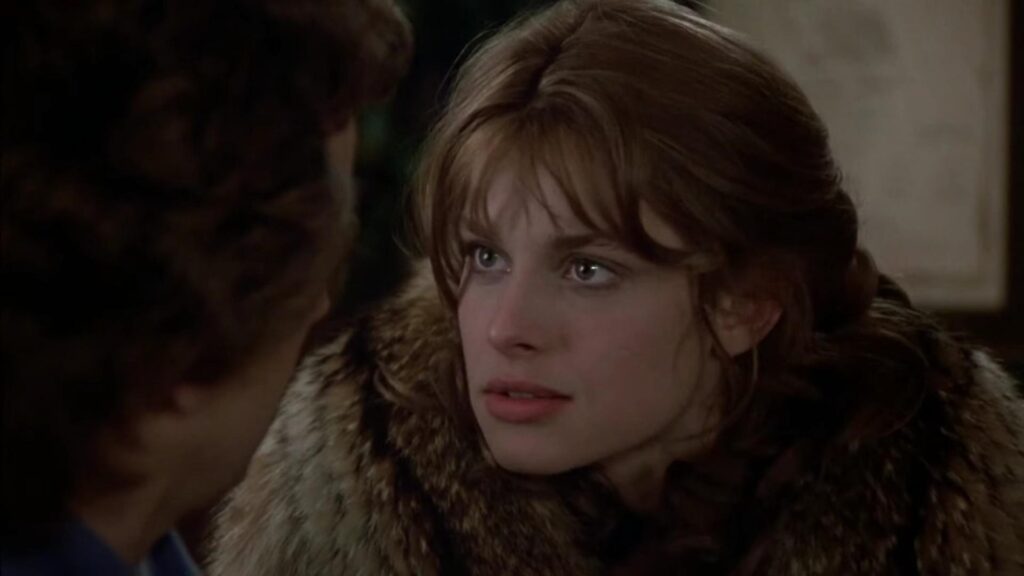
Nastassja Kinski in Unfaithfully Yours (Photo/20th Century Fox)
Reception for Unfaithfully Yours
Unfaithfully Yours grossed $3.8 million on its opening weekend, finishing No. 1 at the box office.
The film would gross $19.9 million in its theatrical run.
Legacy
The legacy of Unfaithfully Yours is its status as a 1980s remake that successfully reimagines a Preston Sturges classic for a modern audience.
While the 1948 original was a dark, satirical masterpiece, this 1984 version is remembered for leaning into the peak “lovable screwball” energy of Moore.
Coming off the massive success of Arthur, Moore’s performance here solidified his reputation as a master of high-energy physical comedy and “frustrated intellectual” tropes.
The film is frequently cited for the brilliant comedic chemistry between Moore and Brooks, whose dry, neurotic delivery provides a perfect foil to the conductor’s operatic meltdowns.
Furthermore, it remains a notable highlight in Kinski’s career, allowing her to play a more comedic, lighthearted role compared to her more somber European works.