






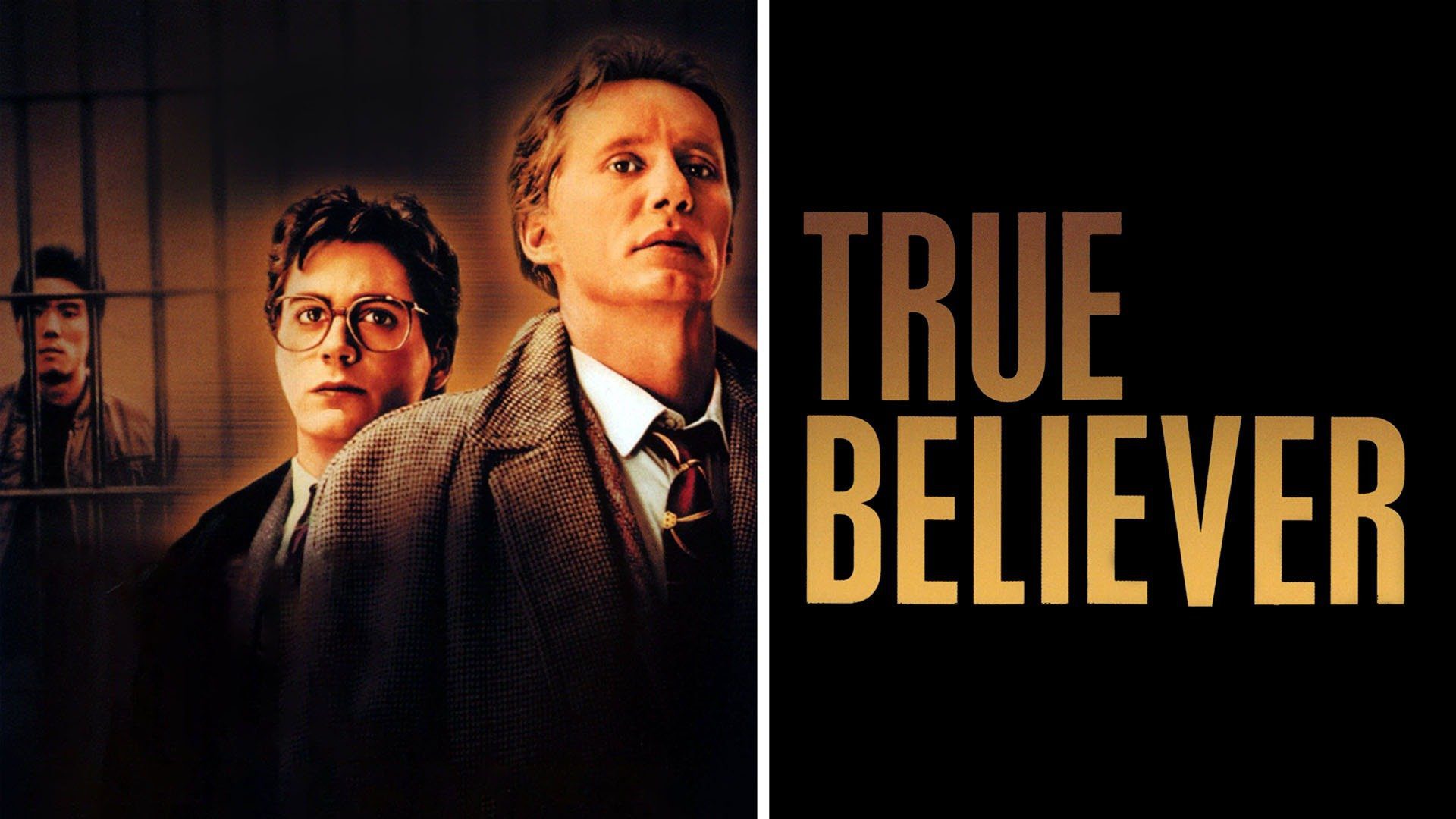
True Believer (released in theaters on Feb. 17, 1989), directed by Joseph Ruben, is a taut, electrifying legal thriller that captures the cynical hangover of the late 1980s. Emerging from the same gritty cinematic soil as the era’s best investigative dramas, it serves as a high-stakes character study of a man who has traded his revolutionary ideals for a lucrative career defending drug dealers.
The film is loosely inspired by the real-life exploits of radical attorney Tony Serra and the investigation into the wrongful conviction of Chol Soo Lee, lending the narrative a palpable, lived-in urgency.
The story follows Eddie Dodd (James Woods), a formerly idealistic civil rights lawyer who has spent the last decade comfortably cynical, specializing in getting wealthy criminals off on technicalities.
His world is disrupted by the arrival of Roger Baron (Robert Downey Jr.), a fresh-faced, idealistic law clerk who admires the legend Eddie used to be. Prompted by a desperate mother, the duo takes on the case of Shu Kai Kim (Yuji Okumoto), an immigrant who has spent eight years in prison for a gangland murder he claims he didn’t commit.
As Eddie and Roger dig deeper, aided by their sharp investigator Kitty Greer (Margaret Colin), they uncover a massive conspiracy involving suppressed evidence and police corruption.
Their investigation puts them in the crosshairs of a ruthless District Attorney, Robert Reynard (Kurtwood Smith), and leads them into the dangerous territory of a white supremacist prison gang.
Along the way, they encounter various figures from the urban underworld, including characters played by Charles Hallahan, Luis Guzmán, Graham Beckel, and Miguel Fernandes.
The plot culminates in a high-tension courtroom battle where Eddie must reclaim his spirit to dismantle a system designed to bury the truth.
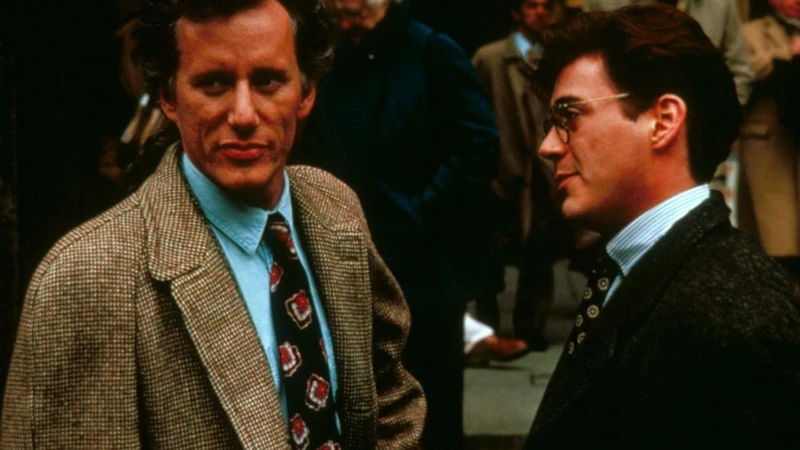
James Woods and Robert Downey Jr. in True Believer (Photo/Columbia Pictures)
Reception for True Believer
True Believer grossed $3 million on its opening weekend, finishing ninth at the box office.
The film would gross $8.7 million in its theatrical run.
Roger Ebert gave True Believer three out of four stars in his review.
Legacy
The legacy of True Believer lies in its masterful pairing of two acting powerhouses at very different stages of their careers.
The film remains one of the finest showcases for the manic, high-wire intensity of Woods, whose performance is a masterclass in verbal dexterity and moral conflict.
Simultaneously, it provided a young Downey Jr. with a grounded dramatic role that demonstrated the range he would later use to conquer Hollywood.
Beyond the acting, the film’s legacy is its contribution to the “legal underdog” subgenre, influencing countless procedural dramas with its gritty aesthetic and focus on the systemic flaws of the American justice system.
True Believer is remembered for its sharp, unsentimental dialogue and its refusal to offer easy answers, cementing its status as a cult classic for those who prefer their courtroom dramas with a side of noir-infused realism.