







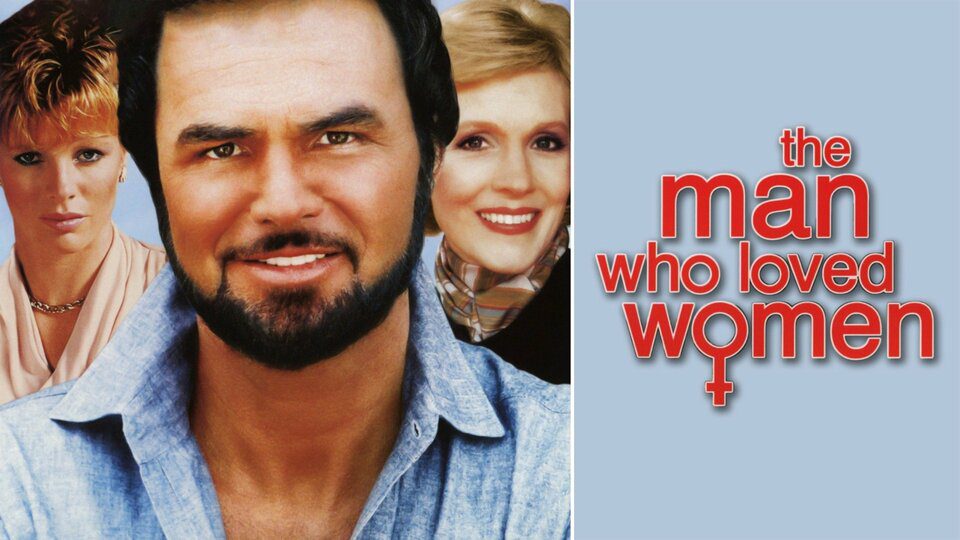
The Man Who Loved Women (released in theaters on Dec. 16, 1983) is a remake of François Truffaut’s 1977 French classic, this version moves the action to contemporary Los Angeles, reimagined through the comedic lens of director Blake Edwards.
The film opens at the funeral of David Fowler (Burt Reynolds), a successful sculptor whose service is attended almost exclusively by women.
Through a series of flashbacks narrated from the couch of his psychiatrist, Marianna (Julie Andrews), the film unravels the life and loves of a man helplessly addicted to the female form.
David isn’t a typical “Don Juan” looking for conquests; he is a man genuinely enthralled by every woman he meets.
However, his obsession has become a debilitating neurosis, rendering him unable to focus on his work or maintain a single relationship.
His journey through the dating scene introduces an eclectic array of women:
-
Louise (Kim Basinger), a socialite with a penchant for risky public trysts.
-
Agnes (Marilu Henner), whose fiery personality leaves a lasting mark.
-
Janet (Sela Ward), representing one of his many fleeting but intense connections.
-
Cynthia Sikes and Jennifer Edwards also feature as significant figures in David’s complicated romantic past.
As David recounts his escapades, he finds himself falling for the one woman who remains professionally out of reach: Marianna. Under her guidance, he attempts to understand the roots of his behavior—often tied to his distant mother—while navigating the comedic fallout of his many overlapping affairs.
Barry Corbin provides supporting humor as Louise’s wealthy husband, Roy.
The Man Who Loved Women stands as a fascinating tonal departure for Reynolds, who traded his “good ol’ boy” persona for a more vulnerable, neurotic, and sophisticated character.
The film is remembered as a stylish exploration of mid-life crisis and the blurred lines between appreciation and compulsion.
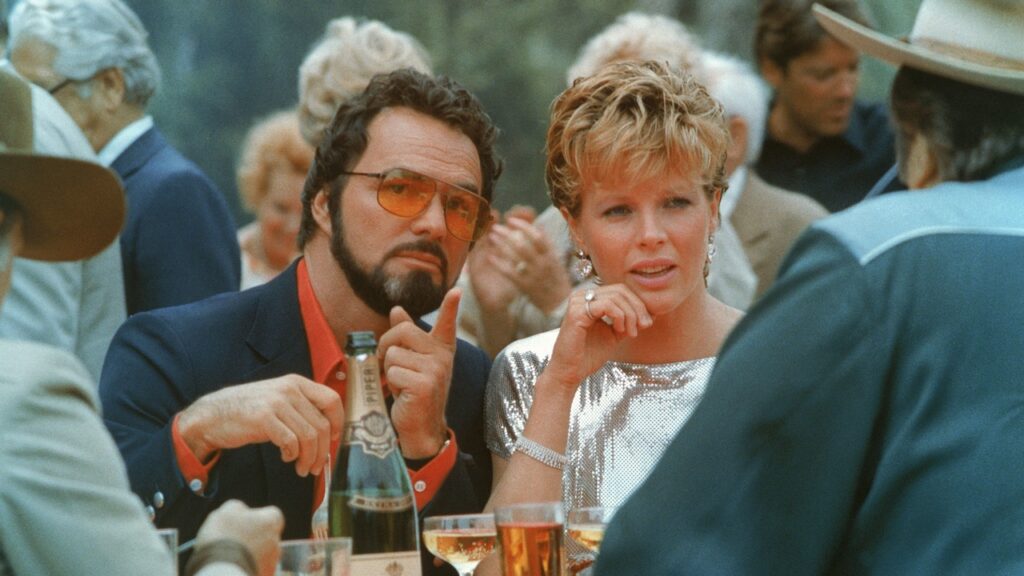
Burt Reynolds and Kim Basinger in The Man Who Loved Women (Photo/Columbia Pictures)
Reception for The Man Who Loved Women
The Man Who Loved Women grossed $1.3 million on its opening weekend, finishing tenth at the box office. The top grossing film of the weekend was Sudden Impact, which earned $7.1 million on its second weekend.
The film would gross $10.96 million in its theatrical run.
Roger Ebert gave the film two out of four stars in his review.
Legacy
The film’s legacy is rooted in the collaboration between Reynolds and Edwards, as well as the onscreen chemistry between Reynolds and Andrews. Andrews brings a grounded, calm elegance to the film that balances Reynolds’ frantic energy.
It also served as an early showcase for Basinger, who displayed the comedic timing and screen presence that would soon make her a major star.
The Man Who Loved Women is viewed as a quintessential 80s “adult” comedy—urbane, slightly melancholic, and deeply preoccupied with the psychology of romance. While critics often debate its success compared to the Truffaut original, the 1983 version is valued for its lush Henry Mancini score and its attempt to give a Hollywood superstar a more complex, introspective canvas to play upon.