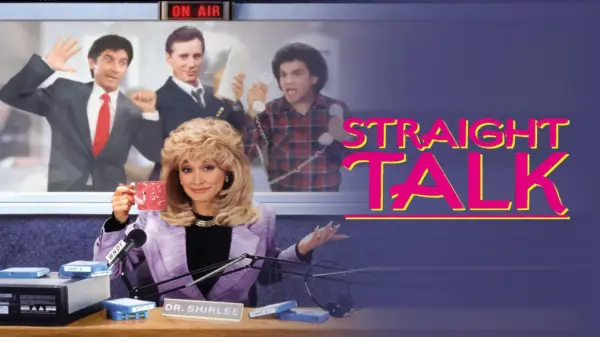


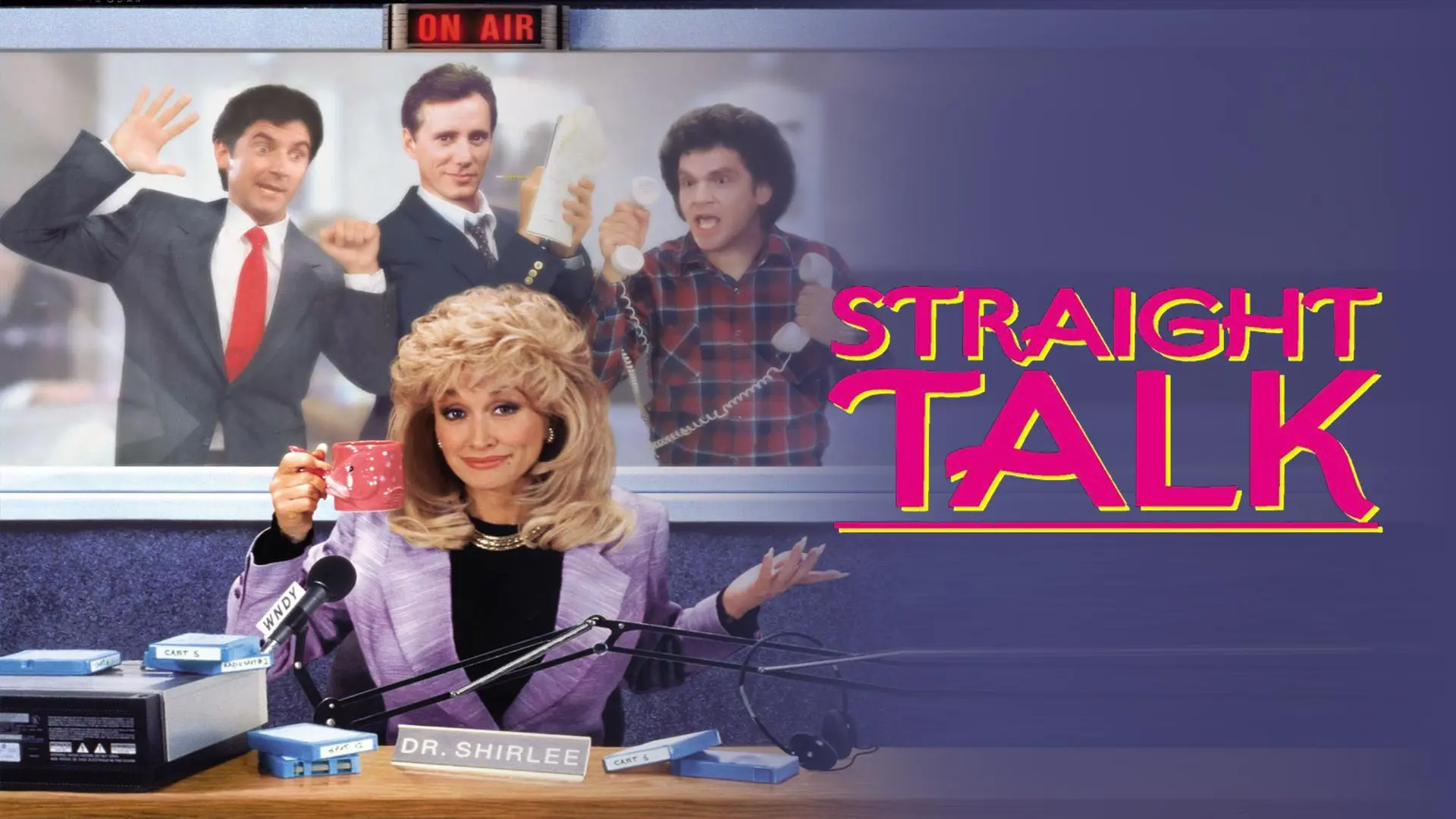
Straight Talk (released in theaters on April 3, 1992) follows Shirlee Kenyon, a down-home dance instructor from Arkansas who, after losing her job and her lackluster boyfriend (Michael Madsen), decides to start over in the big city of Chicago. Played with trademark effervescence by Dolly Parton, Shirlee’s life takes an accidental turn when she is mistaken for a clinical psychologist at a major radio station.
Despite her lack of formal credentials, her common-sense “straight talk” and sincere empathy resonate instantly with the troubled callers of the Windy City, turning her into an overnight broadcasting sensation known as “Doctor Shirlee.”
The plot thickens as the station’s ambitious manager, played by Griffin Dunne, pushes her into the spotlight, while a cynical, investigative reporter named Jack Russell (James Woods) becomes determined to expose her as a fraud.
Supporting performances by Jerry Orbach as a seasoned station veteran and Teri Hatcher as an aspiring socialite add layers to the corporate and social world Shirlee is trying to navigate.
As Jack digs into her past, he finds himself unexpectedly falling for Shirlee’s genuine charm, leading to a romantic and professional dilemma where the truth threatens to dismantle the hope she has provided to thousands of listeners.
The film operates as a lighthearted, fish-out-of-water romantic comedy that serves as a perfect vehicle for Parton’s “Iron Butterfly” persona—sweet on the outside but possessing a core of formidable wisdom.
Woods delivers an effective performance as the fast-talking, skeptical journalist whose hard edges are softened by Shirlee’s sincerity.
The chemistry between the leads provides the film’s engine, balancing the absurd premise of the radio mix-up with a grounded exploration of the difference between academic expertise and lived experience.
Madsen’s brief turn as the unreliable ex-boyfriend and the snappy dialogue typical of 1990s studio comedies keep the narrative moving at a brisk, entertaining pace.
Jay Thomas, Spalding Gray, Tracy Letts and John Sayles round out the cast.
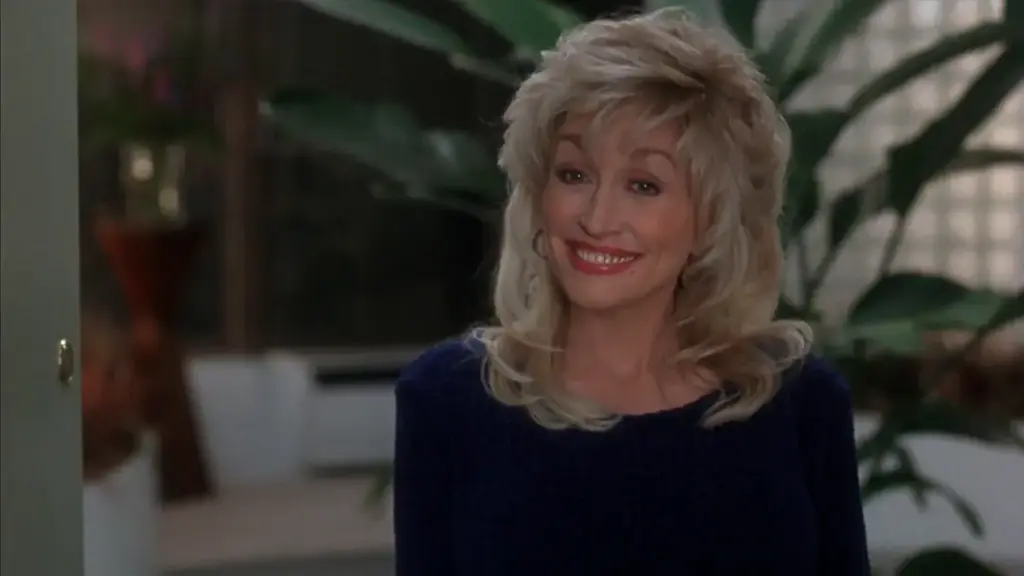
Dolly Parton in Straight Talk (Photo/Hollywood Pictures)
Reception for Straight Talk
Straight Talk grossed $4.6 million on its opening weekend, finishing fourth at the box office behind White Men Can’t Jump ($10.9 million), Basic Instinct ($10.2 million) and Beethoven ($7.6 million).
The film would gross $21.2 million in its theatrical run.
Roger Ebert gave Straight Talk two out of four stars in his review.
Legacy
The legacy of this 1992 comedy is defined by its celebration of authentic, “home-grown” wisdom over institutional elitism, a theme that remains a staple of Dolly Parton’s cinematic identity.
Straight Talk is fondly remembered as one of the highlights of Parton’s leading-lady era, showcasing her unique ability to carry a film with a blend of musicality, humor, and heart.
The movie’s soundtrack, featuring original songs written and performed by Parton, further solidified its cultural footprint and remains a favorite among her fans.
While Straight Talk captures a specific moment in early-nineties radio culture, the film’s message about the power of simple, honest communication continues to resonate, serving as a reminder of an era when mid-budget star vehicles focused on charm and character over spectacle.