



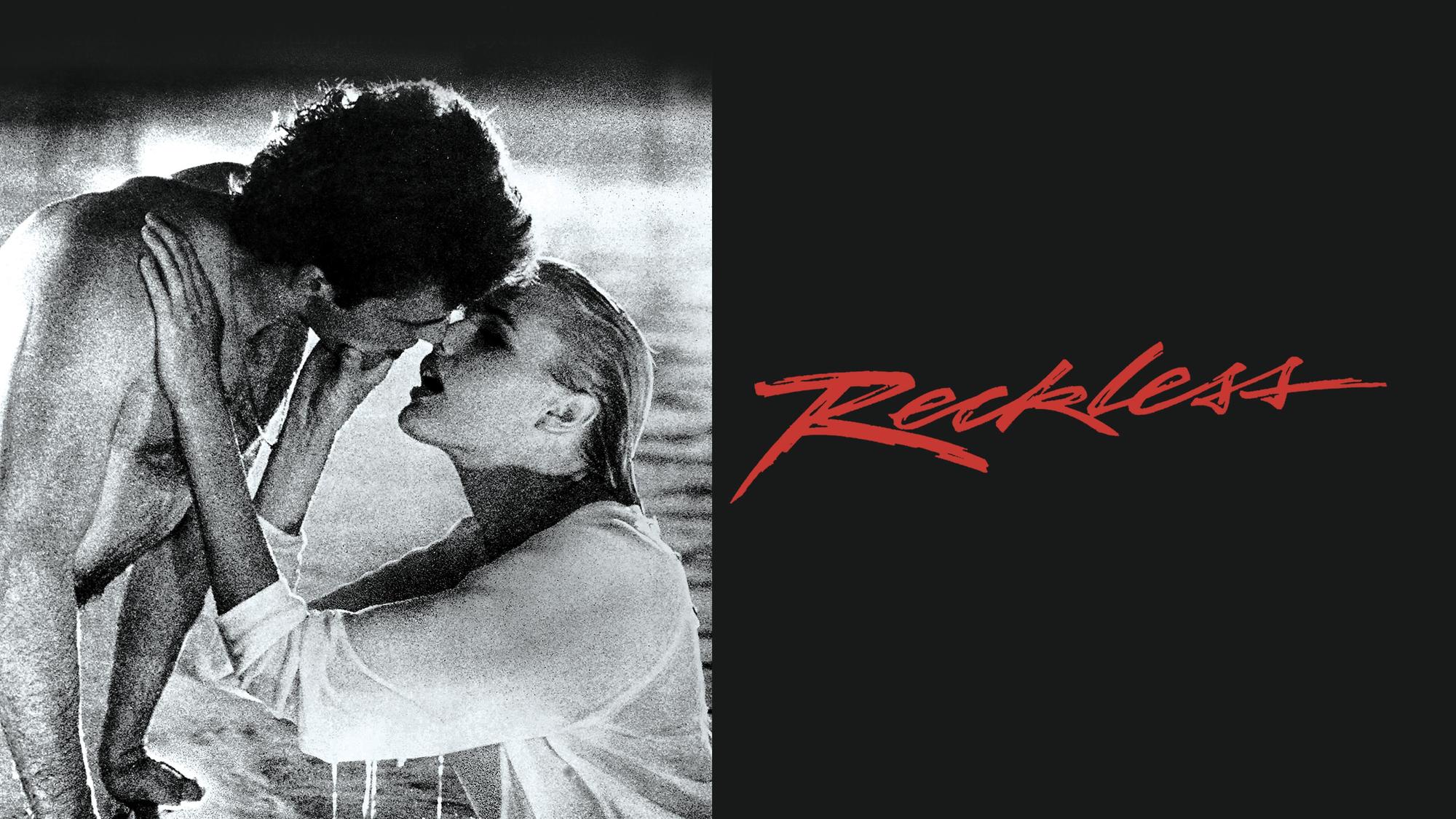
In the moody, atmospheric drama Reckless (released in theaters on Feb. 3, 1984), Johnny Rourke (Aidan Quinn) is the quintessential rebel from the wrong side of the tracks in a dying Appalachian steel town. Johnny is a brooding, motorcycle-riding outcast dealing with a fractured home life, headlined by his estranged, alcoholic father (Kenneth McMillan) and a deep-seated resentment toward the bleak future his town offers.
His world collides with that of Tracey Prescott (Daryl Hannah), a beautiful, wealthy cheerleader who seemingly has everything Johnny lacks.
Despite their disparate social standings and the interference of Tracey’s straight-laced boyfriend, Randy (Adam Baldwin), the two are drawn together by a shared, unspoken desire to escape the suffocating expectations of their environment.
Directed by James Foley in his directorial debut and written by Chris Columbus, the film follows the combustible romance as Johnny pushes Tracey to abandon her safe, predictable life.
The plot explores the friction between the classes, personified by the authority figures who view Johnny as a lost cause, including his coach (Cliff DeYoung) and various townspeople played by Lois Smith and Dan Hedaya.
As Johnny’s behavior becomes increasingly erratic and self-destructive following a personal tragedy, the film builds toward a defiant climax.
It is less a traditional love story and more a portrait of youthful disillusionment, culminating in a desperate, high-speed bid for freedom that challenges whether either of them can truly leave their pasts behind.
Jennifer Grey, Billy Jacoby, Haviland Morris, and Adam LeFevre round out the cast.
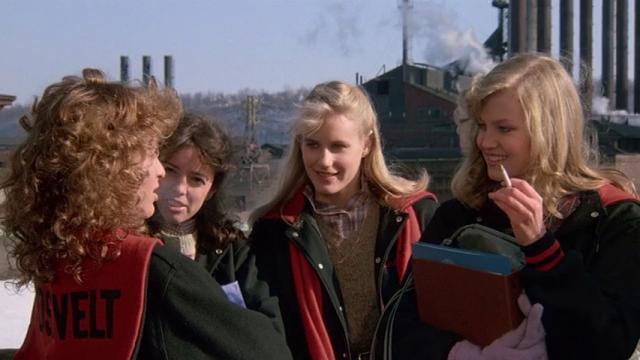
Daryl Hannah and Haviland Morris in Reckless (Photo/MGM-UA)
Reception for Reckless
Reckless grossed $2.4 million on its opening weekend, finishing third at the box office.
The film would gross $8.3 million in its theatrical run.
Legacy
Reckless is defined by its striking visual language and its role as a launching pad for several major Hollywood talents.
With its heavy use of neon lighting, industrial landscapes, and a pulsating synth-rock soundtrack, the film helped pioneer the “music video aesthetic” that would come to dominate 1980s cinema.
Furthermore, Foley’s direction showcased a sophisticated, gritty sensibility that he would later bring to acclaimed works like Glengarry Glen Ross.