













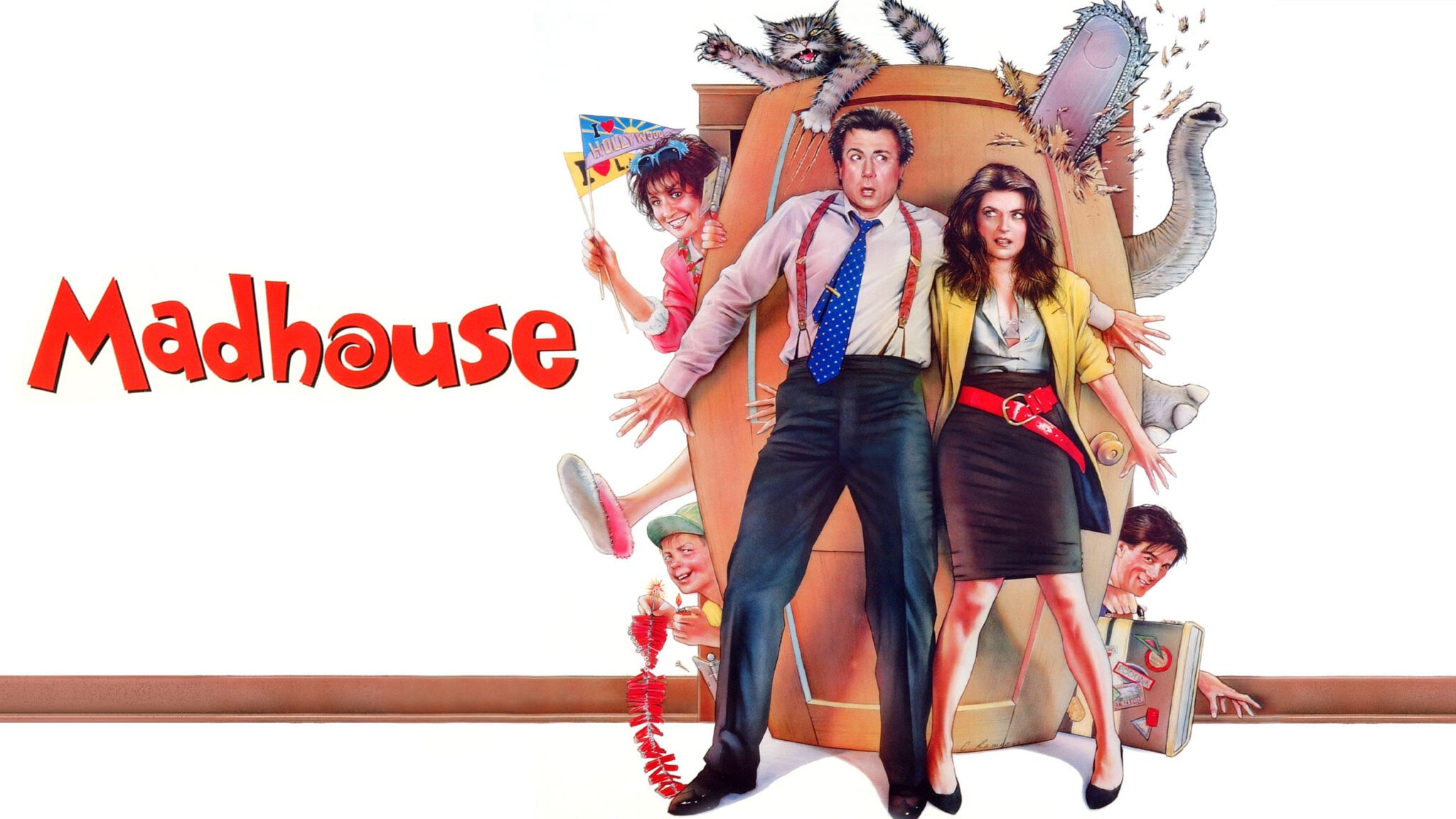
Madhouse, (released i theaters on Feb. 16, 1990), is a frantic and relatable slapstick comedy, featuring Mark and Jessie Bannister (John Larroquette and Kirstie Alley) are a successful, yuppie couple living in a pristine, newly renovated dream home in Los Angeles.
Their domestic bliss is short-lived when Mark’s shiftless cousin, Fred (John Diehl), and his pregnant, volatile wife, Bernice (Jessica Lundy), arrive for an unannounced visit. What begins as a temporary stay quickly devolves into a permanent nightmare as the house is slowly overtaken by a parade of increasingly bizarre and unwanted visitors.
The plot escalates into a suburban war of attrition when Jessie’s pampered sister and her husband also move in, followed by Mark’s lecherous, aging neighbor and even more distant relatives.
As the Bannisters’ beautiful home is physically dismantled by the sheer incompetence and greed of their guests, Mark’s cynical, sharp-tongued friend Wes (Dennis Miller) offers a running commentary of witty observations on their deteriorating sanity.
Madhouse captures the slow-burn descent into madness as Mark and Jessie find themselves unable to say “no” to the people exploiting their kindness.
The narrative reaches a fever pitch when the Bannisters, pushed past the brink of a nervous breakdown, decide that the only way to regain their home is to stop being “nice” and start using psychological—and occasionally explosive—warfare to drive their “loved ones” out for good.
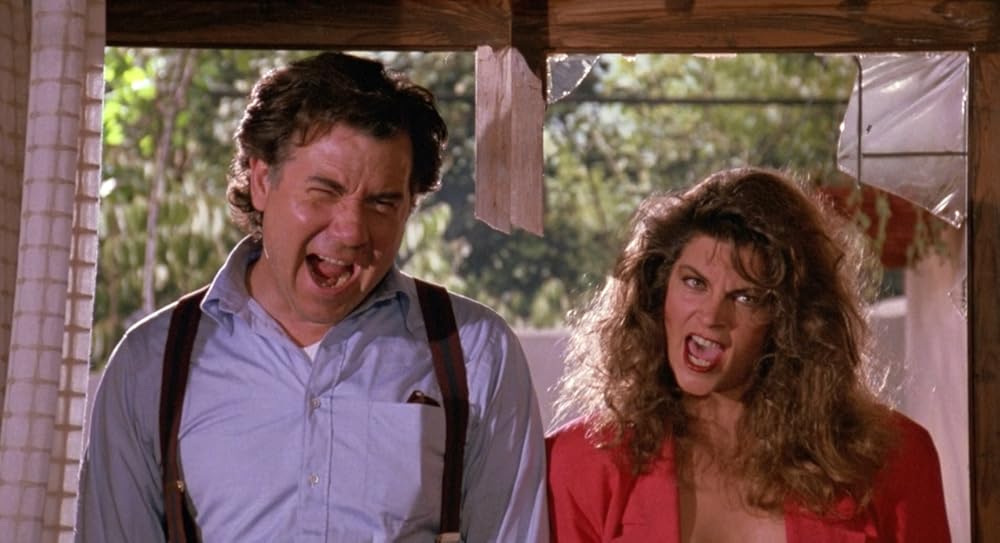
John Larroquette and Kirstie Alley in Madhouse (Photo/Orion Pictures)
Reception for Madhouse
Madhouse grossed $5.2 million on its opening weekend, finishing fourth at the box office behind Driving Miss Daisy ($9.8 million), Hard to Kill ($8.4 million) and Revenge ($6.1 million).
The film would gross $21 million in its theatrical run.
Roger Ebert gave Madhouse two out of four stars in his review.
Legacy
Madhouse is defined by its status as a quintessential “late-night cable” classic, resonating with anyone who has ever suffered through an overextended houseguest stay.
The film served as a perfect showcase for the comedic chemistry between Alley and Larroquette, both of whom were at the height of their television fame on Cheers and Night Court, respectively.
It is fondly remembered for its dark, “Looney Tunes” approach to home destruction and for Miller’s distinctive, dry-witted performance, which remains a highlight for fans of his early career.
Madhouse has earned a lasting reputation as a sharp satire on the politeness of the middle class and the fragility of the “American Dream” home.
Its influence can be seen in later “home invasion” comedies that explore the breaking point of social etiquette, ensuring its place as a cult favorite for those who enjoy watching a perfectly ordered life descend into total, hilarious anarchy.