







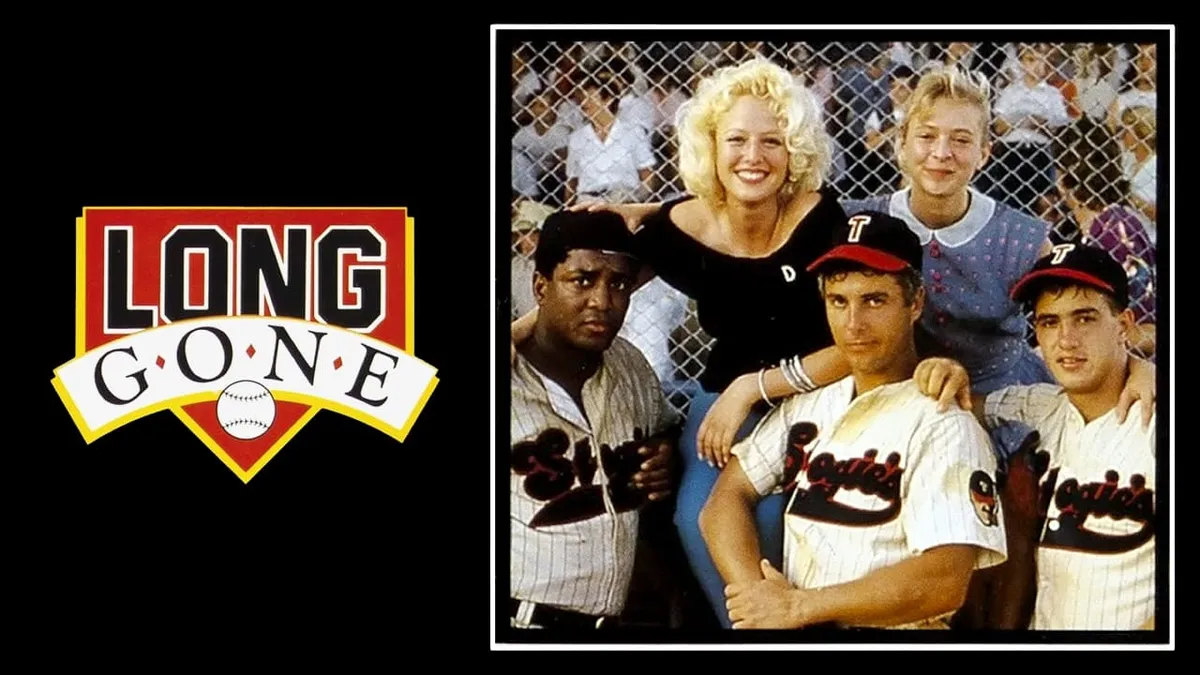
Long Gone, premiered on HBO on May 23, 1987, is a witty and affectionately gritty look at the world of minor league baseball in the deep South during the 1950s. The film captures the ramshackle charm and desperate hope of players battling for one last shot at the big leagues, all while enduring low pay and endless bus travel.
The film stars William Peterson as Cecil “Stud” Cantrell, the aging, charismatic, and hard-living manager and star first baseman for the Tampico Stogies, a low-A baseball team.
The plot kicks into gear when the team desperately needs a pitcher to keep their season alive.
They find one in Jamie Ross (Dermot Mulroney), a handsome, inexperienced college kid who initially clashes with the team’s rough-around-the-edges culture.
The central drama involves Stud Cantrell’s chaotic personal life, particularly his on-again, off-again romance with Dixie Lee Boxx (Virginia Madsen), a beautiful, no-nonsense local woman who acts as the team’s unofficial bookkeeper and confidante.
As the Stogies struggle through their league, facing rivals and enduring the harsh realities of the minor league grind,
Jamie finds himself learning about life, baseball, and love from Stud and the colorful characters surrounding the team.
The tension mounts as Stud’s past threatens his future, forcing him to decide what he values more: the game or Dixie Lee.
The ensemble cast brings rich authenticity to the small-town setting. Larry Riley, Henry Gibson, Joel Murray, and Guich Koock round out the team and local figures.
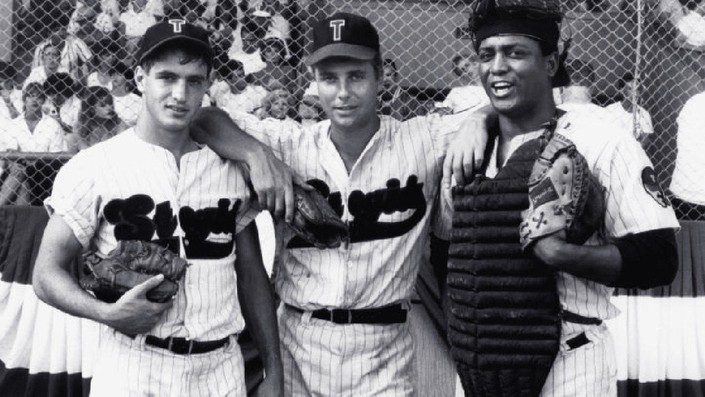
Dermot Mulroney, William Peterson and Larry Riley in Long Gone (Photo/HBO Pictures)
Reception for Long Gone
Long Gone was mentioned in The Ultimate Book of Sports Movies: Featuring the 100 Greatest Sports Films, which described the film as “three parts Bull Durham, two parts Slap Shot, add a dose of Bingo Long and a pinch of The Longest Yard.”
Legacy
Long Gone’s legacy is that of a superior, character-driven sports drama that transcended its made-for-cable origin. It is often celebrated by baseball purists and fans of Petersen and Madsen for its sharp dialogue, evocative period atmosphere, and a mature, unsentimental approach to the fading dreams and enduring camaraderie of minor league life.