




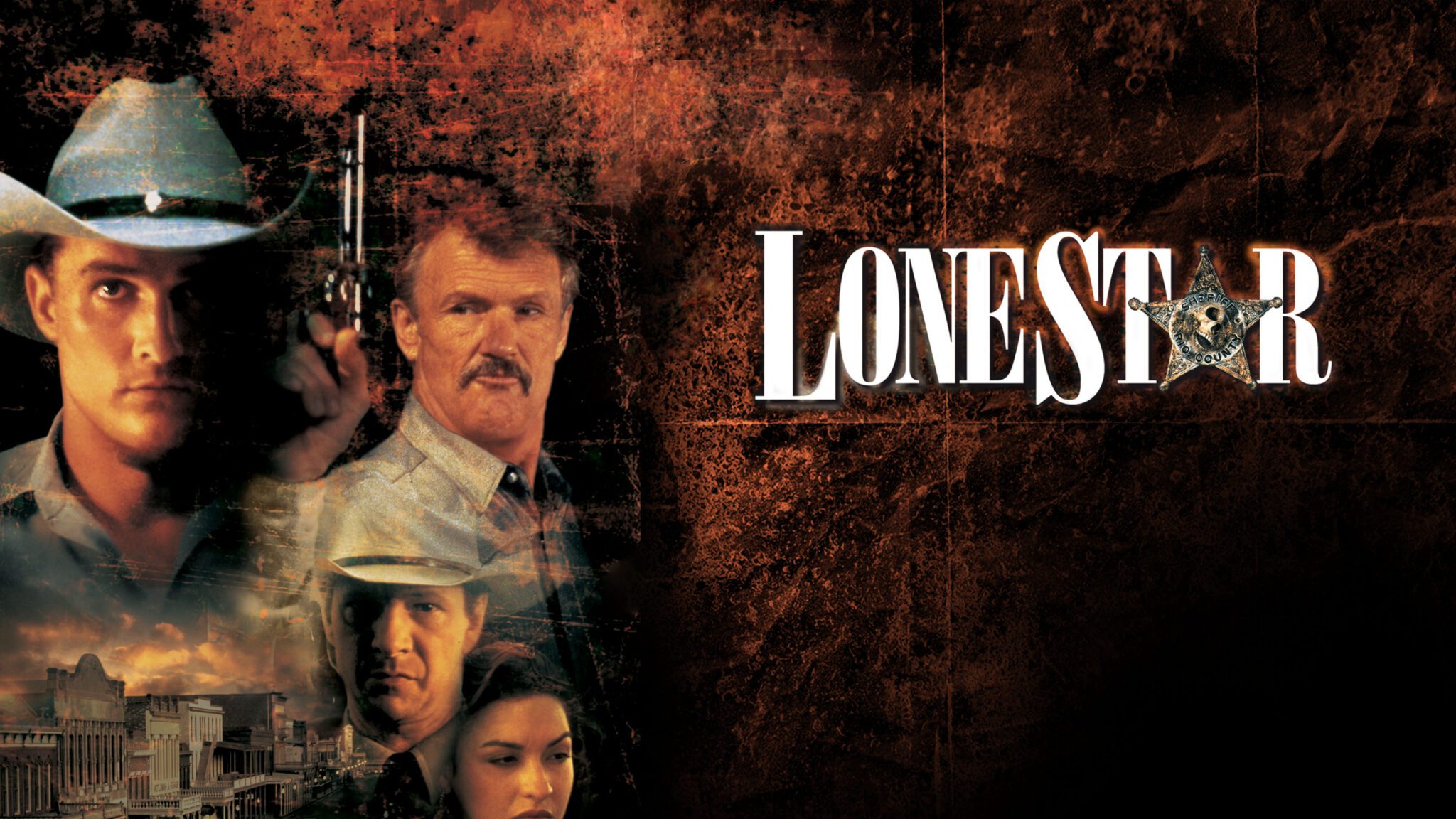
Lone Star (released in theaters on June 21, 1996) is a profound and intricate neo-Western mystery that serves as the magnum opus of independent filmmaker John Sayles. Set in the dusty border town of Frontera, Texas, the film is far more than a simple whodunit; it is a sprawling meditation on how the past bleeds into the present.
Sayles eschews flashy editing for seamless, in-camera transitions between decades, creating a narrative where history feels like a physical presence. It is a quiet, intellectual powerhouse that deconstructs the myths of the American West while exploring the complex intersections of Mexican, Black, and Anglo identities.
The discovery of a skeletal remain in the desert, accompanied by a rusted Masonic ring and an old sheriff’s badge, reopens a cold case from 1957.
The current sheriff, Sam Deeds (Chris Cooper), suspects the bones belong to the corrupt and sadistic Sheriff Charlie Wade (Kris Kristofferson), who vanished decades ago with a significant sum of money.
Sam’s investigation is complicated by the fact that the man long suspected of killing Wade was Sam’s own father, the late and legendary Sheriff Buddy Deeds (Matthew McConaughey, appearing in flashbacks).
As Sam digs into the town’s buried secrets, he navigates a landscape defined by generational friction.
He reconnects with his high school sweetheart, Pilar (Elizabeth Peña), a history teacher struggling with the local school board’s curriculum, while dealing with the town’s political gatekeepers like Mayor Hollis Pogue (Clifton James).
Parallel to Sam’s search is the arrival of Colonel Delmore Payne (Joe Morton), a rigid military officer who returns to the local base to confront his estranged father, Otis (Ron Canada), a powerful figure in the town’s Black community.
Featuring supporting turns from Frances McDormand as Sam’s neurotic ex-wife and Tony Plana, the film weaves these disparate threads into a single tapestry.
The narrative builds to a shocking revelation that challenges the very foundations of Sam’s identity, forcing him to decide if the truth is worth the cost of the town’s peace.
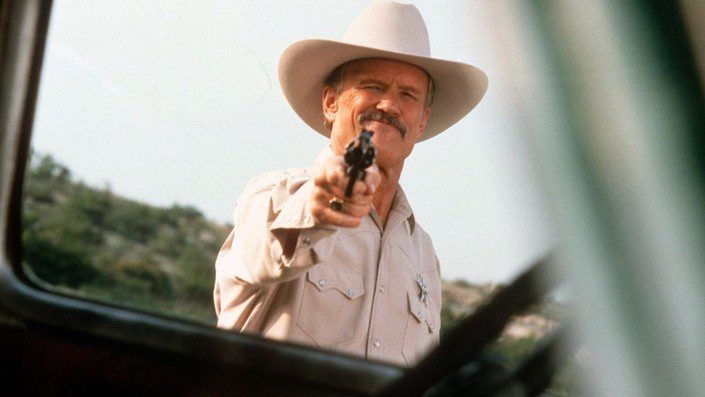
Kris Kristofferson in Lone Star (Photo/Sony Pictures Classics)
Reception for Lone Star
Lone Star grossed $232,184 on its opening weekend, in limited release on 21 screens.
The film would gross $12.4 million in its theatrical run.
Roger Ebert gave Lone Star four out of four stars in his review.
The film premiered at the 1996 South by Southwest Festival.
Sayles’s screenplay was nominated for an Academy Award and Golden Globe Award.
Lasting Legacy
Lone Star is remembered as one of the most intelligent and structurally perfect films of the 1990s.
It is also known for the breakout performance of McConaughey, whose brief but magnetic screen time as Buddy Deeds proceeded his role in A Time To Kill, released later that summer.
The film is celebrated for its screenplay, which is frequently studied in film schools for its brilliant use of non-linear storytelling and its ability to address complex social issues without resorting to melodrama.
Lone Star stands as a timeless exploration of the boundaries we build between countries, families, and ourselves, praised for its depth, its craftsmanship, and its haunting final line that remains one of the most debated in film history.