

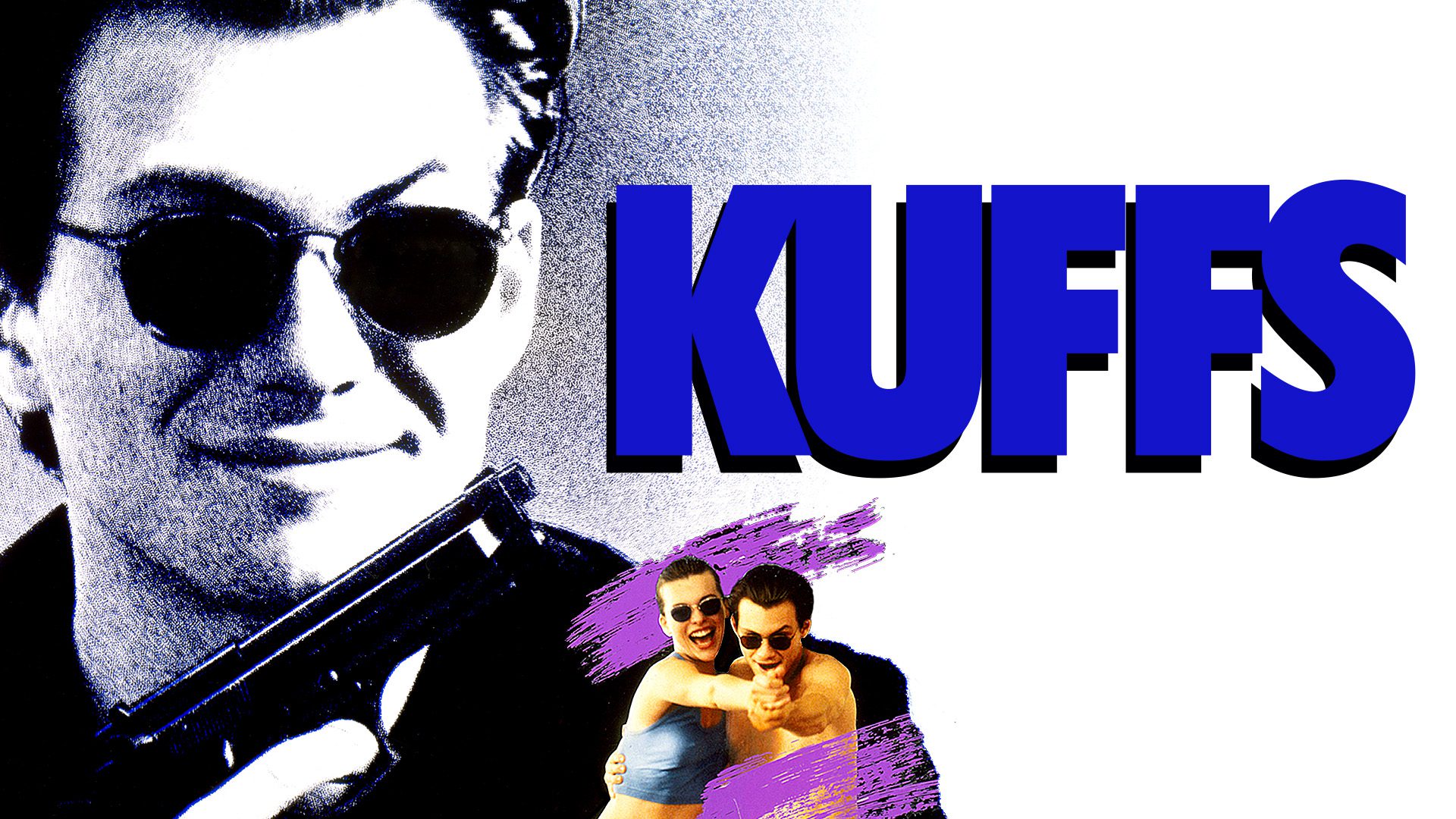
Kuffs (released in theaters on January 10, 1992) is a unique stylistic outlier of the early 90s, blending the fast-talking irreverence of a teen comedy with the stakes of an urban police thriller. Directed by Bruce A. Evans, the film is perhaps best remembered for its meta-narrative approach, utilizing frequent fourth-wall breaks that allowed a young Christian Slater to showcase the smirking charisma that made him a definitive star of the era.
George Kuffs (Slater) is a charmingly irresponsible high school dropout who finds himself at a crossroads. After learning that his girlfriend, Maya (Milla Jovovich), is pregnant, George panics and heads to San Francisco to visit his older brother, Brad (Bruce Boxleitner).
Brad is a respected member of the Special Patrol Guard, a unique, for-profit private police force that protects specific districts of the city.
Their reunion is cut short when Brad is murdered by a local mobster named Kane after refusing to sell his patrol district.
Inheriting his brother’s “beat,” George suddenly finds himself in possession of a police precinct despite having no training and a general disdain for authority.
To keep the district out of the hands of the corrupt businessman Sam Jones, George must learn the ropes of the Special Patrol.
He is assigned a straight-laced partner, Ted Bukovsky (Tony Goldwyn), who has little patience for George’s unorthodox methods and constant commentary to the camera.
The film culminates in a chaotic, bullet-riddled showdown where George and Ted must take down Kane’s syndicate to avenge Brad and secure a future for Maya and their unborn child.
Alexandra Paul, Troy Evans, Leon Rippy, Mary Ellen Trainor, and Ashley Judd (in her film debut) round out the cast.
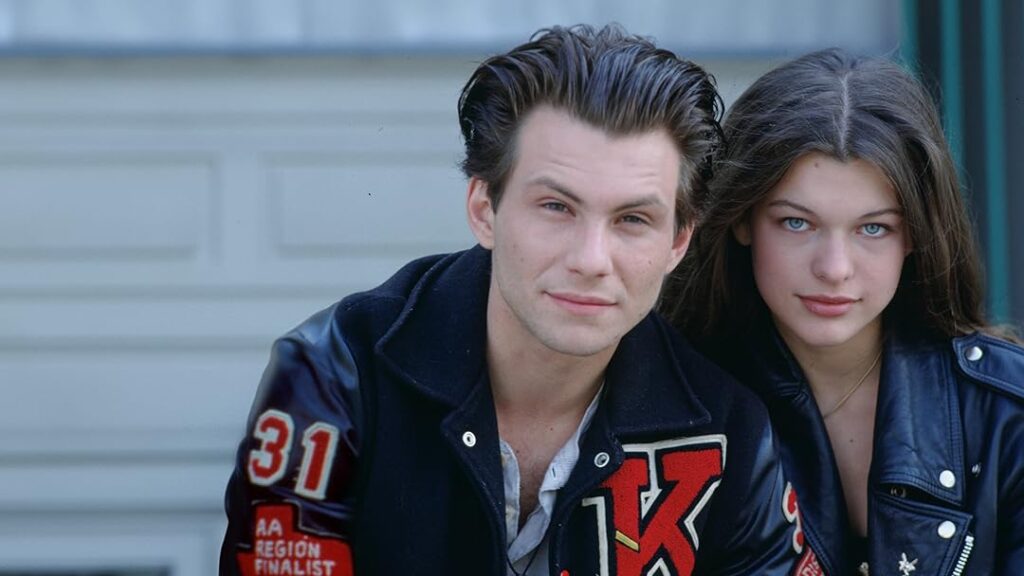
Christian Slater and Milla Jovovich in Kuffs (Photo/Universal Pictures)
Reception for Kuffs
Kuffs grossed $5.7 million on its opening weekend, finishing fifth at the box office.
The film would gross $21.1 million in its theatrical run.
Legacy
Kuffs is defined by its status as a cult favorite that predated the mainstream popularity of “self-aware” action cinema. By having the protagonist speak directly to the audience, the film created an intimate, rebellious tone that resonated with the “Generation X” sensibility of the early 90s.
It remains one of the most vibrant examples of Slater’s peak leading-man period, capturing the specific energy that made him a counter-culture icon.
Beyond its lead performance, the film is remembered for its catchy, synth-driven Harold Faltermeyer score and its early-career appearances by future stars like Jovovich and Judd.
It successfully navigated a difficult tonal balance, swinging from lighthearted gags to genuine violence without losing its momentum.
While it was only a modest success upon its initial release, Kuffs has maintained a lasting presence on home media and cable, celebrated for its stylish San Francisco photography and its refusal to take the conventions of the buddy-cop genre too seriously.
Kuffs stands as a fun, kinetic time capsule of 1992, proving that sometimes the best way to fight crime is with a badge, a gun, and a well-timed wink to the camera.